A merchandise warehousing program centralises branded stock, automates ordering through a branded portal and delivers consistent pick, pack and ship services under one clear commercial model. It suits any organisation running recurring merchandise, uniforms, event kits, or loyalty gifts that have outgrown ad hoc ordering. Some providers build and manage these programs for businesses and organisations, and the payoff can be predictable delivery, tighter brand control, and hours back for your marketing and procurement teams.
TL;DR:
- A merchandise warehousing program includes storage, inventory control, pick, pack and dispatch, plus optional services like kitting, returns, and reporting.
- Costs are divided into product, management fee, storage, pick-and-pack, and shipping, with complexity increasing total expenses significantly.
- Selecting a provider requires clear proof of capabilities like real-time stock visibility and documented onboarding, and avoiding hidden fees or lack of reporting.
- Proper program setup involves detailed service scope, SKU specs, volume estimates, and a clear renewal process to prevent costly errors.
- Outsourcing to an integrated program can reduce administrative hassle and allow scalable growth with transparent pricing and documented workflows.
Table of Contents
- What does a merchandise warehousing program include?
- How does a merchandise program run from brief to delivery?
- What does a merchandise warehousing program cost?
- How do you choose a merchandise warehousing partner?
- Programme setup checklist for your brief
- How Chilli Promotions approaches merchandise programs
- Get your merchandise warehousing program running properly
- FAQ
What does a merchandise warehousing program include?
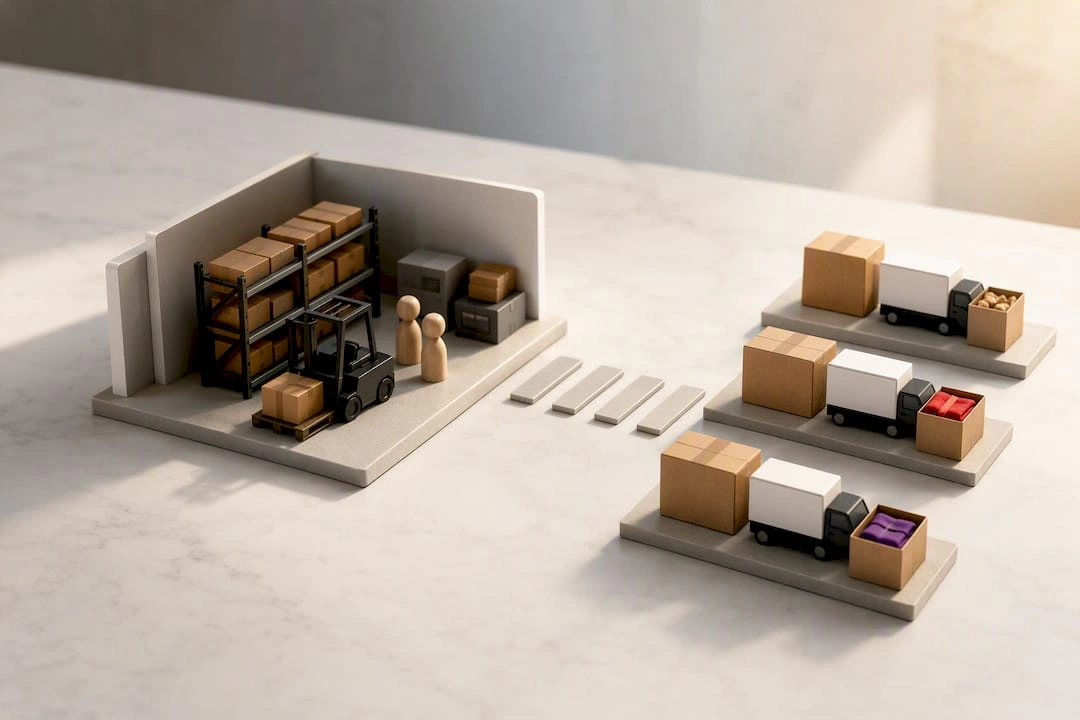
A properly run program bundles several services that, done separately, tend to create gaps and duplicate costs. The core components are storage, inventory control, and pick, pack and dispatch, wrapped around a portal that gives your team (and sometimes your staff or franchisees) self-service ordering.
Storage options usually flex between short-term holding for a single campaign, seasonal buffers ahead of a conference or uniform rollout, and long-term bulk storage for core SKUs that reorder year round. Inventory control sits on top of that storage, tracking stock levels against reorder points so nobody discovers a shortage the week before a launch. This is also where a warehouse management system earns its keep. Poor inventory control is the most common failure point in branded merchandise programs, and it can waste a significant portion of a merch budget through excess stock or embarrassing stockouts.
Beyond storage, expect:
- Pick, pack and dispatch, including per-recipient shipping for individual staff or customer orders rather than bulk pallets
- Kitting, where multiple items (a shirt, a bottle, a notebook) get assembled into a single branded pack before dispatch
- Returns handling for faulty stock or wrong sizing
- Reporting on stock levels, spend and order volume by cost centre or department
How does a merchandise program run from brief to delivery?
The lifecycle follows a predictable sequence, and skipping steps early tends to cause expensive rework later.
- Discovery brief. You outline annual volume estimates by SKU, seasonal peaks, and which services are in scope versus excluded. This is also where the management fee structure gets agreed.
- Spec library build. Every SKU gets documented with colourway, size range, artwork version and decoration method before the portal goes live. Skipping this step is the single biggest cause of recurring fulfilment errors.
- Goods-in and receiving. Stock arrives, gets checked against the spec library, and is logged into the warehouse system.
- Job records, picking and QC. Every order generates a job record tracking blank goods cost, decoration cost and kitting labour before any supplier is engaged.
- Dispatch and reporting. Orders ship, and mid-program reporting tracks spend, stock turnover and any SKU adjustments ahead of renewal.
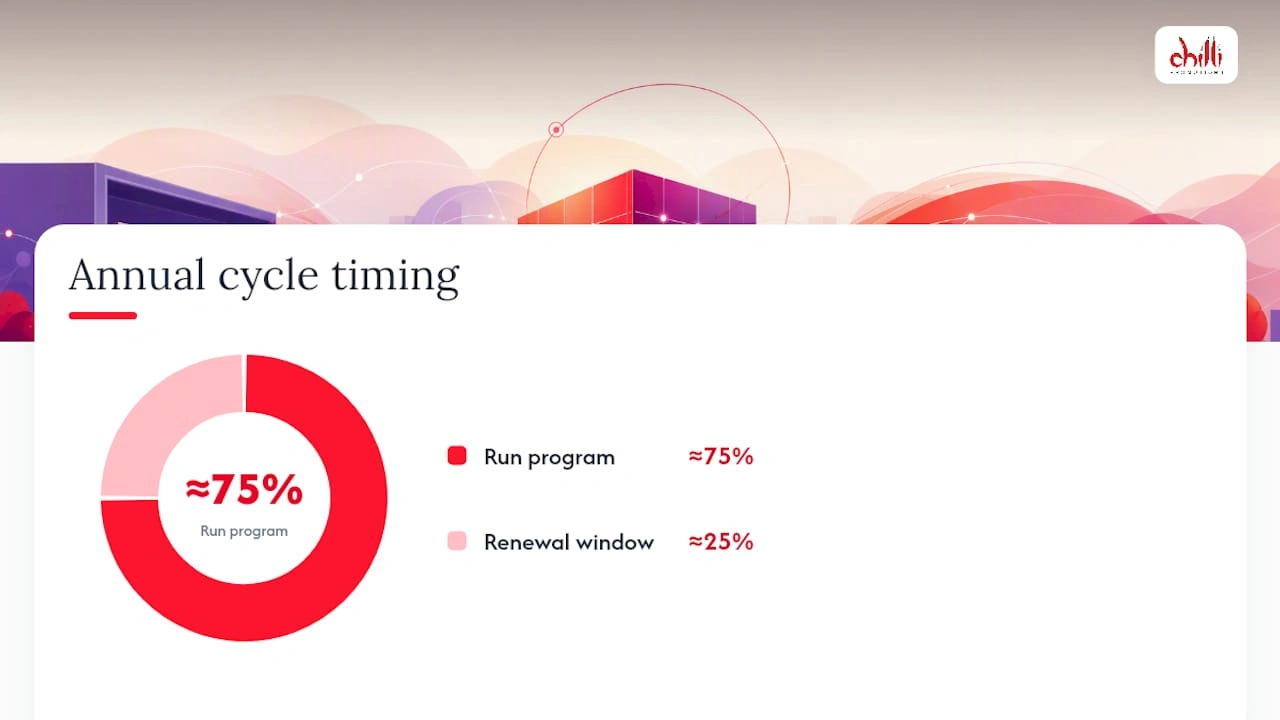
Most programs run on an annual cycle, with a renewal conversation triggered around the three-quarter mark so new volume estimates and pricing can be locked in before the old terms lapse.
Pro Tip: Ask for the spec library template before you sign anything. If a provider can’t show you a working example, that’s a sign their onboarding process is improvised rather than documented.
What does a merchandise warehousing program cost?
Pricing typically breaks into five components, and understanding each one stops you comparing quotes that aren’t actually comparable.
- Product cost — the blank goods and decoration, priced per unit
- Management fee — either a flat monthly charge or a percentage of throughput, covering portal hosting, account management and reporting
- Storage — charged per pallet, per shelf, or per cubic metre, sometimes tiered by season
- Pick-and-pack — a per-order handling fee, often higher for complex multi-item kits
- Kitting and shipping — priced separately from pick-and-pack because assembly labour and per-recipient carrier costs behave differently at scale
SKU complexity moves these numbers more than most buyers expect. A program with three sizes across one product is simple to store and pick. A program with fifteen SKUs across five products, each shipped individually to home addresses, multiplies picking time and carrier costs even if total unit volume is identical. Kitting labour and per-recipient shipping are commonly under-quoted, so ask for these as separate line items rather than a bundled estimate.
Outsourcing this function generally converts fixed in-house costs (warehouse lease, staff, equipment) into variable per-order costs, which is why smaller and mid-sized organisations rarely build their own facility. Before signing, request a sample invoice, confirm which carrier rates were used to build the quote, and get a written list of anything explicitly out of scope.
How do you choose a merchandise warehousing partner?
Selection comes down to two checklists: what the provider can technically do, and what they’ll commit to commercially.
On capability, look for a warehouse management system with real-time stock visibility, a portal you can customise with your own branding and approval workflows, multi-site fulfilment if you have interstate or New Zealand recipients, kitting capacity for multi-item packs, and a documented returns process.
On commercial terms, pin down lead times in writing, ask what accuracy service level applies to picking (a rate below 99% starts causing real complaints at volume), confirm what insurance covers stored stock against damage or loss, and clarify invoicing cadence, whether that’s monthly, per campaign, or on drawdown.
Three red flags are worth walking away from:
- Hidden fees that only surface once you’re mid-contract
- No documented spec-library or onboarding process
- No mid-program reporting, leaving you guessing at spend and stock levels until renewal
Programme setup checklist for your brief
Before you send an RFP or brief a shortlisted provider, get these items down on paper.
- List every service you need included, and explicitly exclude anything you don’t (freight insurance, artwork revisions, sample production).
- Estimate annual volume by SKU, including seasonal peaks.
- Agree the management fee structure and billing cycle in writing.
- Set a renewal notice period, ideally reviewed around week 36 of a 52-week cycle.
- Build the spec library: SKU code, colourway, size, artwork version and decoration spec for every item.
- Confirm the goods-in schedule and job record policy before the first delivery arrives.
- Schedule a mid-program spend and stock report at the halfway point.
How Chilli Promotions approaches merchandise programs
Some providers have manufactured and supplied branded merchandise across Australia and New Zealand, and start every program with the spec library, not the price list. Management fees are treated as a named, disclosed line rather than something buried in product markup, with job records and billing cadence documented so nothing gets renegotiated by memory at renewal time. That discipline is what lets a program scale from one campaign to an ongoing portal without the wheels coming off.
— Allissar Tawadros
Get your merchandise warehousing program running properly
Some providers offer a practical alternative to piecing a merchandise program together from separate suppliers. Instead of juggling a print shop, a storage facility and a courier account separately, you can get warehousing, kitting, portal ordering and dispatch handled under one transparent management fee.
If you’re at the briefing stage, start by browsing the promotional products range to shortlist candidate SKUs, or check the role merchandise plays in marketing programs if you’re still building the business case internally. Chilli Promotions can also review a draft programme brief, provide sample pricing against your volume estimates, or jump on a scoping call to work through spec library requirements before you commit. For businesses layering digital campaigns on top of a merchandise rollout, integrated marketing support can help coordinate the two. Request a scoping call or a sample quote today to see what a properly run program costs against your actual volumes.
FAQ
What are the main types of warehouses used in fulfilment?
Common types include distribution centres, bulk storage warehouses, climate-controlled facilities, cross-dock terminals, fulfilment centres for direct-to-recipient shipping, bonded warehouses for imported goods, and cooperative or shared-space warehouses used by multiple smaller clients.
What are the core warehouse processes in a merchandise program?
The standard sequence is receiving, putaway, inventory management, picking and packing, and shipping, with returns handling as a sixth process most merchandise programs also need.
Are there major warehousing and fulfilment providers in Australia?
Australia has a range of third-party logistics providers and specialist merchandise fulfilment companies; Chilli Promotions runs managed merchandise warehousing programs for businesses and organisations across Australia and New Zealand.
Can you give an example of how a warehouse store setup works?
A branded online store setup typically pairs a customised ordering portal with warehoused stock, so an employee or franchisee orders uniforms or gifts through the portal and the warehouse picks, packs and ships that specific order without manual handling by head office.
How much stock should a merchandise program hold at once?
For core high-volume SKUs ordered frequently, holding 30 to 60 days of forward supply is a common approach when annual volume justifies it, balancing unit pricing against the risk of overstocking.