For most people, the safest everyday drink bottles are food-grade stainless steel and glass, with certain plastics like Tritan and PET acceptable when used as intended and kept clean. Lids, straws and gaskets matter just as much as the bottle body itself. Any material that meets Food Standards Australia New Zealand (FSANZ) requirements and gets cleaned properly will serve you well.
TL;DR:
- Stainless steel bottles offer long-lasting durability and preserve taste, but they are heavier and more expensive than plastic or glass options.
- Glass bottles provide the purest flavor without chemical leaching but are fragile and unsuitable for impact-prone environments like gyms or hiking.
- Reusable plastics like Tritan and PP are cost-effective and dishwasher-safe, but they require replacement after scratches or clouding to maintain hygiene and safety.
- Proper cleaning, including thorough scrubbing and drying, is essential for all materials to prevent bacteria build-up and extend bottle lifespan.
- Buyers should request food-contact conformance certificates and migration test results from suppliers rather than relying on marketing labels like “BPA-free.”
Table of Contents
- Drink bottle materials at a glance
- How do the main drink bottle materials compare?
- What do food safety regulators say about bottle materials?
- Which drink bottle material is best for the environment?
- How should you clean different bottle materials?
- Which bottle material suits your situation best?
- What has Chilli Promotions learnt sourcing branded bottles?
- The perspective that gets missed in most bottle guides
- Need branded bottles you can actually vouch for?
- FAQ
Drink bottle materials at a glance
Different materials suit different routines, and the “best” choice depends on whether you’re commuting, hitting the gym, or fitting out a corporate gift order. Here’s how the common drink bottle materials stack up before you dive into the detail.
- Stainless steel (304/18/8 grade): Best for durability and all-day insulation. Trade-off: heavier than plastic and pricier upfront.
- Glass (including borosilicate): Best for taste purity at the desk or home. Trade-off: fragile, and unsuitable for the gym bag or a toddler’s hands.
- PET and reusable plastics (Tritan, HDPE, PP): Best for lightweight, low-cost, disposable or semi-disposable use. Trade-off: scratches harbour bacteria and can retain odours over time.
- Aluminium: Best for lightweight travel and hiking. Trade-off: almost always needs an internal liner, and a damaged liner can affect taste and safety.
- Silicone (collapsible bottles, seals, sleeves): Best for compact travel bottles and gasket components. Trade-off: quality varies wildly between food-grade and industrial-grade silicone.
- Titanium: Best for ultralight adventure use where weight is critical. Trade-off: a significant price premium for a niche benefit.
- Plant-based composites (bamboo, wheat-straw, sugarcane): Best for reducing plastic content in promotional or eco-conscious ranges. Trade-off: often blended with resin, and durability data is still limited.
Each of these appears across the promotional drinkware market, and the right pick usually comes down to how the bottle will actually be used, not which material sounds the most impressive on a spec sheet.
How do the main drink bottle materials compare?
The differences between materials show up clearly once you line them up against the things that actually matter: safety, taste, insulation, weight and how long the bottle survives daily use.
Stainless steel: the durability benchmark
Food-grade 304 stainless steel, often labelled 18/8, gets its name from the specific chromium and nickel composition that defines this grade. That combination is what makes it resistant to rust, scratches and flavour retention, which is why it dominates the reusable bottle market. The chromium forms a passive oxide layer that stops corrosion, and because the surface is non-porous, it doesn’t absorb odours from yesterday’s soup or last week’s protein shake.
Nickel sensitivity is worth a mention here, since a small percentage of people react to nickel exposure through skin contact. In a drink bottle, nickel exposure via ingestion from properly finished 304 steel is minimal, but anyone with a diagnosed nickel allergy should check with a supplier about polishing standards rather than assume every steel bottle is equal.
The other distinction that matters is lined versus unlined interiors. Most single-wall steel bottles are unlined and safe on their own. Double-wall insulated bottles typically use a vacuum layer between two steel walls rather than a plastic liner, which is why a good vacuum-insulated steel bottle keeps drinks cold for many hours without any added chemical risk. Some cheaper insulated bottles use a copper coating on the inner wall to boost thermal performance. That copper sits behind the steel layer, not in contact with the liquid, so it’s a design detail rather than a safety concern, but it’s still worth asking a supplier about if you’re ordering in bulk.
Glass: the purity standard
Glass doesn’t leach anything into your drink, full stop. It’s chemically inert, which is why water, coffee or cordial tastes exactly like water, coffee or cordial, with no flavour interference and no porosity for bacteria to hide in. That neutrality is glass’s single biggest advantage over every other material on this list.
Borosilicate glass, the type used in lab equipment and better-quality drinkware, resists thermal shock far more effectively than standard soda-lime glass. That means you can go from a fridge-cold bottle to a warm room without the glass cracking, though it still can’t handle the abuse a steel bottle shrugs off. Drop it on tile and it’s likely gone. Weight is the other trade-off: glass bottles run heavier than steel or plastic of the same volume, which rules them out for backpacks, gym bags and anywhere impact is likely.
Plastics: not all reusable plastic is equal
This is where the material conversation gets murkier, mostly because “plastic” covers wildly different polymers with different risk profiles. Single-use PET bottles, the kind sold in supermarket fridges, are designed for one or two uses. They’re not built for repeated washing, and heat, sunlight and scratching accelerate the breakdown of the plastic surface over time.
Reusable plastics are a different category. Tritan (a copolyester) and polypropylene (PP) are common in quality reusable bottles because they’re durable, dishwasher-safe and manufactured without bisphenol A. HDPE shows up in some sports bottles for its flexibility and low cost. The real risk with any reusable plastic isn’t the base polymer, it’s what happens to a bottle after two years of scratches, dishwasher cycles and sun exposure in a car. Scratched or clouded plastic is harder to clean thoroughly and is the point at which any plastic bottle should be retired, regardless of its BPA-free label.
Aluminium: light but rarely used raw
Aluminium bottles are popular for their light weight, but raw aluminium reacts with acidic drinks, so almost every aluminium bottle on the market has an internal liner, usually a food-grade epoxy or enamel coating. That liner is doing the actual food-contact work. If it chips or wears thin from repeated dropping or aggressive scrubbing, the bottle should come out of rotation, because a compromised liner exposes the drink to bare aluminium and can introduce a metallic taste.
Silicone: useful, but quality varies
Silicone shows up in two places: whole collapsible bottles and the smaller components (gaskets, seals, mouthpieces, straw sleeves) fitted to bottles of every other material. Food-grade silicone is inert and heat-stable, but industrial-grade silicone, sometimes used in cheaper components to cut cost, can contain fillers that aren’t approved for food contact. This is one area where supplier certification genuinely matters more than the marketing copy on the box.
Titanium: a premium for a narrow use case
Titanium bottles are lighter than steel and just as inert, but the metal costs considerably more to manufacture. Unless you’re shaving grams for multi-day hiking or ultralight travel, the premium is hard to justify against what 304 stainless steel already delivers at a fraction of the price.
Plant-based composites: promising, with caveats
Bamboo fibre, wheat-straw and sugarcane-based composites have become popular in eco-conscious promotional ranges because they reduce virgin plastic content. In practice, most of these materials are a natural fibre bound with a resin, often melamine, so they’re not pure plant material and shouldn’t be treated as fully biodegradable just because bamboo is in the name. They’re a genuine step toward lower plastic use, but durability and heat tolerance still lag behind steel and glass, so they suit cool beverages and shorter product lifespans rather than daily hot-drink use.
What do food safety regulators say about bottle materials?
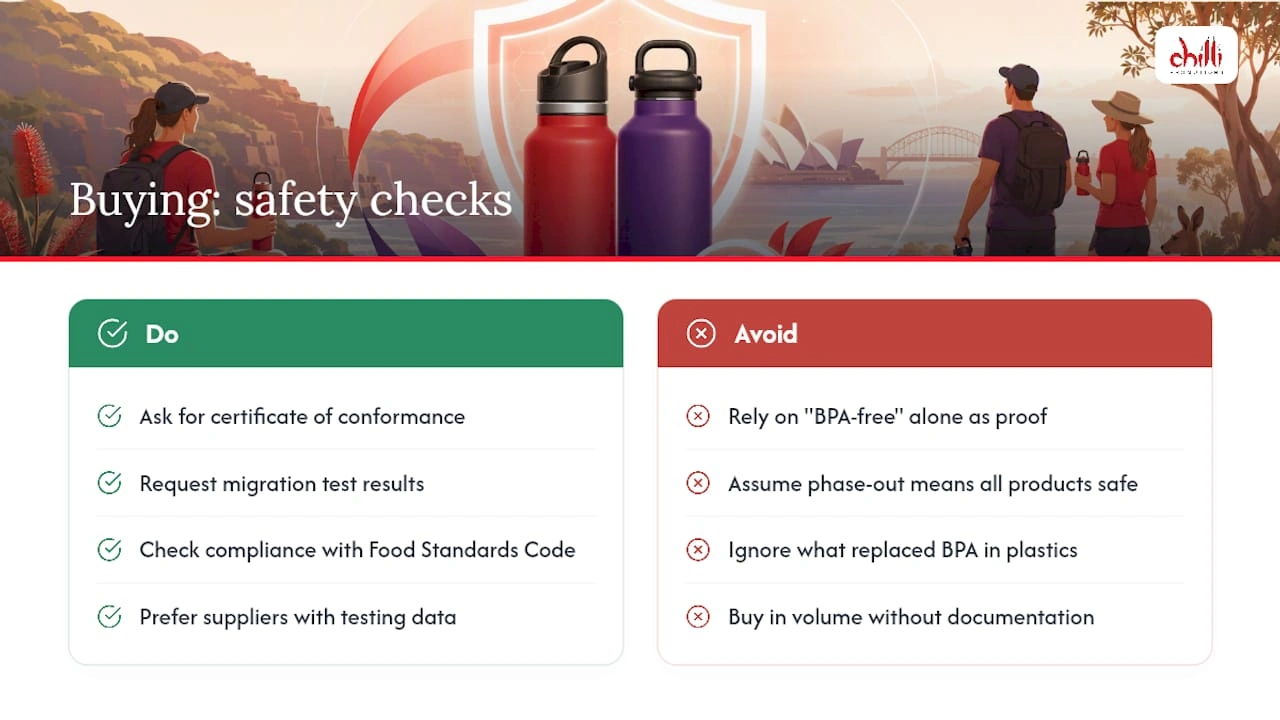
FSANZ regulates food-contact materials under the Australia New Zealand Food Standards Code, and its surveys of packaging chemicals found that estimated dietary exposures to most packaging-related chemicals sit below the tolerable daily intake thresholds. Manufacturers are required to ensure any material that touches food or drink is fit for that specific purpose, not just food-adjacent.
“BPA-free” gets used as a marketing badge, but it’s worth knowing what sits behind it. FSANZ has confirmed that dietary exposure to bisphenol A in Australia is low, and voluntary industry phase-outs have already removed it from products like polycarbonate baby bottles. That phase-out happened well before most current bottle ranges hit shelves, so BPA-free plastics are now closer to the default than the exception in quality reusable bottles.
Migration testing matters more than a label. A “BPA-free” sticker tells you one chemical was removed. It doesn’t tell you what replaced it, or whether the supplier tested for general chemical migration at all. The Food Standards Code sets the compliance baseline, but genuine assurance comes from a supplier’s certificate of conformance and actual migration test results, not the packaging copy.
If you’re buying in volume, whether for your household or your organisation, ask for that documentation. Procurement teams increasingly treat certificates of conformance and migration test data as real evidence, and marketing language like “BPA-free” as a starting point rather than proof.
Which drink bottle material is best for the environment?
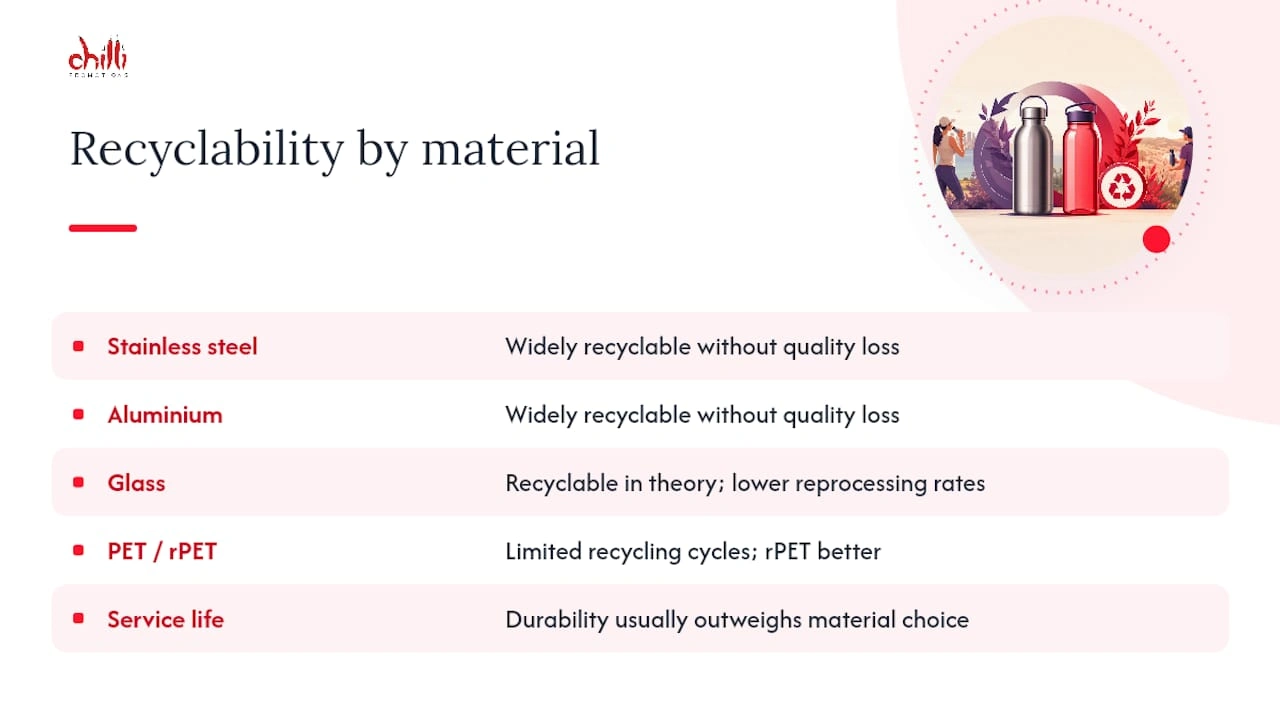
Recyclability differs a lot by material, and it’s rarely as simple as the recycling symbol suggests. Stainless steel and aluminium are both widely and repeatedly recyclable without losing material quality, which is a genuine advantage over most plastics. Glass is also endlessly recyclable in theory, though contamination and colour-sorting issues mean a smaller share actually gets reprocessed in practice.
Standard PET plastics are recyclable but typically only through limited cycles before the polymer degrades. Recycled PET (rPET) is increasingly used in bottle manufacturing, and it’s a genuine improvement on virgin plastic, but any rPET bottle still needs to meet the same food-contact requirements as virgin material, so ask suppliers for the same declarations you’d want for any plastic bottle.
Here’s the part that gets missed: a durable bottle used daily for five years usually beats a “greener” material replaced every six months on total lifecycle impact. Service life is doing more environmental work than the raw material score. If sustainability is genuinely the priority, buy the bottle you’ll actually keep using, and check out Chilli Promotions’s eco-friendly drinkware guide for a fuller rundown of what “eco” actually means across materials.
How should you clean different bottle materials?
Cleaning matters as much as the material itself. All materials, including stainless steel and glass, can harbour bacteria if not cleaned properly, and the crevices are always where things go wrong.
- Rinse daily with warm water after every use, and give the bottle a proper wash with dish soap and a bottle brush at least every few days.
- Strip it down weekly. Remove straws, gaskets and mouthpieces and scrub them separately. This is the step almost everyone skips.
- Dishwasher rules vary by material. Stainless steel handles the dishwasher fine (top rack for insulated bottles), glass is generally safe, but check aluminium liners and silicone components against the manufacturer’s specific guidance before running them through a heat cycle.
- Dry with lids off. Sealing a damp bottle traps moisture and invites mould, especially around silicone seals.
- Retire it at the first sign of chips, flaking internal lining, cracked plastic, or a smell that survives a proper wash.
Pro Tip: Pop straws and gasket seals in a cup of warm water with a drop of dish soap for ten minutes before scrubbing. It loosens residue in the grooves that a quick rinse never reaches.
Which bottle material suits your situation best?
The right material depends less on abstract safety rankings and more on how the bottle will actually be used day to day.
- Desk or office: Glass or stainless steel for taste, since there’s no impact risk sitting on a desk all day.
- Commuting: Insulated stainless steel handles knocks in a bag and keeps coffee hot until you actually drink it.
- Gym or sport: Lightweight Tritan or PP plastic, since it survives drops on a gym floor without denting.
- Kids: Stainless steel with a silicone sleeve balances durability with a soft grip, and it’s forgiving of being thrown.
- Camping or hiking: Aluminium or titanium for weight savings over long distances.
- Hot beverages: Vacuum-insulated stainless steel outperforms every other material for holding temperature over hours.
Cost over the bottle’s expected lifetime tells a different story to the price tag alone. A higher-cost insulated steel bottle that lasts multiple years works out cheaper per year than frequently replacing lower-cost plastic bottles once they scratch, cloud, or retain odours.
What has Chilli Promotions learnt sourcing branded bottles?
Since 2001, Chilli Promotions has manufactured and supplied promotional products, including drinkware, across Australia and New Zealand, working directly with clients on material selection for branded bottle programs. That experience means fielding the same safety questions procurement teams ask before signing off on a bulk order: what grade of steel, what’s the liner made from, and can the supplier produce a food-contact declaration on request.
For any branded bottle order, ask your supplier for a certificate of conformance and, for larger distributions to staff or clients, sample migration test results covering the specific material and finish used. A reputable supplier should have this documentation ready, not promised “later.”
The perspective that gets missed in most bottle guides
Most drink bottle content treats material choice as the whole decision. It isn’t. A cheap, scratched Tritan bottle that gets washed properly every day is safer in practice than a premium steel bottle nobody ever cleans. The material sets the ceiling on safety; hygiene habits determine whether you actually reach it.
If I had to set a default for everyday and promotional use, it’s food-grade 304 stainless steel for anything that travels, and glass for anything that stays on a desk. Beyond that, prioritise bottles with replaceable seals and straws over bottles where the whole unit gets binned the moment one part fails. Certificates matter more than marketing claims, every time.
— Allissar Tawadros
Need branded bottles you can actually vouch for?
Choosing between stainless steel, glass and various plastics gets a lot easier once you have proper documentation to back the decision, and that’s exactly where Chilli Promotions removes the guesswork for procurement teams. As a direct manufacturer and supplier, Chilli Promotions can provide food-contact declarations and sample testing details for its drinkware range, so you’re not relying on a marketing label to justify a bulk order to your compliance team or your board.
Whether you’re outfitting a university campus, a corporate office, or an event with branded bottles, Chilli Promotions works across promotional products with a focus on eco-friendly and carbon-offset options where they suit your brand. If durability and taste matter as much as your logo, start with stainless steel promotional drink bottles, or check the practical constraints in the guide to branding a drink bottle before you finalise artwork. For procurement teams weighing durability against presentation more broadly, this guide to branded workwear longevity covers similar trade-offs in a different product category. Ready to move forward? Request a quote and compliance documentation from Chilli Promotions today.
FAQ
What materials are drink bottles usually made from?
The most common drink bottle materials are food-grade stainless steel, glass, reusable plastics like Tritan and polypropylene, aluminium with an internal liner, and increasingly silicone or plant-based composites for niche and eco-focused ranges.
What are single-use plastic bottles made of?
Most single-use plastic bottles, including standard supermarket water bottles, are made from PET (polyethylene terephthalate), a lightweight plastic designed for one or two uses rather than long-term reuse.
What is the healthiest material for a drink bottle?
Food-grade stainless steel (304/18/8 grade) and glass are generally considered the safest choices because both resist chemical migration and don’t absorb odours or flavours, provided lids and seals are cleaned regularly.
Is stainless steel or glass better for taste?
Glass is chemically inert and gives the most neutral taste, but insulated stainless steel comes very close while also offering far better durability and temperature retention for daily use.
Are BPA-free plastic bottles actually safe?
Reusable plastics made from Tritan, PP or HDPE that carry genuine BPA-free certification are considered safe for regular use, though any scratched, clouded or heavily worn plastic bottle should be replaced regardless of its original certification.