TL;DR:
- Effective Australian merchandise supplier vetting involves verifying ABN and ASIC records, inspecting product samples, and confirming bank account ownership to prevent fraud. It also requires assessing sustainability claims and establishing structured payment terms for larger orders to manage risks. Ongoing due diligence and transparency in supplier relationships are essential for long-term success.
Merchandise supplier vetting is the process of verifying a supplier’s legitimacy, capabilities, and compliance before committing to any purchase or partnership. For Australian businesses sourcing branded merchandise, this process covers official registration checks through the Australian Business Register (ABR) and ASIC, product quality assessment, financial fraud prevention, and sustainability compliance. Skipping any of these steps exposes your business to counterfeit goods, payment scams, and reputational damage. Done well, supplier due diligence protects your brand and builds the kind of long-term supplier relationships that consistently deliver results.
What official business verification is essential for merchandise supplier vetting in Australia?
ABN verification on the ABR is the non-negotiable first step in any supplier evaluation in Australia. The ABR at abr.business.gov.au shows whether a supplier’s ABN is active, whether the registered business name matches exactly what appears on invoices and contracts, and whether the entity is registered for GST. A mismatch between the name on an invoice and the ABR record is a serious red flag, not a clerical error.
ABN verification alone is not enough. Cross-checking ASIC records confirms the company’s legal structure, its registered directors, and its registered address. This matters because fraudulent suppliers sometimes register a valid ABN but operate under a different entity to obscure ownership. ASIC’s company search takes minutes and costs nothing for basic checks.
GST registration status is worth confirming separately. A supplier claiming to charge GST but not registered for it is either making an error or committing fraud. Both outcomes create compliance problems for your business at tax time.
- Confirm the ABN is active and the registered name matches all documents exactly
- Cross-check ASIC for directors, registered address, and company structure
- Verify GST registration if the supplier is charging GST on invoices
- Check that the business type (company, sole trader, partnership) aligns with what the supplier has told you
- Confirm the registered address is a real commercial premises, not a PO box or residential address for a claimed manufacturer
Pro Tip: Set a calendar reminder to re-verify supplier ABN and bank details before every significant pay run. Supplier verification is not a one-off task. Business structures change, and scammers update bank details between payments.
How do you assess product quality and supplier reliability?
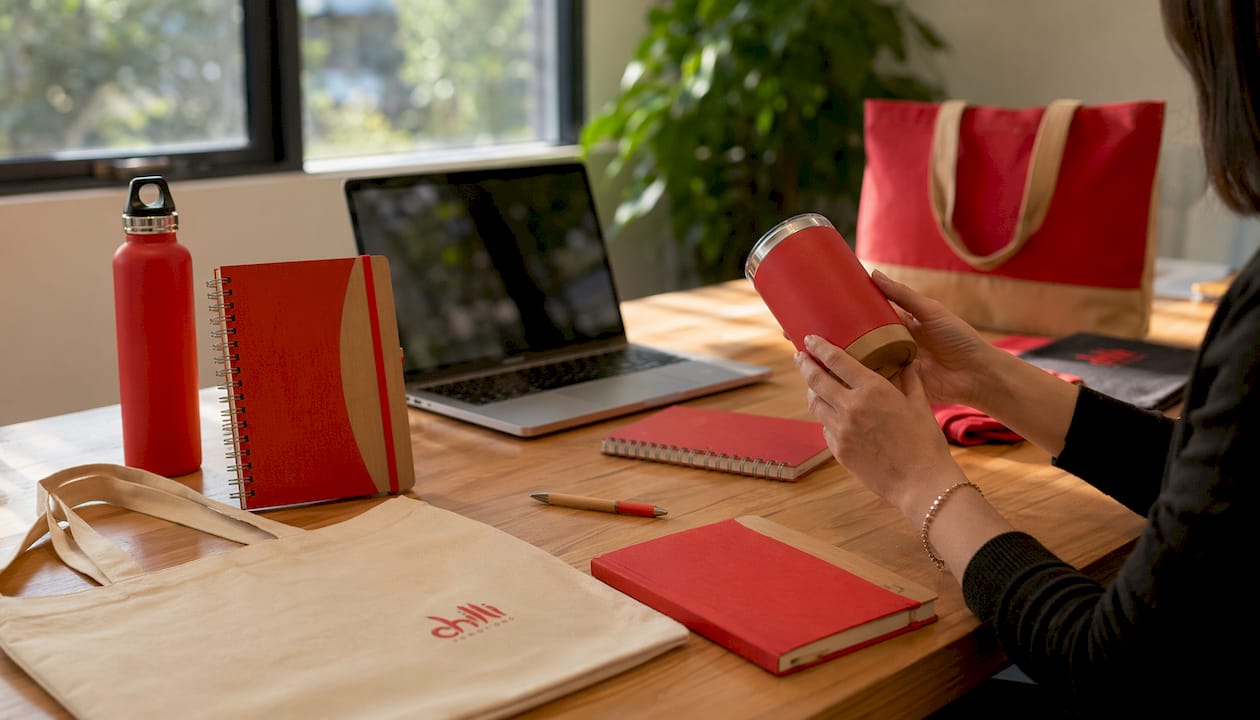
Physical samples are the single most reliable indicator of what a bulk order will deliver. Request samples before placing any order, and inspect them for material quality, print or embroidery finish, packaging integrity, and durability under normal use. A supplier who hesitates to send samples, or who charges an inflated sample fee with no credit against a future order, is signalling low confidence in their own product.
Clear logistics and return policies separate reliable suppliers from unreliable ones. Ask directly: what is the lead time from order confirmation to dispatch? What happens if goods arrive damaged? How are shortfalls handled? A supplier who answers these questions clearly and in writing is one you can work with. Vague or verbal-only answers are a warning sign.
Communication responsiveness is a quality indicator in its own right. A supplier who takes three days to answer a pre-sale enquiry will not suddenly become faster once you have paid a deposit. Test response times and communication clarity before you commit.
- Request physical samples and inspect finish, material weight, and packaging before ordering
- Ask for references from Australian retailers or businesses in comparable markets
- Confirm lead times, minimum order quantities, and dispatch methods in writing
- Ask specifically about damage policies and how shortfalls or defects are resolved
- Evaluate communication speed and clarity across at least two or three exchanges before ordering
Pro Tip: Maintain relationships with at least two vetted suppliers for your most critical product categories. Single-supplier dependence creates real risk when production delays or quality failures occur.
What financial and identity checks prevent fraud in the vetting process?
Payment redirection fraud targets businesses at the exact moment they are onboarding a new supplier. Confirming bank account ownership through Confirmation of Payee (CoP) verification is the most direct defence. Most businesses skip this step entirely, which is precisely why scammers exploit it. CoP confirms that the bank account number and BSB actually belong to the entity named on the invoice.
ABN verification does not confirm who controls the bank account. A fraudster can obtain a legitimate ABN, present convincing documentation, and still redirect payments to an account they control. Identity verification must go beyond the ABR.
Verifying a supplier’s ABN confirms the business exists. It does not confirm that the person requesting payment is authorised to receive it, or that the bank account belongs to the supplier. Confirmation of Payee and independent identity checks close that gap. Businesses that rely solely on ABN checks remain exposed to payment redirection fraud even after completing official registration checks.
Common red flags to watch for:
- Payment instructions arriving by email only, with no phone confirmation from a known contact
- Bank account details that differ from those used in previous transactions
- Requests to change payment details shortly before a large invoice falls due
- Pressure to pay quickly, with urgency framing designed to bypass normal approval processes
- Supplier contact using a free email domain (Gmail, Hotmail) rather than a verified business domain
Where possible, use biometric or independent phone verification for new suppliers. Call the supplier on a number you have independently sourced, not one provided in the same email as the payment request.
How do sustainability and compliance fit into supplier selection in Australia?
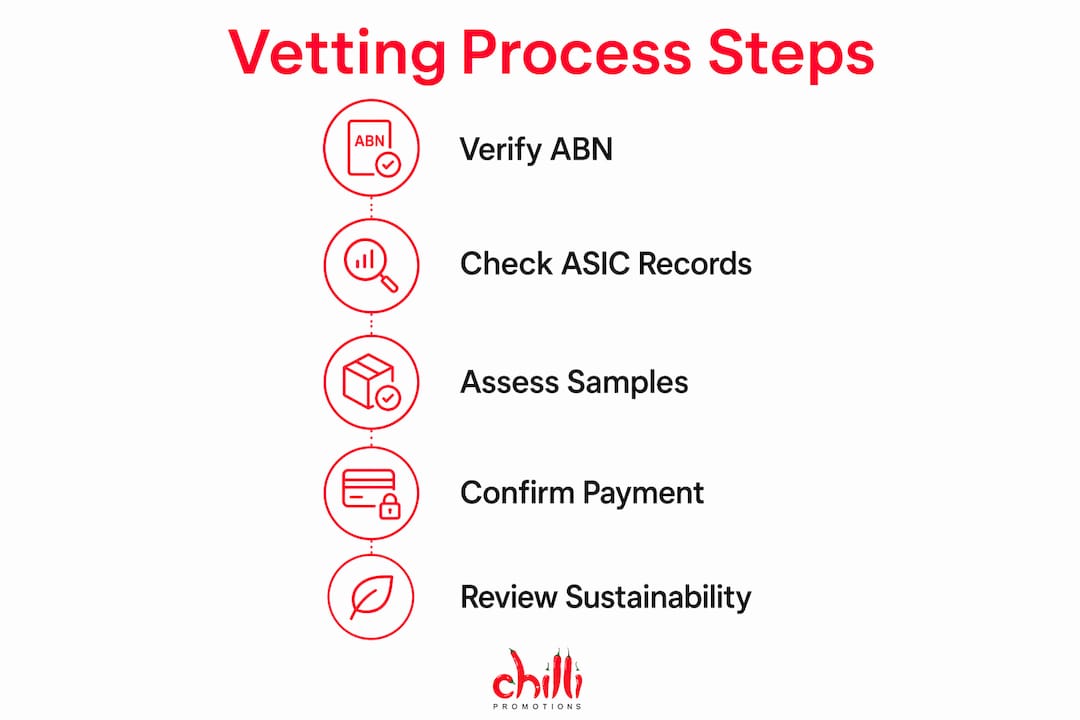
Sustainability is now a key factor in tender evaluations across Australian government and corporate procurement. Buyers expect suppliers to provide clear recycled content percentages, packaging compliance data aligned with National Packaging Targets, and evidence of emissions reduction activity. Suppliers who cannot provide this data are increasingly excluded from shortlists before price is even discussed.
Third-party certifications like B Corp or EcoVadis signal a genuine commitment to sustainability, but they do not automatically validate every product claim. Certification must match the specific claim being made to satisfy ACCC requirements. A supplier holding an EcoVadis Silver rating for their operations is not automatically certified for every product in their catalogue. Verify the scope of any certification before using it in your own marketing or tender responses.
The Modern Slavery Act 2018 applies to entities with annual consolidated revenue of $100 million or more, requiring formal due diligence and annual reporting on supply chain risks. Even businesses below that threshold benefit from applying the same framework. Asking suppliers about their labour practices, subcontracting arrangements, and country of origin for raw materials is good procurement practice at any scale.
| Sustainability check | What to ask the supplier |
|---|---|
| Recycled content | Percentage of recycled material by product, with documentation |
| Packaging compliance | Alignment with National Packaging Targets, recyclability of outer packaging |
| Certifications | Scope of B Corp, EcoVadis, ISO 14001, or equivalent, specific to products ordered |
| Emissions data | Carbon footprint per unit or per order, NoCO2 documentation where available |
| Labour practices | Subcontracting disclosure, country of origin for raw materials, Modern Slavery Act compliance |
For a deeper look at how to apply these standards to your product selection, the sustainable promotional products guide from Chilli Promotions covers recycled content, certifications, and compliance in practical detail.
What are the recommended steps to execute supplier vetting effectively?
A structured vetting workflow prevents the common mistake of skipping steps under time pressure. The steps below apply whether you are finding suppliers in Australia domestically or sourcing from overseas manufacturers.
- Build a longlist. Identify five to ten candidate suppliers through industry directories, trade shows, and referrals. Do not shortlist based on website quality alone.
- Check licences and scope. A licence listing “trading” or “import-export” indicates a middleman, not a manufacturer. Middlemen add markups and reduce your direct control over quality. Know which type of entity you are dealing with before proceeding.
- Request live video factory tours. Live video tours show real-time operations and cannot be staged the way pre-recorded videos can. If a supplier stalls or offers only a recorded tour, treat that as a red flag.
- Contact references. Ask specifically for references from businesses shipping to comparable Australian markets. Generic references from overseas clients do not tell you how the supplier handles Australian customs, GST, and local delivery expectations.
- Negotiate structured payment terms. A 30% deposit with the 70% balance conditional on passing a pre-shipment inspection aligns the supplier’s incentives with quality compliance. Paying in full upfront removes that alignment entirely.
- Commission a third-party audit for larger orders. For orders above $15,000, a third-party factory audit assesses manufacturing quality, capacity, and working conditions. This cost is small relative to the risk of a failed bulk order.
- Calculate landed costs in full. Include freight, GST, import duty, and inspection fees in your cost comparison. A lower unit price from an overseas supplier can become more expensive than a local option once all costs are included.
Before you scale any part of this process, make sure your internal workflows are solid. Automation amplifies existing inefficiencies rather than fixing them. Get the manual process right first, then look at tools to support it. For a ready-to-use framework, the promotional product checklist from Chilli Promotions covers evaluation criteria in a format you can apply immediately.
Key takeaways
Effective merchandise supplier vetting in Australia requires official registration checks, product quality assessment, fraud prevention controls, and sustainability compliance working together as a single process.
| Point | Details |
|---|---|
| Verify ABN and ASIC records first | Confirm active ABN, exact name match, directors, and registered address before any other step. |
| Confirm bank account ownership | Use Confirmation of Payee to verify bank details belong to the supplier, not just an email sender. |
| Inspect physical samples | Request and assess samples for quality, finish, and packaging before placing bulk orders. |
| Embed sustainability checks | Ask for recycled content data, certification scope, and Modern Slavery Act compliance from every supplier. |
| Structure payment terms | Use a 30% deposit with 70% balance conditional on a passed pre-shipment inspection for orders above $15,000. |
What we have learned from two decades of supplier partnerships
After more than 20 years working with Australian businesses on promotional merchandise, the Chilli Promotions team has seen the same mistakes repeat across procurement cycles. The most common is treating supplier vetting as a one-time gate rather than an ongoing relationship management practice. Businesses complete thorough checks at onboarding, then never revisit supplier credentials again. Bank details change. Business structures change. Ownership changes. The vetting process needs to be periodic, not just initial.
The second pattern we see is over-reliance on certifications without verifying their scope. A supplier presenting an EcoVadis Silver rating or a B Corp certification creates confidence. That confidence is warranted for the certified operations. It does not automatically extend to every product in their range. We have seen businesses make sustainability claims in tender responses based on a supplier’s company-level certification that did not apply to the specific products ordered. The ACCC takes greenwashing seriously, and the reputational cost of a challenged claim far outweighs the effort of verifying certification scope upfront.
The third issue is rushing the process when a deadline looms. Urgency is exactly the condition that payment redirection fraud exploits. Building a pre-approved supplier panel, with verified credentials and confirmed bank details, removes the pressure to cut corners when a campaign brief arrives with a tight turnaround. The businesses that do this well treat their supplier panel as a genuine asset, not an administrative task.
The future of supplier evaluation in Australia will require more transparency, not less. Regulatory expectations around Modern Slavery Act reporting, National Packaging Targets, and emissions disclosure are tightening. Businesses that build sustainability data collection into their supplier onboarding now will be ahead of the compliance curve in two to three years.
— Chilli Promotions Team
Chilli Promotions: vetted merchandise for Australian businesses
Chilli Promotions has been manufacturing and supplying promotional products across Australia and New Zealand since 2001. Every product in the range is selected with quality, compliance, and brand impact in mind, so you are not starting your vetting process from scratch.
Whether you need corporate giveaway products for an upcoming event or a broader promotional merchandise range for an ongoing brand programme, Chilli Promotions brings supplier due diligence, sustainability credentials, and two decades of Australian market experience to every order. You get a partner who has already done the hard work of supplier evaluation, so your brand gets products you can stand behind.
FAQ
What is merchandise supplier vetting in Australia?
Merchandise supplier vetting is the process of verifying a supplier’s ABN, ASIC registration, product quality, payment identity, and compliance before placing an order. It protects Australian businesses from fraud, poor quality, and regulatory risk.
How do I verify an Australian supplier’s legitimacy?
Check the supplier’s ABN on the Australian Business Register at abr.business.gov.au and cross-reference with ASIC to confirm directors and registered address. Any mismatch between these records and the supplier’s documents is a red flag.
What is Confirmation of Payee and why does it matter?
Confirmation of Payee (CoP) verifies that a bank account actually belongs to the entity named on an invoice. Most businesses skip this check, which is the gap payment redirection scammers exploit.
Do sustainability certifications like B Corp cover all products?
No. A supplier’s B Corp or EcoVadis certification applies to their certified operations, not automatically to every product they sell. Always verify that the certification scope covers the specific products you are ordering to avoid greenwashing claims under ACCC guidelines.
When should I commission a third-party factory audit?
A third-party factory audit is best practice for orders above $15,000. It assesses manufacturing quality, production capacity, and working conditions, and the cost is small relative to the risk of a failed bulk order.