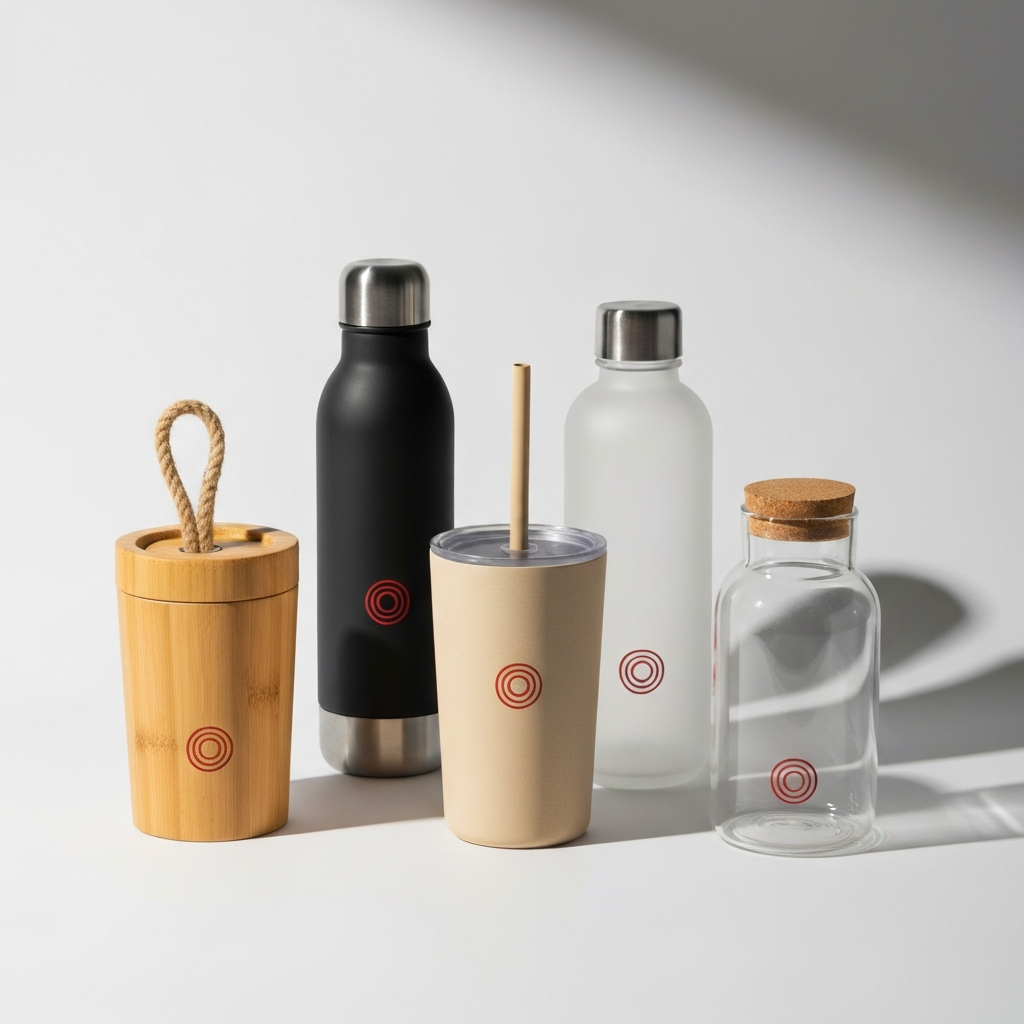
Promotional drink bottles have been the top corporate giveaway in Australia for the past five years, and demand shows no sign of slowing. In 2026, handing out a plastic bottle with your logo is no longer enough. Corporate buyers, procurement teams, and sustainability managers are asking harder questions: What's this made of? Is it recyclable? Does your supply chain offset its emissions?
This guide answers all of those questions. By the end, you'll know exactly which eco-friendly promotional drinkware materials suit your brand, budget, and sustainability commitments, and how to order them confidently in Australia.
Why Businesses Are Switching to Eco-Friendly Promotional Drink Bottles
Three converging forces are driving the shift: employee expectations, client expectations, and corporate sustainability obligations.
Employee expectations: A 2025 survey by Workplace Insights Australia found that 71% of employees aged 25-45 prefer working for companies with visible sustainability commitments. Corporate gifting is one of the most visible expressions of those commitments, and a conventional plastic bottle sends exactly the wrong signal.
Client expectations: Clients that are listed companies with ESG reporting obligations increasingly require suppliers to demonstrate sustainability credentials through their procurement policies. Eco-branded merchandise serves as both a conversation starter and a compliance check-box.
Regulatory direction: Australia's National Packaging Targets and state-level single-use plastics bans are tightening. Choosing eco-friendly promotional products ahead of regulation is both responsible and commercially smart.
The result: eco-friendly promotional drink bottles are no longer a premium niche. They are the mainstream expectation for corporate gifting in 2026.
The 5 Most Popular Eco Materials for Branded Drink Bottles
Not all eco-friendly drink bottles are made equal.
1. Bamboo
Bamboo is one of the fastest-growing plants on Earth, with some species growing up to 90cm per day. It requires no pesticides, no irrigation, and minimal processing compared to conventional plastics or metals. Bamboo promotional drinkware typically features a bamboo outer shell combined with a food-grade stainless steel or silicone inner, making it safe for both hot and cold beverages.
Best for: Premium corporate gifts, wellness and health brands, events with a natural or artisanal aesthetic. The warm, textured finish of bamboo photographs beautifully and stands out in branded photography.
Print options: Laser engraving (produces a sharp, permanent contrast on bamboo), pad printing, or heat-transfer labelling.
Certifications to look for: FSC-certified bamboo sourcing; food-grade silicone; BPA-free inner.
Average price range: Mid to premium — AUD $8-$25 per unit depending on size and branding method, before quantity discounts.
🌿 Shop Bamboo Eco Drinkware from Chilli Promotions

2. Wheat Straw
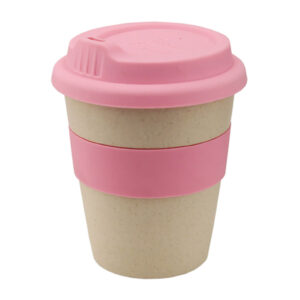
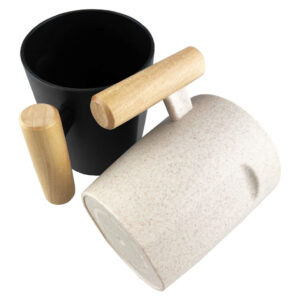
Wheat straw drinkware is made from the stalks left over after wheat is harvested — agricultural waste that would otherwise be burned or discarded. Mixed with a food-grade binder, it produces a lightweight, slightly matte material that looks and feels similar to conventional plastic but with a significantly reduced environmental footprint.
Best for: Conferences, trade shows, employee welcome kits, and campaigns where you need moderate volume at a lower price point than bamboo or stainless steel.
Print options: Screen printing (excellent colour reproduction), pad printing, full-colour digital print.
Important note: Wheat straw products are not dishwasher-safe at high temperatures. Recommend hand wash for longevity.
Average price range: Budget to mid — AUD $4-$12 per unit.
🌾 Shop Wheat Straw Eco Drinkware from Chilli Promotions


3. Sugarcane / Bagasse
Bagasse is the fibrous pulp remaining after sugarcane juice is extracted. It's 100% compostable under industrial composting conditions and is already widely used in food service packaging in Australia. As drinkware, sugarcane appears in two forms: fully compostable single-use cups and coated reusable tumblers with a food-grade lining that extends product life.
Best for: Events with on-site composting facilities; environmental organisations; campaigns where the "compostable" message is central to the brand story.
Key consideration: Verify the composting claims with your supplier. "Compostable" packaging requires industrial composting facilities. Home composting often doesn't reach the required temperatures.
Average price range: Budget to mid — AUD $3-$10 per unit.
🌿 Shop Plant-Based Eco Drinkware from Chilli Promotions
4. rPET (Recycled PET Plastic)
rPET is made from post-consumer recycled PET plastic, the same material used in standard single-use water bottles. Some premium rPET lines use ocean-recovered or ocean-bound plastic, which carries additional sustainability credentials. Producing rPET uses approximately 75% less energy than producing virgin PET.
Best for: High-volume campaigns where cost-per-unit matters; sporting events; situations where clarity and a "clean" look are important. rPET bottles have the same transparency and structural properties as conventional plastic.
Print options: Full-wrap digital print (excellent for colourful, detailed artwork), screen printing, pad printing.
Average price range: Budget to mid — AUD $3-$10 per unit.
♻ Shop rPET & Recycled Eco Drinkware from Chilli Promotions

5. Recycled Aluminium & Stainless Steel
Aluminium is infinitely recyclable without quality degradation, and producing recycled aluminium uses approximately 95% less energy than producing it from raw bauxite ore. Recycled aluminium and stainless steel promotional drink bottles deliver a premium, durable product with an excellent print surface for laser engraving or pad printing. They keep drinks hot for up to 12 hours and cold for 24.
Best for: Long-term gifting where durability matters; premium client gifts; sports and outdoor brands; high-end corporate events where the product will be used for years.
Average price range: Mid to premium — AUD $10-$30 per unit.
🔩 Shop Stainless Steel & Insulated Bottles from Chilli Promotions

How to Choose the Right Eco Drink Bottle for Your Brand
With five eco materials to choose from, the decision comes down to four factors: use case, quantity, budget, and sustainability story. Our full sustainable promotional products guide covers the broader selection framework if you're sourcing across multiple product categories.
| Use Case | Recommended Material | Why |
|---|---|---|
| Premium client gift (1-100 units) | Bamboo or recycled aluminium | Premium feel, long-lasting, strong brand impression |
| Staff onboarding kit | Stainless steel (insulated) | Daily use for years; highest brand exposure per dollar |
| Conference giveaway (500+ units) | Wheat straw or rPET | Cost-effective at volume; good print quality |
| Event with composting facilities | Sugarcane / bagasse | Compostable; strong sustainability messaging |
| Ocean plastic campaign / ESG highlight | Ocean-recovered rPET | Compelling story; measurable impact per unit |
| Outdoor / sporting event | Recycled aluminium or stainless steel | Durable; BPA-free; works for hot and cold |
If you're still not sure, our team can guide you through the selection based on your specific campaign goals. Request a free consultation.
What Does "Carbon-Neutral" Actually Mean for Promotional Products?
This is one of the most common questions we get, and it's a good one to ask. In the promotional products industry, "carbon-neutral," "carbon-offset," and "sustainable" are sometimes used interchangeably, and sometimes loosely.
- Carbon-offset: The carbon emissions generated in producing and shipping your products are calculated, and an equivalent amount of carbon is offset through a verified project (such as forest protection, renewable energy, or soil carbon sequestration). The product itself still generates emissions, but those emissions are counterbalanced.
- Carbon-neutral: Net zero carbon emissions, achieved through elimination or full offset. A carbon-neutral promotional product means the total lifecycle emissions have been balanced to zero.
- Net-zero: A longer-term commitment across an entire organisation's operations and supply chain, typically aligned with science-based targets.
At Chilli Promotions, every order is 100% carbon-offset. We partner with NoCO2 (Carbon Reduction Institute of Australia) to measure and offset emissions from manufacturing, packaging, and delivery through verified wind-power projects in China. This is included in the product price, with no greenwashing surcharges. Learn more about our carbon-offset program, or read the full explainer on what carbon-neutral actually means for a promotional product order.
MOQ, Lead Times & Branding Options for Australian Businesses
A practical summary of what to expect when ordering eco promotional drink bottles in Australia. For a full breakdown of how quantities affect pricing tiers, see our minimum order quantities explained guide.
Minimum Order Quantities (MOQ)
- Wheat straw, rPET, sugarcane: from 50 units
- Stainless steel and recycled aluminium: from 50 units
- Bamboo and glass: from 25-50 units (product dependent)
- Custom manufactured products: from 500 units (longer lead time)
Lead Times
- Standard: 15-20 business days from artwork approval
- Rush: 7-10 business days (subject to availability; surcharge may apply)
- Blank stock (no branding): 3-5 business days
Branding Methods
- Laser engraving: Permanent, premium result. Best on stainless steel, aluminium, and bamboo.
- Screen printing: Cost-effective for 1-6 solid colours. Best on wheat straw, rPET, and hard plastics.
- Full-colour digital print: For complex artwork, gradients, or photographic images. Available on select products.
- Embossing / debossing: Tactile, premium finish. Available on leather-wrapped and silicone-wrapped bottles.
- Pad printing: Versatile; suits most materials; cost-effective for 1-4 colours.
All orders include free artwork setup, a digital proof before production, and a satisfaction guarantee. Read our full guide to branding methods →
"The promotional products have been successful in engaging Aboriginal and Torres Strait Islander young people. Due to the demand, we were forced to do another order."— Elisabeth Tuckey, Head of Corporate Affairs, Headspace National Office
