Walk through any promotional products catalogue in 2026 and you'll see the terms everywhere: "carbon-neutral," "carbon-offset," "net-zero," "sustainable," "eco-certified." But what do these terms actually mean when applied to a branded drink bottle or a corporate gift? And how do you tell the difference between a genuine commitment and greenwashing?
Procurement managers, sustainability officers, and marketing teams across Australia ask us this regularly. The honest answer: it depends entirely on the supplier and what they can verify.
Carbon-Neutral vs Carbon-Offset vs Net-Zero: What's the Difference?
These three terms are often used interchangeably, but they have distinct meanings:
Carbon-Offset
A carbon-offset claim means that the greenhouse gas emissions generated by producing, packaging, or shipping a product have been counterbalanced by an equivalent reduction in emissions elsewhere, typically through a verified carbon offset project. The product itself still generates emissions; those emissions are balanced by the offset purchase.
Think of it like this: if manufacturing your branded drink bottles generates 10 tonnes of CO2, the supplier purchases 10 tonnes of verified carbon offsets (for example, by funding a forest protection project that prevents 10 tonnes of CO2 from being released). The net result on paper is zero, but the emissions still happened.
Carbon-Neutral
Carbon-neutral is a step further than carbon-offset. A carbon-neutral claim means the net carbon emissions associated with the product (or company) are zero, either because emissions have been reduced to zero through operational changes, or because all remaining emissions are fully offset. In practice, most "carbon-neutral" claims for products rely primarily on offsets, with some degree of emissions reduction in the supply chain.
Net-Zero
Net-zero is typically an organisational commitment rather than a product-level claim. It involves reducing carbon emissions across an entire business's operations (Scope 1, 2, and 3) to as close to zero as possible, with any remaining residual emissions offset through high-quality carbon removal projects. This is a longer-term strategic commitment, usually aligned with science-based targets.
The Practical Difference for Buyers
As a corporate buyer of promotional products, the most important question is not which term a supplier uses. Ask what they can verify. Specifically, ask for:
- The methodology used to calculate the carbon footprint of your order
- The name of the offset standard or certifying body (Gold Standard, VCS/Verra, ACCUs)
- A certificate or project reference number you can verify independently
Any supplier making carbon-neutral or carbon-offset claims who cannot provide these details is making an unverifiable, and potentially misleading, claim.
How Carbon Offsetting Works for Promotional Products
For a promotional product order to be carbon-offset in a verifiable way, the supplier needs to complete three steps:
- Measure the emissions: Calculate the carbon footprint of manufacturing, packaging, and shipping the specific products in your order. This should be based on actual supply chain data, not industry averages alone.
- Purchase verified offsets: Buy an equivalent number of verified carbon offset credits from a recognised offset standard. Each credit represents one tonne of CO2 equivalent (tCO2e) reduced or removed from the atmosphere.
- Retire the offsets: Formally retire the offset credits so they can't be resold or reused. Retirement is recorded on a public registry — this is the step that makes the offset verifiable.
If a supplier skips step 3 (retirement), the offsets may have been double-counted or resold, making the claim meaningless. Always ask for the retirement certificate or registry reference.
What to Look for in a Supplier's Sustainability Claims
These questions apply whether you're sourcing branded eco drink bottles, apparel, or any other eco promotional products.
Green Flags ✅
- Named offset standard (Gold Standard, VCS, ACCUs, or equivalent)
- Certificate or serial number you can look up on a public registry
- Scope 3 emissions included (not just manufacturing, but also shipping and packaging)
- Third-party verification of the carbon calculation methodology
- Product-level carbon footprint data (not just a company-level pledge)
- Transparency about what's not covered (end-of-life disposal, consumer use phase)
Red Flags ❌
- "Carbon-neutral" claim with no named offset standard or certificate
- "We plant a tree with every order" — tree planting is not a carbon offset unless independently verified for growth and long-term survival
- Offsets purchased from unrecognised programs without international verification
- No transparency about the carbon calculation methodology
- "Eco-friendly" used as a synonym for "made from natural materials" without any emissions accounting
- Claims that only cover one part of the supply chain (e.g., "our factory is carbon-neutral" but shipping is not addressed)
For a practical checklist to assess any supplier's eco credentials before ordering, see our sustainable promotional products guide, which covers greenwashing red flags across all product types.
How Chilli Promotions Approaches Carbon Offsetting
We want to be straightforward about what we do and don't do, because trust in this space requires transparency. This applies across our full range, from eco corporate gifts to drinkware and branded merchandise.
Every order placed with Chilli Promotions is 100% carbon-offset. In practice, that means:
- We calculate the carbon emissions associated with manufacturing, packaging, and shipping each order, covering Scope 1 and Scope 3 emissions relevant to the product lifecycle.
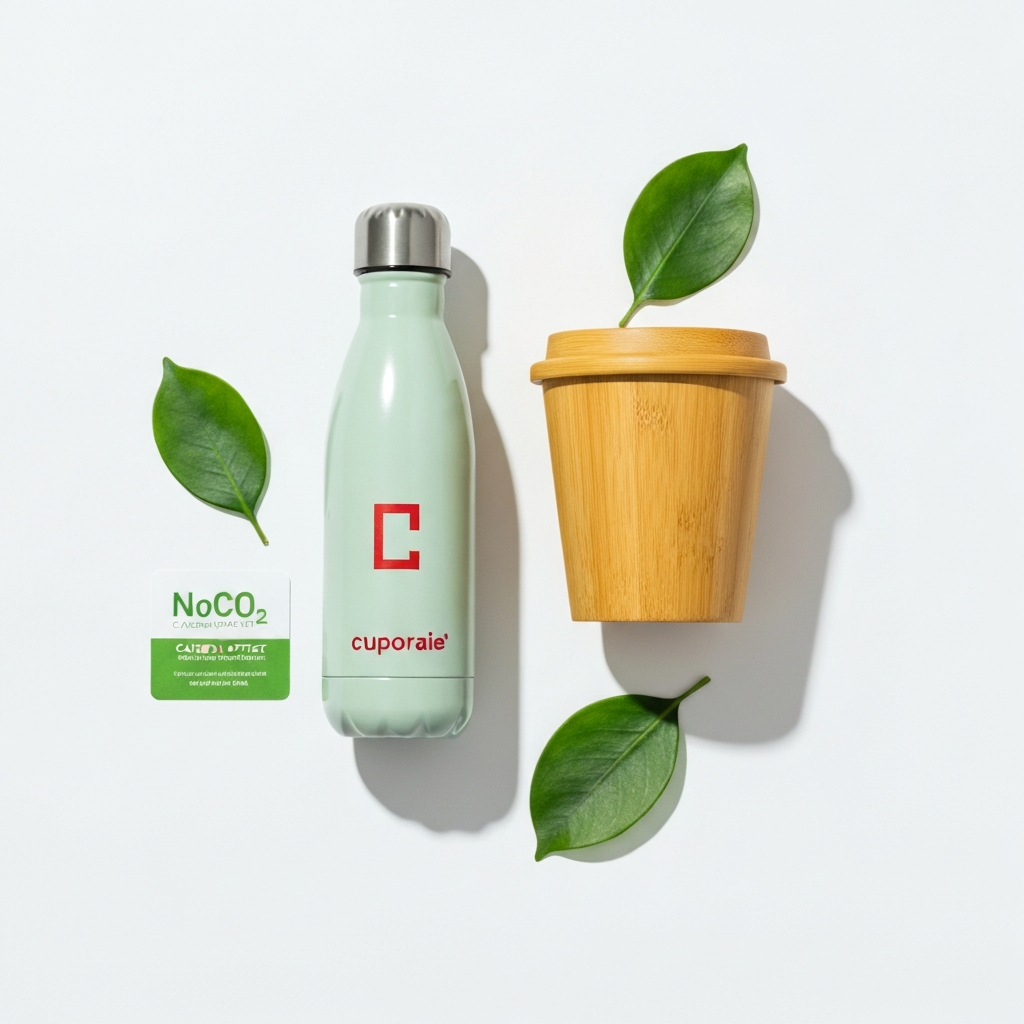
- We purchase verified carbon offset credits through NoCO2 (Carbon Reduction Institute of Australia).
- The offsets are retired on the relevant public registry, meaning they cannot be resold or reused.
- This is included in the price of every product we sell. There is no "sustainability surcharge."
We are working to publish our full offset methodology and project details on our carbon offset program page, including the named offset standard and project reference numbers so you can verify independently. If you need this information now for procurement purposes, contact our team and we'll share it directly.
We also want to be clear about what we don't claim: we don't claim that our products are "net-zero" across their full lifecycle (including how recipients use and dispose of them). That would require data we don't have. What we do claim, and can verify, is that the emissions we're responsible for as a supplier are fully offset.
"The capability of the range to also be carbon offset aligns well with the VRC commitment to sustainability."— Tim Howell, Club Loyalty Executive, Victorian Racing Club
Does It Matter Which Offset Standard?
Yes, significantly. Not all carbon offset standards are equal. A quick guide to the most relevant standards for Australian buyers:
Gold Standard
Widely regarded as the highest-quality offset standard. Gold Standard offsets go through rigorous independent verification and must demonstrate additional social and environmental co-benefits beyond carbon. Projects include renewable energy, clean cookstoves, and forest protection in developing countries.
VCS (Verra / Verified Carbon Standard)
The world's most widely used voluntary carbon standard. VCS projects are independently verified and issued as Verified Carbon Units (VCUs) on the Verra Registry. It covers a wide range of project types including forestry, agriculture, and industrial emissions reduction.
ACCUs (Australian Carbon Credit Units)
Australia's domestic offset unit, issued by the Clean Energy Regulator under the Emissions Reduction Fund. ACCUs support Australian land-sector projects including avoided deforestation, savanna burning management, and soil carbon. If supporting Australian projects is important to your ESG reporting, ACCUs are worth specifying.
Lower-Quality or Unverified Offsets
Some suppliers purchase offsets from programs that lack rigorous third-party verification or that have been criticised for weak additionality claims. If a supplier can't name a specific standard, treat the claim with scepticism.
Frequently Asked Questions
🌿 Shop Carbon-Offset Eco Promotional Products from Chilli Promotions