TL;DR:
- Merchandise is a powerful marketing tool that extends brand presence through tangible items with high long-term recall. It outperforms digital ads by delivering active engagement, repeated exposure, and a strong return on investment. Properly designed merchandise aligns with brand values and fits into recipients’ daily routines to maximize impact.
Merchandise is defined as any physical branded item used to extend a brand’s presence beyond digital channels, creating tangible touchpoints that drive awareness, loyalty, and measurable return. The role of merchandise in marketing has shifted decisively from afterthought to performance channel. 47% of marketers now consider branded merchandise a core marketing channel, with average returns ranging from $1 to $8 per dollar spent. Apparel and drinkware consistently lead on ROI. Physical items work because they occupy space in a recipient’s daily life, delivering repeated brand exposure that no digital ad can replicate.
How does merchandise build long-term brand visibility and recall?
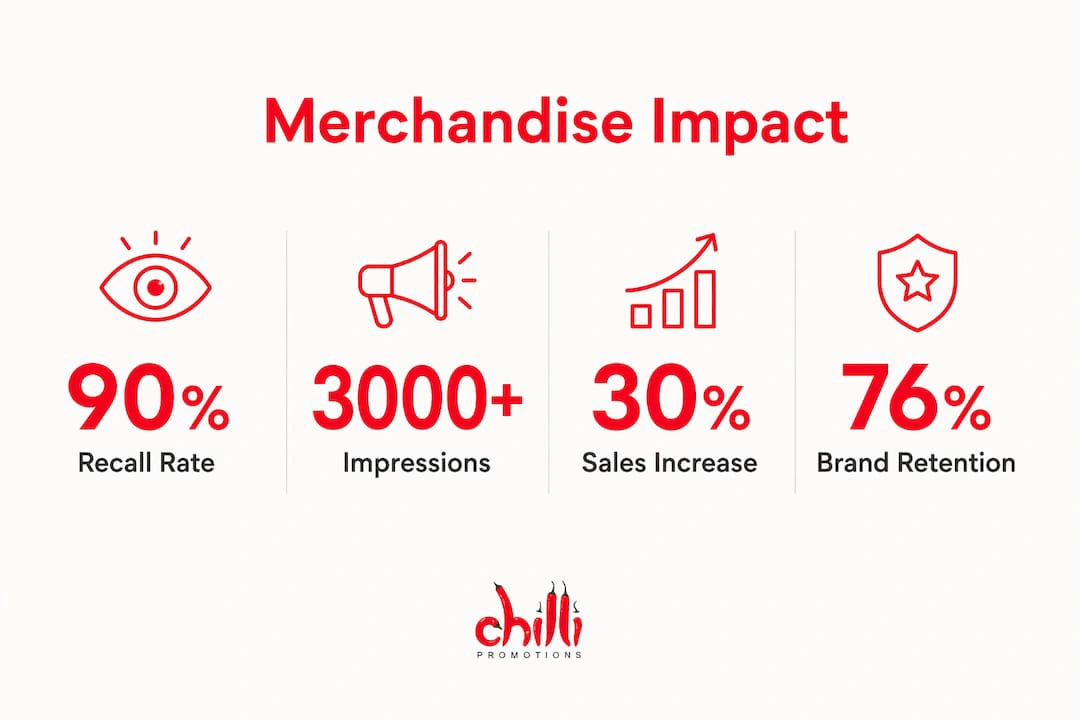
Branded merchandise outperforms digital advertising on one critical metric: sustained attention. 90% of recipients remember the brand name on a promotional product, and 76.2% retain the brand message for over two years. No display ad achieves that retention window.
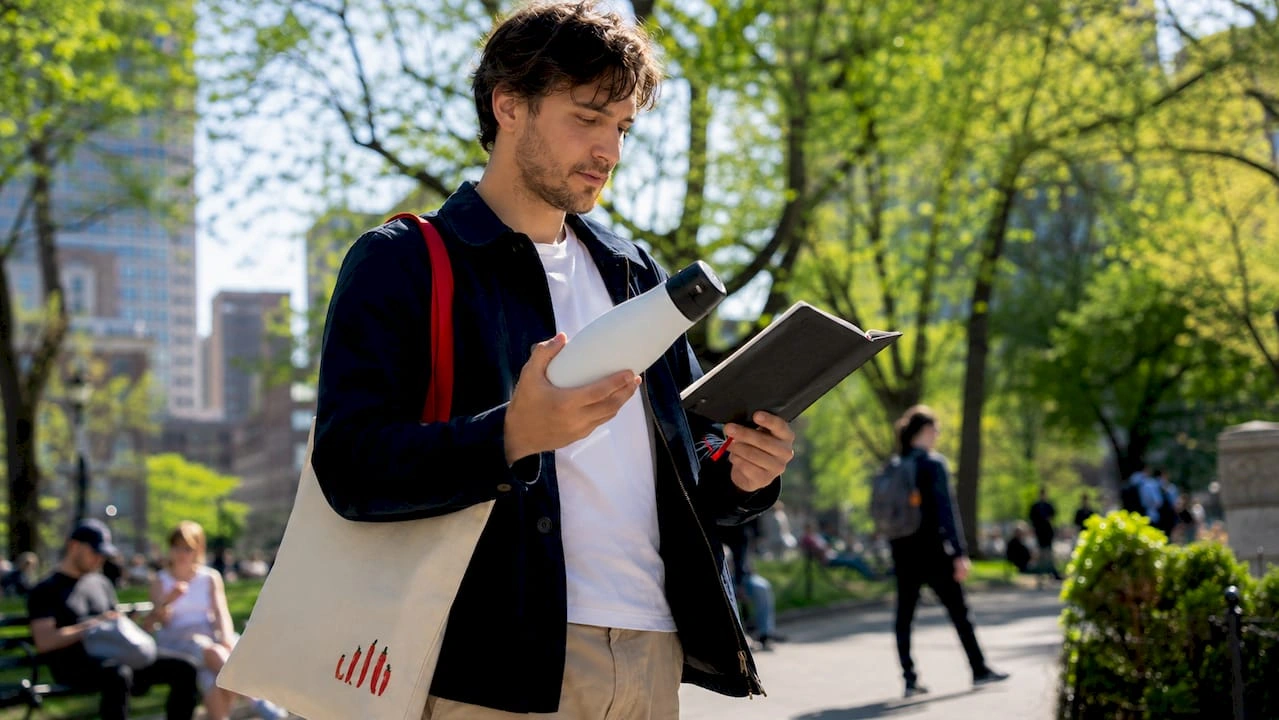
The cost-per-impression advantage is equally compelling. Branded bags alone generate over 3,000 impressions each, producing a cost-per-impression measured in fractions of a cent. Compare that to paid social or programmatic display, where costs per thousand impressions regularly run into dollars, and the economics of merchandise become hard to ignore.
Physical items also work through environmental repetition. A branded water bottle on a desk, a tote bag on a commute, or a quality pen in a meeting room all deliver passive brand exposure every time they are used. That repetition builds familiarity, and familiarity builds trust. Digital ads interrupt; merchandise integrates.
| Metric | Branded merchandise | Digital display advertising |
|---|---|---|
| Brand recall rate | 90% of recipients | Typically under 20% |
| Message retention | Over 2 years (76.2%) | Hours to days |
| Cost per impression | Fractions of a cent | Dollars per thousand |
| Attention quality | Active, physical use | Passive, easily ignored |
Pro Tip: Choose merchandise that fits naturally into the recipient’s daily routine. A product used every day delivers far more impressions than a novelty item that ends up in a drawer.
What role does merchandise play in customer engagement and loyalty?
Merchandise deepens customer relationships at every stage of the lifecycle, from acquisition through to retention. A physical gift signals investment in the relationship in a way that an email or digital voucher simply does not. That signal matters, particularly in high-trust sectors like financial services.
73% of financial service buyers purchase promotional items routinely, and some fintech firms report a 30% increase in new accounts following merchandise campaigns. Those numbers reflect a broader truth: branded items build trust and credibility before a conversation even starts. In a bank branch or at a financial event, a well-chosen piece of merchandise reinforces the institution’s professionalism and care.
The role of merchandise in banking events and client engagement programmes is particularly strong when items are chosen for utility. Merchandise that recipients actually use keeps the brand visible long after the event ends. Generic pens get discarded; a quality notebook or a premium travel mug stays in circulation for months.
The merchandise types that consistently perform best for customer engagement include:
- Drinkware (insulated bottles, branded mugs): high daily use, strong visibility
- Apparel (polo shirts, caps, jackets): worn publicly, extending brand reach beyond the recipient
- Tech accessories (charging cables, power banks): high perceived value, long product life
- Notebooks and stationery: used in professional settings, reinforcing brand credibility
- Tote bags and carry items: generate thousands of impressions per item in public spaces
Pro Tip: For key account gifting, pair a premium item with a personalised note. The combination of physical quality and personal acknowledgement creates a memorable experience that generic merchandise alone cannot achieve.
How is merchandise used in employee engagement and brand culture?
Merchandise is one of the most underused tools in internal marketing. Providing branded apparel early in onboarding boosts new hire confidence and sense of belonging from day one. That effect is particularly pronounced in sectors like banking, where professional presentation and institutional identity carry real weight.
The role of merchandise in bank recruitment extends well beyond the uniform. A curated welcome kit transforms administrative onboarding into a personal experience. Unboxing branded items reinforces a new employee’s decision to join, signals that the organisation invests in its people, and sets a cultural tone before the first team meeting. That emotional engagement reduces early attrition and accelerates cultural integration.
For banks and financial institutions specifically, branded merchandise also plays a visible role in branch experience. Staff wearing consistent, quality-branded apparel project professionalism and reinforce the institution’s identity to every customer who walks through the door. The role of merch in bank branch experience is therefore both internal and external simultaneously.
A structured approach to employee merchandise produces the best results:
- Define the purpose first. Decide whether the merchandise serves onboarding, recognition, team culture, or public-facing brand identity before selecting items.
- Prioritise quality over quantity. One well-made branded jacket creates more pride and longer wear than five cheap promotional items.
- Align items with your brand values. A bank with sustainability commitments should choose certified, recycled-content products. Misalignment between brand values and merchandise choices undermines credibility.
- Create a curated unboxing experience. Packaging, sequencing, and a personal message transform a box of items into a meaningful moment.
- Measure uptake and wear rates. Ask new hires whether they use and wear their welcome kit items. That feedback directly informs future merchandise decisions.
What are best practices for designing effective merchandise campaigns?
Effective merchandise campaigns treat product selection as a design exercise, not a procurement task. Merchandise programmes succeed when utility and brand alignment drive every decision. The question is never “what is cheapest?” but “what will this person actually use, and does it reflect our brand?”
A two-tier gifting strategy separates daily driver items for broad distribution from premium gifts reserved for key clients and top-tier staff. Daily drivers, such as branded pens, notebooks, or tote bags, maximise reach at lower cost. Premium gifts, such as quality drinkware sets, leather accessories, or tech items, deepen relationships with the contacts who matter most. Allocating budget across both tiers produces better overall results than spending everything on one category.
Physical branded items earn attention that digital channels cannot buy. That attention is highest when merchandise aligns with the recipient’s lifestyle. A fitness brand gifting a quality water bottle lands perfectly. A financial services firm gifting a premium notebook at a client event signals professionalism and care. Mismatched merchandise, regardless of quality, signals that the sender did not think carefully about the recipient.
| Merchandise category | Best strategic use | Key selection criteria |
|---|---|---|
| Apparel | Onboarding, events, branch staff | Quality fabric, accurate sizing, brand colour match |
| Drinkware | Client gifts, loyalty programmes, events | Insulation quality, logo placement, durability |
| Tech accessories | High-value client gifts, recruitment | Functionality, perceived value, brand alignment |
| Stationery | Trade shows, banking events, onboarding | Paper quality, cover finish, practical size |
| Tote bags and carry items | Mass distribution, events, campaigns | Material quality, print durability, capacity |
Working with a specialist partner, rather than a generic print supplier, makes a measurable difference in campaign outcomes. Collaborating with designers who understand brand authenticity produces merchandise that recipients keep and use, rather than discard.
Pro Tip: Before finalising your merchandise selection, ask one question: “Would I use this myself?” If the honest answer is no, choose something else. Recipients make the same judgement instantly.
Key takeaways
Merchandise delivers sustained brand exposure and measurable ROI when treated as a performance channel rather than a giveaway programme.
| Point | Details |
|---|---|
| Merchandise outperforms digital on recall | 90% of recipients remember the brand name, with retention lasting over two years. |
| ROI is measurable and strong | Average returns range from $1 to $8 per dollar spent, with apparel and drinkware leading. |
| Employee merchandise builds culture | Branded welcome kits reduce early attrition and accelerate cultural integration from day one. |
| Two-tier gifting maximises budget | Separate daily driver items from premium gifts to balance reach and relationship depth. |
| Utility drives campaign success | Merchandise aligned with recipient lifestyle earns active attention and long-term brand visibility. |
The shift we’ve seen in how merchandise is actually used
From the Chilli Promotions team’s perspective, the most significant change in merchandise marketing over the past decade is not the products themselves. It is the mindset behind them.
For years, branded merchandise was treated as a line item at the bottom of an event budget. Boxes of pens ordered at the last minute. Branded stress balls that nobody wanted. The thinking was “we need something to give away,” not “we need something that works.” That approach produced forgettable results, and it gave merchandise an undeserved reputation as a low-value tactic.
What we see now, working with clients across Australia and New Zealand, is a genuine shift toward merchandise as a deliberate brand investment. The marketers getting the best results are the ones who brief merchandise the same way they brief a campaign creative. They define the audience, the occasion, the message, and the desired outcome before they select a single product. That discipline produces merchandise that recipients actually value and use.
The mistake we still see most often is choosing merchandise based on price per unit rather than value per impression. A $3 item that gets thrown away on day one has a cost-per-impression of infinity. A $15 item that someone uses daily for two years is one of the most cost-effective media placements in your entire marketing mix. The importance of merchandise marketing lies precisely in that long-term, physical presence that no digital channel can replicate.
The brands doing this well, including several financial institutions we work with, treat merchandise as part of their brand architecture. Every item reflects their values, their quality standards, and their commitment to the people they serve. That consistency is what turns a promotional product into a genuine brand asset.
— Chilli Promotions Team
Branded merchandise solutions from Chilli Promotions
Chilli Promotions has worked with Australian and New Zealand businesses since 2001, developing merchandise programmes that deliver real brand impact rather than generic giveaways.
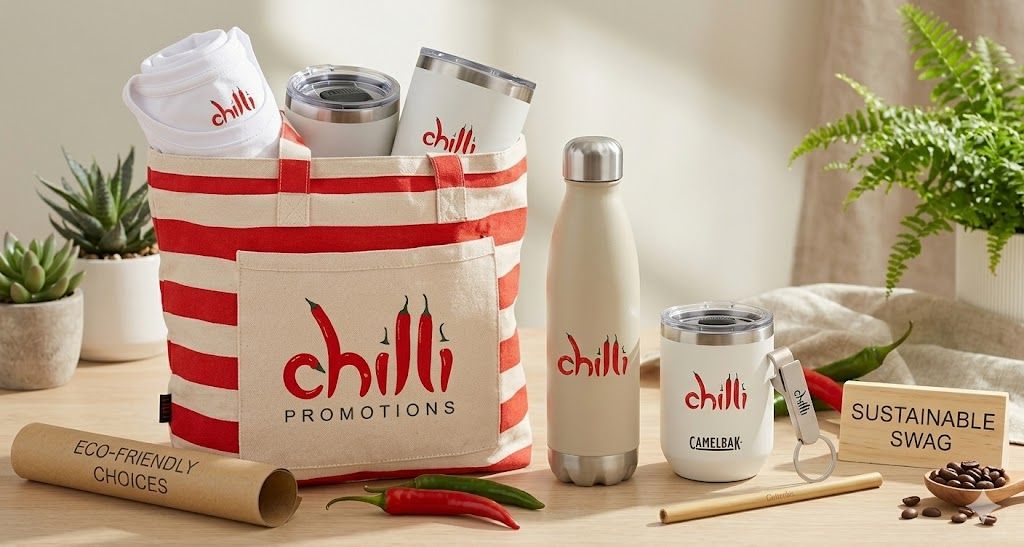
Whether you need corporate giveaway products for a campaign, a curated employee onboarding kit for new starters, or a full merchandise strategy for a banking event or recruitment drive, Chilli Promotions brings design expertise and category knowledge to every brief. The team works as a partner in your brand direction, not just a supplier filling an order. Every product is selected and designed to make a difference, create awareness, and leave a lasting impression on the people who receive it.
FAQ
What is the role of merchandise in marketing?
Merchandise functions as a physical marketing channel that builds brand visibility, drives customer engagement, and delivers sustained brand recall. Unlike digital advertising, branded items remain in a recipient’s environment for months or years, generating repeated impressions at a fraction of the cost.
How does merchandise compare to digital advertising for brand recall?
Branded merchandise achieves a 90% brand name recall rate among recipients, with 76.2% retaining the brand message for over two years. Digital display advertising typically delivers recall rates well below 20%, making merchandise significantly more effective for long-term brand memory.
What is the role of merchandise in bank marketing and recruitment?
In banking, merchandise builds client trust, reinforces branch professionalism, and supports recruitment by creating memorable candidate experiences. Some fintech firms report a 30% increase in new accounts after merchandise campaigns, and branded apparel in onboarding kits strengthens new hire confidence and cultural belonging.
What merchandise types deliver the best return on investment?
Apparel and drinkware consistently deliver the strongest ROI within branded merchandise programmes. Branded bags generate over 3,000 impressions each, and items used daily in public spaces extend brand reach well beyond the original recipient.
How should a business measure merchandise campaign effectiveness?
Track cost-per-impression by dividing total merchandise spend by estimated total impressions over the product’s lifespan. Supplement this with recipient surveys on usage rates, and monitor downstream metrics such as new account sign-ups, event engagement, or employee retention following merchandise-led campaigns.