TL;DR:
- Sustainable banking merchandise, when verified with proper certifications and supply chain transparency, enhances brand reputation and trust. It drives measurable customer advocacy and improves tender success by fulfilling regulatory and ESG requirements. Businesses that focus on durability and evidence-backed claims gain a competitive advantage while reducing environmental impact.
Sustainable banking merchandise is defined as branded promotional products chosen specifically to meet environmental, social, and governance (ESG) standards while reinforcing a financial institution’s or corporate brand’s values. For Australian businesses, why sustainable banking merchandise matters goes well beyond optics. Intentional, design-led merchandise drives 77% purchase intent, 81% brand recall, and 84% advocacy among Australian and New Zealand consumers. Those numbers make a clear case: the right product, chosen for the right reasons, does measurable work for your brand.
Why does sustainable merchandise boost brand reputation in banking?
Brand reputation in banking is built on trust, and merchandise is a physical expression of that trust. Consumers assess brand integrity based on the quality and sustainability of the items they receive. Well-chosen sustainable items boost advocacy, whereas tokenistic ones create scepticism. A recycled-content notebook with a certified carbon-neutral supply chain tells a very different story than a cheap plastic pen with a green logo printed on it.

The shift from tokenism to intentionality is the defining change in merchandise strategy right now. Businesses that treat sustainability as a core design brief, rather than an afterthought, see stronger results across every metric. 66% of recipients transition to digital engagement after receiving a physical item. That means a well-designed sustainable product does not just sit on a desk. It actively drives people online, deepening the brand relationship beyond the initial touchpoint.
Understanding brand recognition is central to this conversation. Merchandise that aligns authentically with brand values produces stronger recall than generic giveaways, because it gives recipients a reason to connect the product with a specific set of beliefs. For banking and financial services brands, those beliefs increasingly centre on environmental responsibility and ethical conduct.
- Choose certified materials. Products carrying ISO 14001, EcoVadis Silver, or NoCO2 documentation signal verified environmental credentials, not just marketing claims.
- Prioritise durability over novelty. Items designed to last years outperform disposable giveaways on both environmental impact and brand recall.
- Align product choice with brand positioning. A bank promoting green home loans should not hand out single-use plastic merchandise at events.
- Use packaging as part of the story. Sustainable packaging choices reinforce the product’s environmental credentials and extend the brand narrative.
Pro Tip: Before finalising any merchandise order, ask your supplier for specific sustainability certifications in writing. “Eco-friendly” without documentation is a marketing claim, not a credential.
What compliance and regulatory considerations affect sustainable banking merchandise in Australia?
Australian businesses face a tightening regulatory environment around sustainability claims, and merchandise is not exempt. The Australian Competition and Consumer Commission (ACCC) and the Australian Securities and Investments Commission (ASIC) both enforce standards under Australian Consumer Law. Greenwashing carries legal and reputational risks that are real and growing. Broad terms like “eco-friendly” without documented evidence risk penalties, not just bad press.
Mandatory climate disclosures are reshaping supply chain expectations at speed. Businesses must now provide supply chain emissions data as part of compliance frameworks affecting procurement decisions. Scope 3 emissions from suppliers are critical data points. If your merchandise supplier cannot provide that data, you risk onboarding delays and contract losses with enterprise and government clients.
The Australian Packaging Covenant Organisation (APCO) National Packaging Targets and the NSW EPA Plastics Plan set clear expectations for recyclability and recycled content in packaging. These are not aspirational targets. They are criteria that appear in tender documents and supplier evaluations. Businesses that cannot demonstrate compliance are filtered out early in procurement processes.
Here is what your compliance checklist for sustainable banking merchandise should cover:
- Documented certifications. Require ISO 14001, FSC, or equivalent certifications from every supplier, not just verbal assurances.
- Specific, evidence-based claims. Replace “sustainable” with “made from 80% post-consumer recycled content” or “carbon-neutral certified via NoCO2.”
- Supply chain transparency. Obtain audited supply chain data, including Scope 3 emissions, to support your own mandatory climate disclosures.
- Packaging compliance. Verify that all packaging meets APCO National Packaging Targets for recyclability and recycled content percentages.
- Greenwashing audit. Review all marketing copy referencing merchandise sustainability against ACCC guidelines before publication.
Pro Tip: Run your sustainability claims past your legal team before they appear on any tender response or marketing material. ACCC enforcement actions have targeted vague language specifically, and the cost of a penalty far exceeds the cost of a legal review.
What practical steps can businesses take to integrate sustainability into their merchandise programmes?
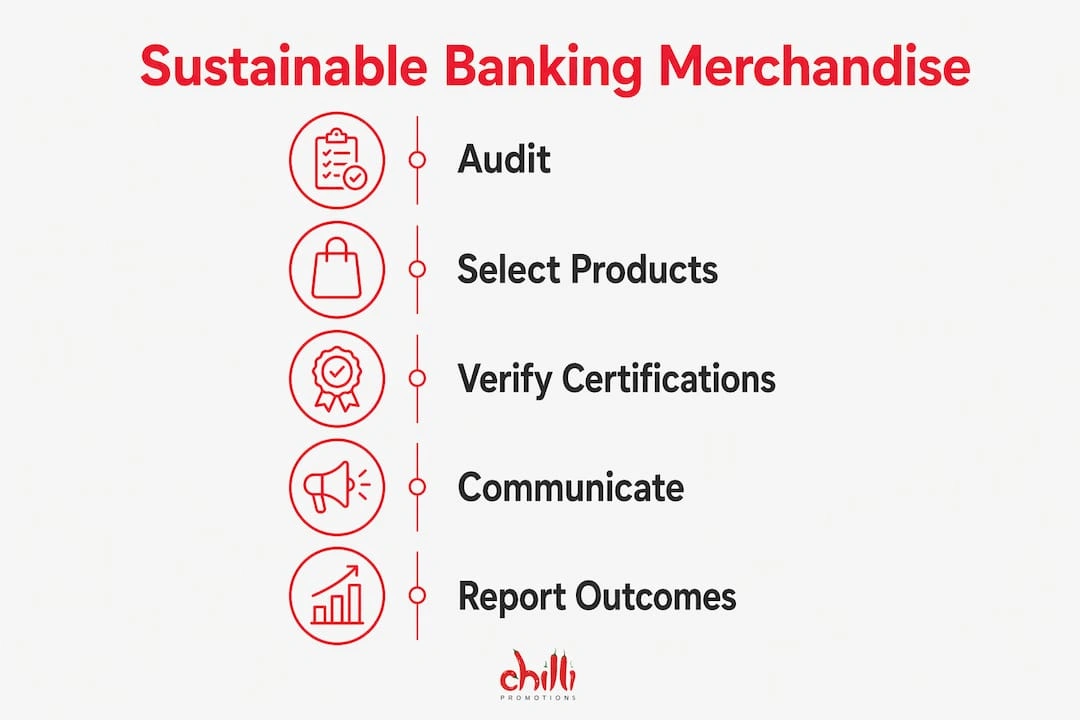
Integrating sustainability into your merchandise programme starts with an honest audit of what you currently use. Review every product in your current catalogue for recyclability, recycled content percentage, durability, and end-of-life disposal options. Disposable or novelty items fail to meet modern sustainability expectations and can actively harm brand perception. Replace them with products designed for the circular economy: items that last, can be repaired, and can be recycled or composted at end of life.
Supplier engagement is the next critical step. Your merchandise is only as sustainable as your supply chain. Ask suppliers directly for their EcoVadis ratings, ISO 14001 certifications, and carbon reporting processes. Suppliers who cannot answer those questions clearly are not ready to support your ESG commitments. The eco-friendly promotional products guide from Chilli Promotions outlines what to look for when evaluating supplier credentials in the Australian market.
Training your marketing and procurement teams matters more than most businesses realise. The person ordering merchandise needs to understand why a plant-based pen costs more than a standard one, and why that cost is justified by compliance and brand value. Without that understanding, sustainability criteria get dropped the moment budget pressure appears.
- ♻ Audit current stock. Identify products that cannot be recycled or that contain virgin plastics, and phase them out on a set timeline.
- Set minimum standards. Require all new merchandise to contain a minimum percentage of recycled or plant-based content.
- Design for circularity. Choose products and packaging that can re-enter a material stream at end of life, not landfill.
- Monitor regulatory updates. Subscribe to APCO, ACCC, and ASIC updates so your standards stay current as regulations tighten.
- Document everything. Keep certification records, supplier audits, and emissions data in a central file ready for tender submissions.
How does sustainable merchandise create competitive advantage in Australian tenders?
Sustainability is now a core requirement in tenders across Australia. Government and enterprise procurement teams embed sustainability criteria directly into evaluation scorecards. Businesses that cannot demonstrate credible credentials are at a competitive disadvantage before the first page of their tender is read. Packaging recyclability, recycled content percentages, carbon reporting, and ethical sourcing are increasingly decisive criteria for winning work.
The financial case is equally clear. SMEs involved in eco-efficiency programmes reported average annual savings over $80,000, 20% greater productivity, and a collective reduction of 30,000 tonnes of CO2 emissions. Sustainability is not a cost centre. It is a performance driver that reduces operational risk and strengthens your position in competitive bids.
Measurable outcomes are what separate credible sustainability programmes from marketing exercises. Tender evaluators want to see waste reduction figures, carbon emissions data, and third-party verified certifications. Case studies that show before-and-after results carry more weight than general statements about commitment to the environment. The role of merchandise in marketing extends directly into procurement success when you can quantify the environmental impact of your choices.
| Tender criterion | What evaluators look for |
|---|---|
| Packaging recyclability | APCO-aligned targets, percentage of recyclable materials stated |
| Recycled content | Verified percentage of post-consumer recycled material per product |
| Carbon reporting | Scope 3 emissions data from audited supply chains |
| Ethical sourcing | Supplier certifications such as ISO 14001 or EcoVadis ratings |
| Greenwashing risk | Specific, documented claims with no vague language |
Transparent, verifiable reporting is what maintains long-term client relationships after you win the contract. Clients who embed sustainability criteria in their procurement will audit their suppliers on an ongoing basis. Businesses that build reporting systems now will retain those contracts. Businesses that rely on vague commitments will lose them.
Key takeaways
Sustainable banking merchandise is a measurable business asset, not a branding exercise, and Australian businesses that treat it as such will outperform those that do not in tenders, brand recall, and customer advocacy.
| Point | Details |
|---|---|
| Merchandise drives measurable outcomes | Intentional sustainable merchandise produces 77% purchase intent and 84% advocacy among Australian consumers. |
| Greenwashing carries legal risk | ACCC and ASIC enforce Australian Consumer Law; vague claims without documentation risk penalties. |
| Compliance shapes procurement success | APCO targets and mandatory climate disclosures are now active criteria in government and enterprise tenders. |
| Circularity beats novelty | Durable, recyclable products outperform disposable giveaways on both environmental impact and brand recall. |
| Transparency builds lasting partnerships | Audited supply chain data and third-party certifications are what retain clients after the initial contract is won. |
The uncomfortable truth about sustainable merchandise in banking
After working with Australian businesses across banking, finance, and corporate sectors for over two decades, the pattern is clear: most organisations still treat sustainable merchandise as a communications decision rather than a procurement one. They ask “does this look sustainable?” instead of “can we prove it is sustainable?” That distinction is where reputations are won and lost.
The businesses that get this right do something counterintuitive. They reduce their merchandise range rather than expand it. They choose fewer products, chosen with more rigour, backed by certifications and supply chain data. A single plant-based, carbon-neutral pen with full NoCO2 documentation does more for your ESG credentials than a bag full of items labelled “eco” without evidence.
The greenwashing crackdown from ACCC and ASIC has made radical transparency the only safe position. Documented evidence of sustainability credentials is not optional. It is the floor. Businesses that act early, build their supplier documentation now, and communicate with specificity will hold a genuine advantage as regulatory scrutiny increases through 2026 and beyond. The ones that wait will spend more time and money catching up than they would have spent getting it right from the start.
— Chilli Promotions Team
Sustainable banking merchandise solutions from Chilli Promotions
Chilli Promotions has supported Australian businesses with verified, eco-friendly corporate gifts and promotional products since 2001. The focus has always been on products that make a genuine difference, not just ones that look the part.
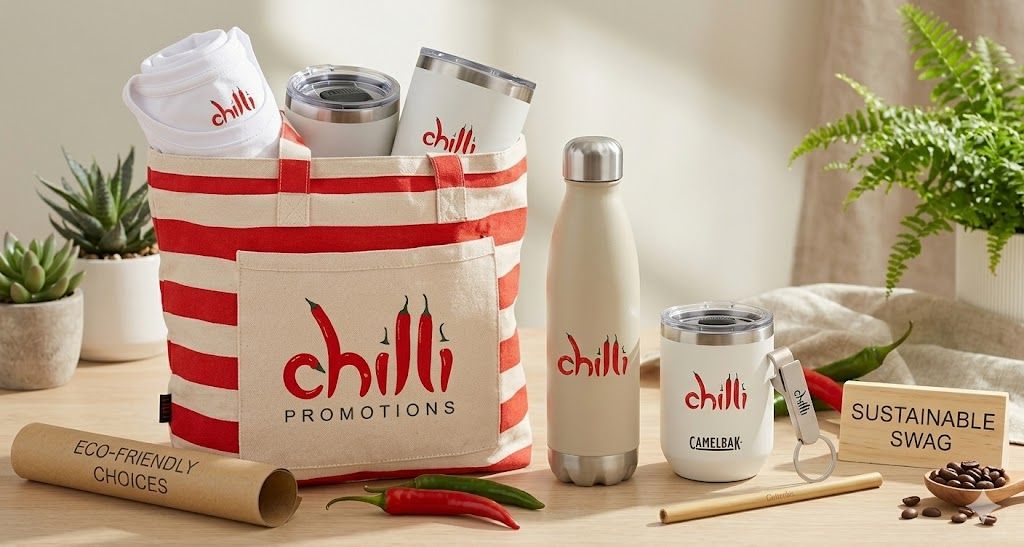
For banking and financial services clients, that means merchandise backed by certifications, audited supply chains, and clear emissions data. Whether you are preparing a tender response, building a CSR merchandise programme, or replacing legacy stock with circular economy alternatives, Chilli Promotions works as a partner in your process, not just a supplier. Explore the corporate giveaway range to find products that meet both your brand standards and your sustainability obligations. Get in touch with the team to discuss your specific compliance requirements and ESG objectives.
FAQ
What is sustainable banking merchandise?
Sustainable banking merchandise refers to branded promotional products selected to meet verified environmental and ethical standards, including recycled content, certified supply chains, and carbon reporting. It supports a financial brand’s ESG commitments through physical touchpoints.
Why does greenwashing matter for merchandise choices?
ACCC and ASIC enforce Australian Consumer Law against vague sustainability claims. Using terms like “eco-friendly” without documented evidence risks legal penalties and reputational damage, making specific, certified claims the only safe approach.
How does sustainable merchandise affect tender outcomes in Australia?
Government and enterprise tenders now score suppliers on packaging recyclability, recycled content, carbon reporting, and ethical sourcing. Businesses without credible sustainability credentials are eliminated from consideration before evaluation begins.
What certifications should I look for in a merchandise supplier?
Look for ISO 14001, EcoVadis Silver ratings, FSC certification for paper-based products, and NoCO2 documentation for carbon-neutral claims. These are verifiable, third-party standards that hold up under ACCC scrutiny.
How does sustainable merchandise support brand recall?
Design-led sustainable merchandise achieves 81% brand recall among Australian and New Zealand consumers. Products that align authentically with brand values outperform generic giveaways because recipients associate the item with a specific, credible set of beliefs.