TL;DR:
- Most EV buyers decide on their preferred brand before visiting a dealership, making early merchandise exposure critical. Distributing high-utility, eco-friendly products during the consideration phase creates stronger brand impressions and improves ROI compared to point-of-sale giveaways. Aligning merchandise with buyer values and timing enhances brand recognition and credibility in the competitive EV market.
An effective EV brand awareness merchandise strategy is defined as the planned use of branded, high-utility promotional products to build recognition and loyalty throughout the electric vehicle buyer’s consideration phase. This matters more than most EV marketers realise. 50% of Australian EV buyers decide on their preferred brand before they ever visit a dealership. That single fact reshapes where your merchandise budget should go. High-utility branded items placed early in the consideration phase generate repeated impressions over months, far outperforming a brochure handed over at the point of sale.
How does the EV buyer decision process shape merchandise strategy?
The EV purchase decision is largely settled before a buyer walks into a showroom. Only 5% of buyers are meaningfully influenced at the point of sale. That means the vast majority of brand preference is formed during the weeks and months of online research, peer conversations, and community engagement that precede any dealership contact.

This has a direct consequence for your electric vehicle marketing strategy. Merchandise deployed at the consideration phase, not the conversion phase, carries the real weight. A branded item sitting on a buyer’s desk during their research period keeps your name present every single day. A showroom giveaway handed over after the decision is already made does almost nothing for brand recall.
The Australian EV market is undergoing a structural reset where traditional advertising overserves the final purchase phase. Marketers who shift spend toward earlier touchpoints gain a significant advantage. Merchandise is one of the few channels that physically occupies a buyer’s daily environment during that critical window.
The practical implication for your planning is clear:
- Map your buyer’s consideration timeline. Identify the 60–90 day window before a typical purchase decision and plan merchandise distribution to land within it.
- Prioritise community and event channels. EV owner communities, charging network events, and sustainability expos are high-value distribution points during the consideration phase.
- Avoid over-investing in dealership giveaways. Point-of-sale merchandise serves relationship reinforcement, not brand building. Keep that budget proportionate.
- Align merchandise with the research moment. Items that accompany test drive bookings, online enquiry confirmations, or EV education events reach buyers at exactly the right time.
The 2026 EV buyer prioritises range, price value, and premium interior feel over technology innovation alone. Your merchandise needs to reflect that premium sensibility. Cheap, generic items signal the wrong brand values to a buyer who expects quality.
What merchandise types maximise brand impressions for EV brands?
High-utility merchandise items provide hundreds of brand exposures over months, delivering stronger return on investment than cheaper, disposable giveaways. The logic is straightforward: an item a buyer uses every day generates daily impressions. An item that ends up in a bin generates none.
For EV brands, the product categories that perform best share two qualities. They are genuinely useful in daily life, and they align with the values of an environmentally conscious buyer. The following categories consistently deliver on both counts:
- Insulated drinkware. Reusable drink bottles and travel mugs made from recycled stainless steel or plant-based materials sit on desks and in car cup holders. They generate impressions at home, at work, and on the road.
- Tote bags and backpacks. Bags made from recycled PET or organic cotton carry your brand into public spaces. They are particularly effective for EV buyers who already identify with sustainable lifestyle choices.
- Tech accessories. Wireless chargers, USB hubs, and cable organisers align naturally with the tech-forward identity of EV ownership. They also have long product lifespans, extending the impression window.
- Notebooks and journals. Premium branded notebooks made from recycled or FSC-certified materials appeal to the considered, research-oriented EV buyer profile.
Eco-friendly promotional products are no longer niche in Australian procurement. Government organisations actively require sustainable items, and corporate buyers expect them. For EV brands, this alignment is not optional. It is a credibility signal.
46% of consumers hold a more favourable view of a brand when they receive eco-friendly promotional products. That figure represents a direct lift in brand sentiment from a single merchandise decision. Choosing recycled content, bamboo, or certified organic materials is not just an ethical choice. It is a measurable marketing advantage.
Pro Tip: Avoid the temptation to order large volumes of low-cost items to stretch your budget. A single premium branded item generates more positive brand sentiment than large quantities of cheap throwaway items. Spend more per unit, distribute fewer, and choose recipients deliberately.
How to integrate merchandise into a broader EV marketing strategy
Merchandise for EV awareness works best when it is part of a planned, multi-touchpoint campaign rather than a standalone giveaway. The goal is to keep your brand present throughout the buyer’s consideration journey, not just at one moment.
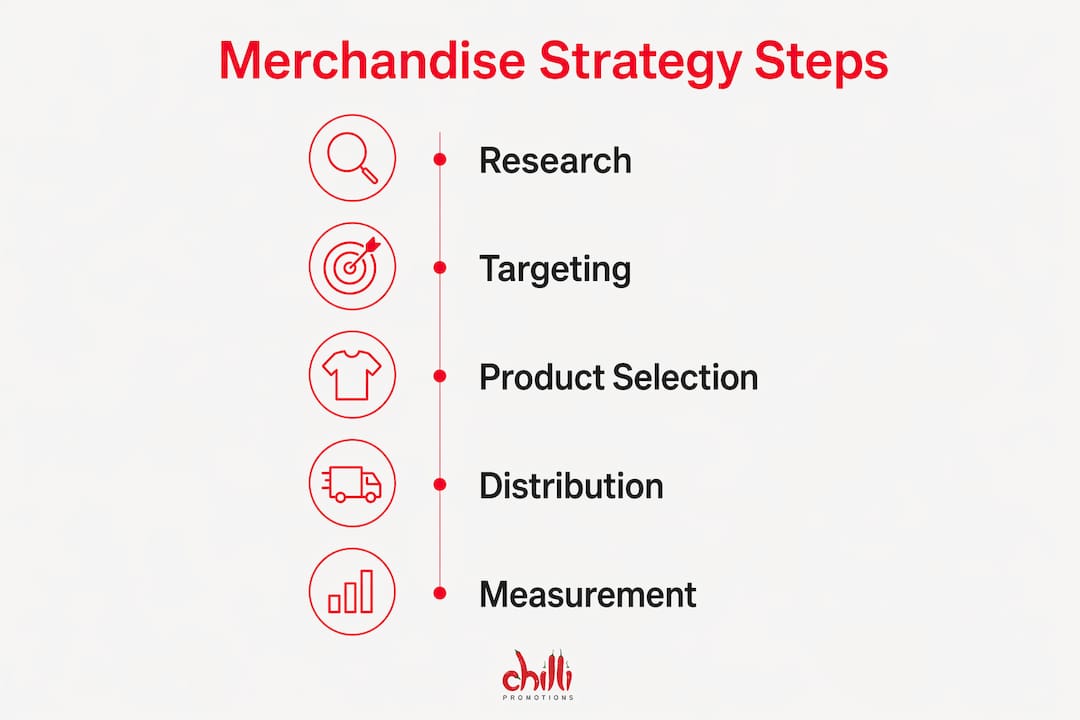
Step-by-step campaign integration
- Audit your current customer touchpoints. List every moment a prospective buyer interacts with your brand: digital ads, email sequences, events, test drive bookings, and community channels. Identify where merchandise can reinforce the message.
- Assign merchandise to specific touchpoints. Match product categories to moments. A premium notebook suits an EV education seminar. A reusable drink bottle suits a community charging event. A tech accessory suits a test drive confirmation pack.
- Combine merchandise with educational content. Pair a branded item with a QR code linking to a range calculator, a charging map, or an ownership guide. The item earns attention; the content builds conviction.
- Time campaigns to launches and milestones. Strategically timed merchandise distribution aligned with model launches, charging network expansions, or government incentive announcements significantly increases campaign effectiveness.
- Use first-party data to personalise distribution. Segment your database by buyer stage, vehicle interest, or geography. Send merchandise that reflects where each prospect is in their decision process.
- Measure and adjust. Track redemption rates on QR codes, event attendance uplift, and post-campaign brand recall surveys. Adjust product selection and timing based on what the data shows.
The table below outlines how to match merchandise categories to campaign stages:
| Campaign stage | Recommended merchandise category | Primary objective |
|---|---|---|
| Awareness | Eco tote bags, branded notebooks | Broad impression generation |
| Consideration | Insulated drinkware, tech accessories | Daily brand presence during research |
| Intent | Premium gift sets, charging accessories | Reinforce premium brand perception |
| Post-purchase | Branded apparel, lifestyle accessories | Build loyalty and advocacy |
Promotional products deliver a very low cost-per-impression compared to digital and broadcast media. A single quality item can generate thousands of impressions over its lifespan. That efficiency makes merchandise one of the highest-value channels available to EV marketers working with fixed budgets.
Pro Tip: Pair your merchandise programme with a consideration-phase digital strategy to create consistent brand exposure across both physical and digital environments. The combination compounds recall far more effectively than either channel alone.
Common pitfalls in EV merchandise campaigns and how to avoid them
Most EV merchandise programmes underperform for predictable reasons. Recognising these patterns early saves budget and protects brand perception.
- Concentrating spend at the point of sale. Focusing marketing spend on the final 5% of the purchase funnel misses 95% of the brand decision influence that happens earlier. Dealership giveaways feel generous but arrive too late to shape preference.
- Distributing cheap, generic items. A low-quality pen or a thin plastic bag communicates the opposite of what an EV brand stands for. Buyers notice. Items that are not kept generate zero ongoing impressions. ROI on merchandise is maximised when items become part of daily routines, not when they are discarded.
- Ignoring sustainability requirements. EV buyers are among the most environmentally conscious consumer segments in Australia. Distributing non-sustainable merchandise to this audience creates a credibility gap. Bamboo, recycled PET, and organic cotton are the baseline expectation, not a premium add-on.
- Skipping strategic timing. Merchandise distributed without reference to the buyer’s decision timeline or campaign milestones loses most of its impact. Timing is as important as product selection.
- Neglecting data. Distributing merchandise without tracking who received it, when, and what action followed makes it impossible to improve. Even basic redemption tracking on a QR code provides usable data.
Marketers should audit their promotional mix to phase out low-impact, low-utility giveaway items and replace them with high-value products that elevate brand perception within the EV consideration journey. That audit is the most productive first step for any team reviewing their branding for EV products.
Key takeaways
A successful EV brand awareness merchandise strategy requires high-utility, eco-friendly products deployed early in the buyer’s consideration phase, not at the point of sale.
| Point | Details |
|---|---|
| Deploy merchandise early | 50% of EV buyers decide on brand before visiting a dealership, so early-funnel placement is critical. |
| Choose high-utility products | Items used daily generate repeated impressions and deliver stronger ROI than disposable giveaways. |
| Prioritise sustainability | 46% of consumers view a brand more favourably after receiving eco-friendly promotional products. |
| Time distribution deliberately | Aligning merchandise with launches, events, and buyer milestones significantly increases campaign effectiveness. |
| Measure and refine | Track redemption and recall data after each campaign to improve product selection and timing. |
Our perspective on EV merchandise strategy
Working with brands across Australia since 2001, the Chilli Promotions team has watched the EV sector mature from a niche curiosity into a mainstream purchase category. The shift has been fast, and the marketing habits have not always kept pace.
The most common mistake we see is treating merchandise as a dealership tool. Brands spend on branded items that arrive at the showroom after the buyer has already committed. That is not brand building. It is gift wrapping a decision that was already made somewhere else.
The EV buyer is doing their research at home, at charging stations, at community events, and in online forums. That is where your brand needs to be present. A quality insulated bottle on their desk during six weeks of research does more for brand recall than a branded keyring handed over at signing.
We also see brands underestimate the credibility signal that sustainable merchandise sends to this specific audience. EV buyers are not a random cross-section of the population. They have made a deliberate, values-driven purchase decision. Handing them a product made from virgin plastic is a mismatch that registers, even if the buyer does not articulate it.
Quality and alignment matter more than volume in this category. Choose fewer items, choose them well, and place them where the decision is actually being made.
— Chilli Promotions Team
How Chilli Promotions supports your EV merchandise programme
Chilli Promotions has been helping Australian brands build presence through quality promotional products for over two decades. For EV marketers, that means access to a curated range of high-utility, eco-friendly promotional products that align with the values and expectations of the 2026 EV buyer.
Whether you are planning a model launch, a community charging event, or a sustained consideration-phase campaign, Chilli Promotions works as a strategic partner, not just a supplier. The team helps you select products that reflect your brand’s premium positioning, match your sustainability commitments, and reach buyers at the moments that matter. Browse the top corporate giveaway picks to find merchandise that earns its place in a buyer’s daily routine, or explore the full promotional products catalogue to build a campaign mix that works across every stage of the EV buyer journey.
FAQ
What is an EV brand awareness merchandise strategy?
An EV brand awareness merchandise strategy is the planned use of branded promotional products to build recognition and preference during the electric vehicle buyer’s consideration phase. It focuses on high-utility, eco-aligned items distributed before the point of sale.
When should EV brands distribute merchandise?
Merchandise should be distributed during the 60–90 day consideration window before a typical purchase decision. Events, test drive bookings, and online enquiry confirmations are high-value distribution moments.
What merchandise types work best for EV brands?
Insulated drinkware, tote bags made from recycled materials, tech accessories, and premium notebooks perform best. These items are used daily, generate repeated brand impressions, and align with the sustainability values of EV buyers.
Why does sustainability matter in EV promotional products?
46% of consumers view a brand more favourably after receiving eco-friendly promotional products. For EV buyers, who are among Australia’s most environmentally conscious consumers, non-sustainable merchandise creates a credibility gap that undermines brand perception.
How do you measure the ROI of EV merchandise campaigns?
Track QR code redemption rates on items, monitor brand recall through post-campaign surveys, and measure event attendance uplift when merchandise is distributed. Pairing physical merchandise with digital marketing funnels also creates trackable engagement data across channels.