TL;DR:
- Effective car dealership promotional merchandise relies on selecting durable, high-value items and organizing displays into zones that guide customer flow. Staff roles should be clearly assigned to optimize visitor engagement and lead conversion, supported by early planning of technology and signage. Measuring engagement, lead capture, and sales helps refine setups, with long-term brand assets outperforming cheap giveaways.
Car dealership promotional merchandise setup is the strategic arrangement and deployment of branded items to boost customer engagement, brand visibility, and sales impact at showrooms and events. Done well, it turns a standard dealership visit into a memorable brand experience. Done poorly, it wastes budget on items that sit in a corner and collect dust. The difference lies in planning: selecting the right products, designing the right display environment, training your staff, and measuring what works. This guide covers each step with the specificity that marketing managers and promotional coordinators actually need.
What does an effective car dealership promotional merchandise setup require?
A successful car dealership promotional merchandise setup treats every branded item as a deliberate tool, not a filler gift. The industry term for this approach is brand activation, which refers to the coordinated use of merchandise, display design, staff interaction, and technology to create a measurable customer response. Activation thinking separates dealerships that generate leads from those that generate foot traffic with nothing to show for it.
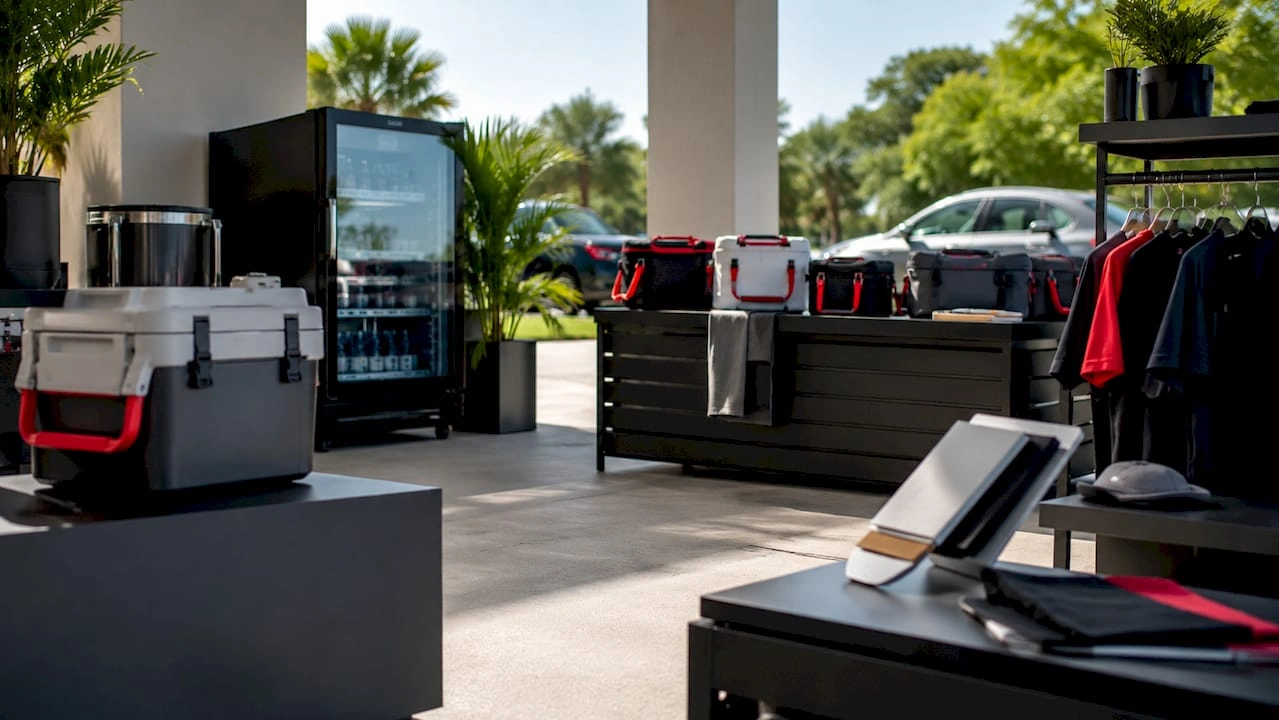
The product mix matters enormously. High-value, durable items outperform cheap giveaways by a significant margin. A branded bar fridge lasts 5–10 years and creates repeated brand impressions in a customer’s home or garage. That is a fundamentally different return on investment compared with a pen that runs out in a week. Automotive corporate gifting specialists like Chilli Promotions recommend anchoring your merchandise range around one or two premium conversation pieces, then supporting them with everyday branded items.
Your setup checklist should cover these categories:
- Premium merchandise: branded bar fridges, insulated coolers, leather goods, and quality apparel
- Everyday dealership branding items: pens, notepads, keyrings, tote bags, and microfibre cloths
- Digital and tech elements: interactive kiosks, touchscreen displays, and QR-linked product catalogues
- Signage and display materials: pull-up banners, branded tablecloths, and OEM-compliant digital screens
- Lead capture tools: entry forms, tablet stands, and branded prize draws
OEM digital signage compliance is mandatory across dealer networks in Australia. Brightness levels, colour profiles, and screen dimensions must all meet manufacturer standards. Ignoring this risks both brand inconsistency and formal non-compliance with your franchise agreement.
Pro Tip: Brief your merchandise supplier on your OEM brand guidelines before placing any order. Chilli Promotions, for example, works directly with dealership marketing teams to match product colours, logos, and finishes to manufacturer specifications.
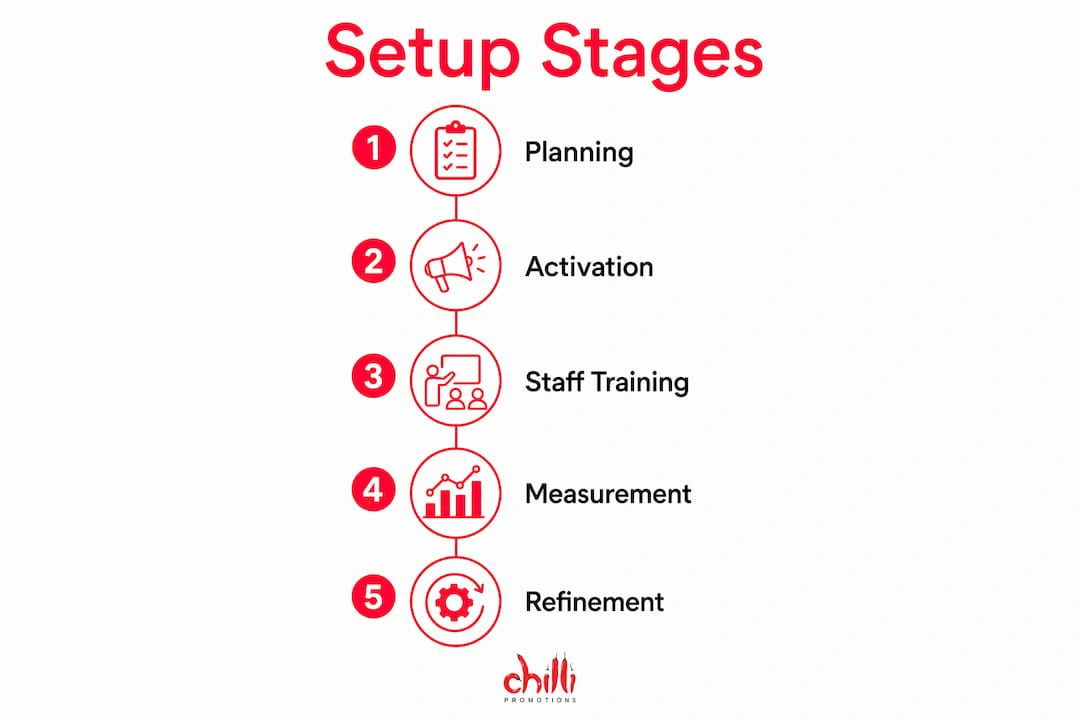
How do you plan and execute the physical setup?
Physical setup planning starts with visitor flow, not product placement. Map how customers move through your showroom or event space before you decide where anything goes. The goal is to place merchandise at natural pause points, not in spots that feel forced or block pathways.
A proven zoning model divides your space into four areas:
- Attraction zone: the entry point where bold signage, a premium display item, or a digital screen draws attention and signals that something worth stopping for is happening
- Engagement zone: the area where customers interact with merchandise, try products, or explore interactive displays; this is where dwell time and lead capture happen
- Conversion zone: a quieter space with seating, a consultant, and branded materials where a sales conversation can begin naturally
- Support zone: the back-of-house area for stock, staff briefings, and replenishment so the front of your setup always looks full and professional
Integrated activations outperform static displays with 28% higher engagement and 19% increased lead capture. That gap exists because integrated setups guide customers through a deliberate experience rather than leaving them to wander. The zoning model above is the physical expression of that logic.
Interactive elements are the single biggest lever for extending time on site. Interactive digital elements can extend average visitor dwell from 45 seconds to over 90 seconds at exhibitions. Doubling dwell time means doubling the window for a meaningful conversation. Place touchscreen product configurators, video walls, or IoT-enabled displays in your engagement zone for maximum effect.
Brand activations must be integrated from early stand design to combine visitor flow, interaction logic, and lead capture effectively. Late planning reduces your options and forces compromises that hurt results. Lock in your display layout, merchandise selection, and technology requirements at least six weeks before any major event.
Pro Tip: Walk your planned setup yourself before opening day. Stand at the entry point and follow the natural sightlines. If you cannot see your engagement zone from the door, neither can your customers.
What staff training and role assignments maximise merchandise impact?
Staff are the most underused asset in any dealership merchandise setup. The physical display creates the opportunity. Your team converts it. Without clear role assignments and prepared conversation starters, even the best merchandise layout underperforms.
Separating attraction, qualification, and closing roles optimises visitor flow and engagement. Assign each team member a specific function rather than asking everyone to do everything. Here is how those roles break down in practice:
- Attract role: positioned near the entry or attraction zone; greets visitors, offers a branded item, and directs them toward the engagement zone with a single open question
- Qualify role: stationed in the engagement zone; asks discovery questions while demonstrating merchandise or interactive displays; identifies purchase intent and hands warm leads to the closing role
- Close/book role: seated in the conversion zone; focuses entirely on test drive bookings, finance enquiries, or service appointments; never leaves this zone during peak periods
Scripted prompts are not about sounding robotic. They are about giving staff a reliable starting point so they spend less mental energy on what to say and more on reading the customer. A simple prompt like, “This is one of our most popular items. What brings you in today?” opens a natural conversation while drawing attention to the merchandise.
Managing busy periods requires a queue logic plan. When your conversion zone is occupied, your qualify role keeps waiting customers engaged with merchandise demonstrations or digital content rather than letting them drift away. The role of merchandise in marketing extends beyond the giveaway itself. It gives staff a physical prop to anchor every conversation.
Pro Tip: Run a 20-minute role-play session with your full team the morning of any major event. Walk through the three roles, practise the scripted prompts, and agree on the handover signal between qualify and close. This single habit removes most of the awkward gaps that lose leads.
How do you measure success and refine your setup over time?
Measurement turns a one-off activation into a repeatable system. Without tracking, you are guessing which merchandise items worked, which display zones performed, and whether the investment justified the cost.
The metrics that matter most for dealership merchandise setups fall into three categories:
| Metric category | What to track | Why it matters |
|---|---|---|
| Engagement | Dwell time per zone, merchandise items distributed | Shows which zones and products attract the most attention |
| Lead capture | Form completions, test drive bookings, QR code scans | Directly links merchandise setup to sales pipeline activity |
| Brand reach | Social media mentions, photo tags, post-event survey responses | Measures whether branded items are generating impressions beyond the event |
Sales data from the four weeks following an event provides the clearest ROI signal. Compare enquiry volumes, test drive rates, and conversion rates against your baseline. If a particular merchandise item generated high engagement but low conversion, the product may be attracting the wrong audience or your conversion zone needs adjustment.
Automotive marketing leaders balance short-term demand generation with long-term brand building for sustainable dealership growth. Apply the same thinking to merchandise. Some items, like branded keyrings or air fresheners, drive immediate recall. Others, like a quality insulated cooler or a bar fridge, build brand presence over years. Your setup should include both.
Digital signage compliance also requires ongoing review. OEM standards update periodically, and dealer networks need CMS configurations that allow central campaign control alongside local content flexibility. Reviewing your digital elements against current OEM guidelines every quarter prevents compliance gaps from accumulating. For a broader view of digital compliance management in automotive marketing, specialist resources can help you stay current with regulatory requirements.
Key takeaways
A car dealership promotional merchandise setup works best when merchandise selection, physical zoning, staff roles, and measurement all operate as a single coordinated system rather than separate tasks.
| Point | Details |
|---|---|
| Treat merchandise as brand assets | Choose durable, high-value items that create lasting impressions beyond the event itself. |
| Zone your display space deliberately | Divide your setup into attraction, engagement, conversion, and support zones to guide customer flow. |
| Assign staff roles clearly | Separate attract, qualify, and close functions so every visitor receives a consistent, purposeful experience. |
| Integrate technology early | Add interactive displays and digital signage during planning, not as an afterthought, to maximise dwell time. |
| Measure and adjust after every event | Track engagement, lead capture, and post-event sales data to refine your setup over time. |
What we have learned from years of dealership activations
After working with automotive clients across Australia and New Zealand since 2001, Chilli Promotions has seen one pattern repeat itself more than any other: dealerships that treat merchandise as an afterthought consistently underperform those that build it into their campaign planning from day one.
The most common mistake is selecting merchandise based on price per unit rather than impact per impression. A cheap branded pen costs less upfront but generates a fraction of the brand recall that a quality insulated cooler or a branded bar fridge delivers over its lifetime. The Pedders suspension campaign is a well-documented example of this principle in action. Their branded bar fridge became a long-term ambassador in customers’ garages, generating brand impressions for years after the initial promotion.
The second pattern we see consistently is underinvesting in staff preparation. Marketing managers spend weeks on merchandise selection and display design, then brief the team for ten minutes on the morning of the event. The physical setup can be excellent and still fail if the staff do not know their roles or how to start a conversation using the merchandise as a prop.
The third insight is one that surprises most clients: effective promotional merchandise requires viewing items as enduring brand assets, not disposable giveaways. That shift in perspective changes every decision downstream, from budget allocation to product selection to how you measure success. The dealerships that grow their brand consistently are the ones that think in years, not events.
— Chilli Promotions Team
Chilli Promotions and your dealership merchandise programme
Chilli Promotions has supported automotive clients across Australia and New Zealand with promotional products for dealers that go beyond the standard catalogue. From custom air fresheners and branded apparel to premium bar fridges and OEM-compliant display materials, the range covers every tier of a dealership’s merchandise needs.
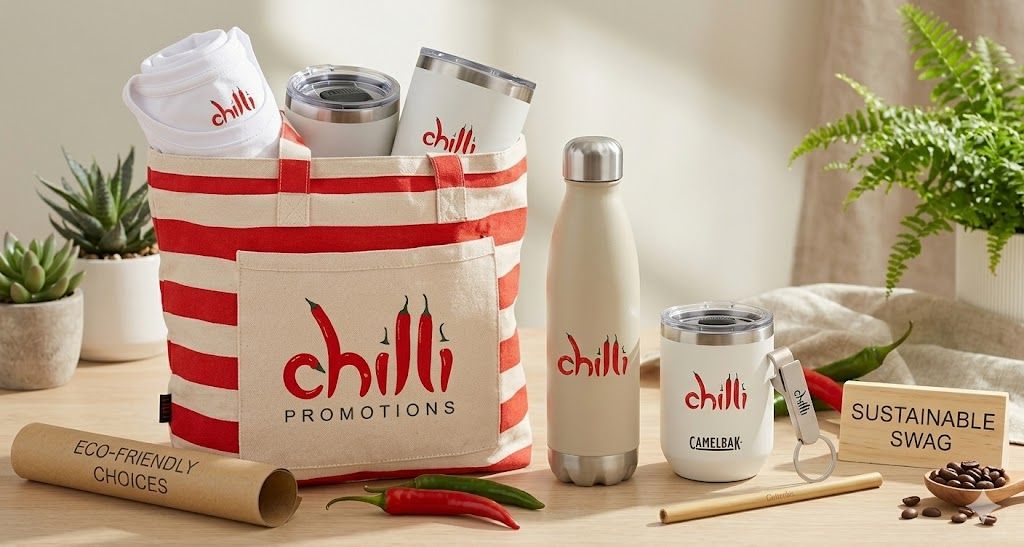
The team works directly with marketing managers and promotional coordinators to align product selection with campaign goals, brand guidelines, and budget. Whether you are setting up for a major model launch, a service centre promotion, or an ongoing showroom presence, Chilli Promotions provides the products and the planning support to make it count. Browse the top corporate giveaways curated for automotive and corporate clients, or get in touch to discuss a custom merchandise programme built around your dealership’s specific objectives.
FAQ
What is a car dealership promotional merchandise setup?
A car dealership promotional merchandise setup is the planned selection, display, and deployment of branded items at a showroom or event to increase customer engagement and support sales. It combines product choice, physical layout, staff interaction, and technology into a coordinated brand activation.
How many merchandise items should a dealership display at one time?
The number depends on your space and campaign goals, but quality outweighs quantity. One or two premium items as centrepieces, supported by a range of everyday branded products, performs better than a cluttered display of low-value giveaways.
What promotional products work best for car dealerships?
Durable, high-use items generate the most lasting brand impressions. Branded bar fridges, insulated coolers, quality apparel, and automotive accessories like microfibre cloths and air fresheners are consistently effective for automotive corporate gifting campaigns.
How do interactive displays improve merchandise setup results?
Interactive digital elements can extend average visitor dwell time from 45 seconds to over 90 seconds, which significantly increases the opportunity for staff to qualify leads and book test drives.
Do dealership promotional materials need to comply with OEM standards?
Yes. OEM compliance for digital signage and branded materials is mandatory across Australian dealer networks. Colour profiles, brightness levels, and logo usage must all meet manufacturer specifications to maintain brand consistency and franchise approval.