The ten best HR conference promotional product ideas are: branded keep cups and insulated bottles, custom tote bags, quality notebooks with pens, USB power banks, lanyards with cardholders, wireless earbuds or earphone cases, branded apparel (polos or caps), eco-friendly seed paper notepads, wellness kits, and premium VIP gift sets. These items work because they combine daily utility with long-term brand visibility — research from APPA shows a large majority of recipients recall the brand on a promotional item, and many recipients have told someone else about that brand. The practical rule: choose fewer items, make them genuinely useful, and order early. Standard lead times in Australia are typically 10–15 business days for standard items, so briefing a supplier like Chilli Promotions at least 6–8 weeks before your event date gives you room for sample approvals and decoration proofs without paying rush fees.
Pro Tip: Request physical samples before committing to a full order. Colour, weight, and finish rarely translate perfectly from a digital mock-up, and a sample approval step protects your brand from a costly misprint.
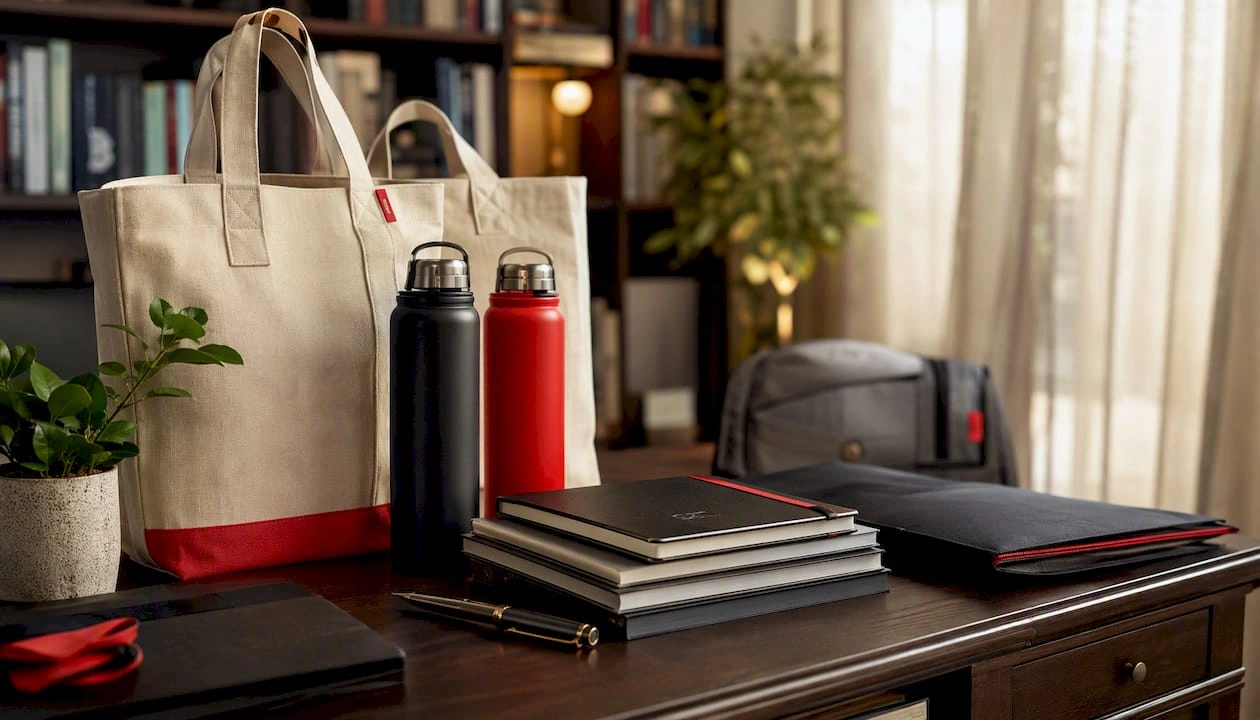
Table of Contents
- What are the best promotional product ideas for HR conferences?
- How do you choose the right items for your HR conference?
- What do Australian HR teams need to know about ordering logistics?
- What sustainable materials and certifications should you look for?
- How do you make conference swag memorable and drive engagement?
- Chilli Promotions: custom HR event merchandise across Australia
- Key takeaways
- Why quality beats quantity at HR conferences
- Useful sources and certifications to check
- FAQ
What are the best promotional product ideas for HR conferences?
The most effective HR event swag ideas fall into five clear use-case groups. Knowing which group each item belongs to makes shortlisting faster and keeps your budget honest.
Attendee essentials
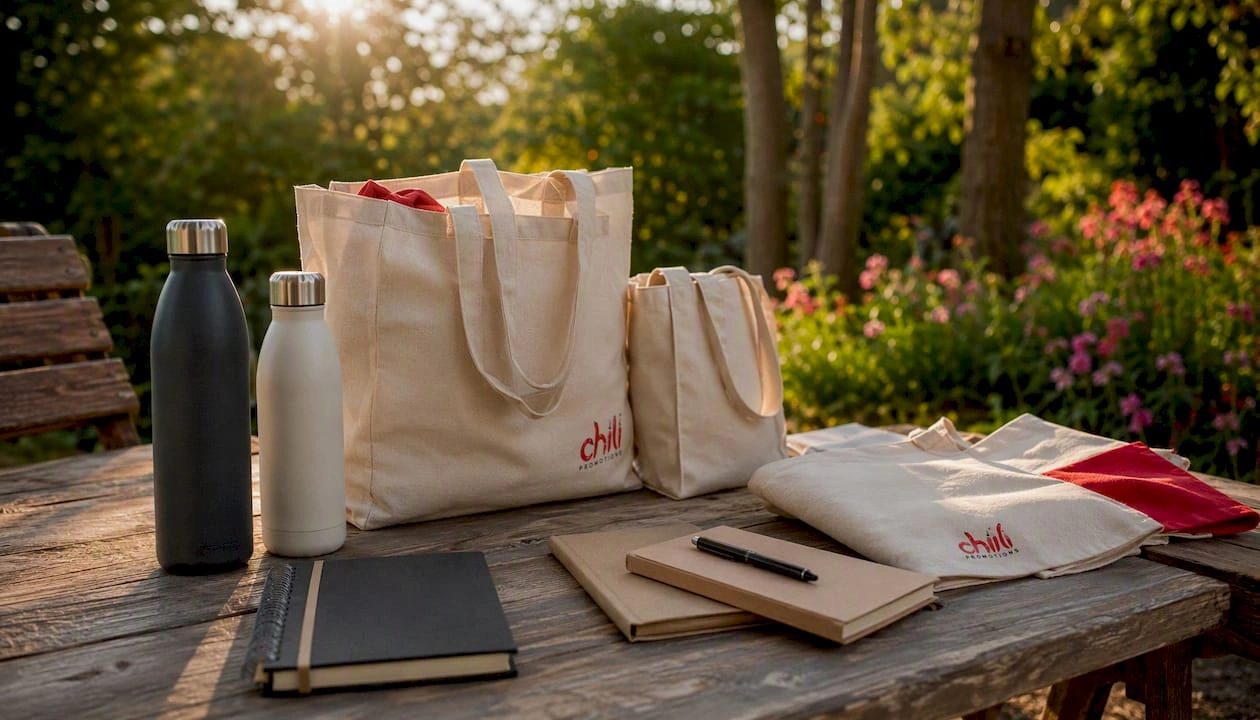
These are the items delegates reach for on day one and keep using long after the conference ends.
- Branded keep cups and insulated bottles | Mid to premium tier | Recycled stainless steel or RPET | Reusable drinkware generates thousands of brand impressions over its lifetime because it travels to cafés, offices, and gyms daily.
- Custom tote bags | Budget to mid tier | Organic cotton or RPET | Replaces single-use plastic bags at the event and beyond; GOTS-certified cotton is the credible choice for sustainability-conscious HR teams.
- Notebooks and pens | Budget tier | FSC-certified paper, recycled board covers | A conference staple that still earns its place when the paper quality and binding are noticeably good. Pair with a quality ballpoint or stylus pen for a cohesive set.
- Lanyards with cardholders | Budget tier | Recycled PET or bamboo | Every delegate needs one; a well-finished lanyard with your logo sits at eye level all day.
Tech and charging accessories
HR conferences attract professionals who are constantly connected, which makes tech accessories among the most appreciated custom merchandise for HR events.
- USB power banks | Mid to premium tier | Recycled ABS casing available | Delegates use these during long conference days and carry them home. Branding placement on the face of the unit stays visible every time it charges a phone.
- Wireless earbuds or branded earphone cases | Premium tier | Recycled or bio-based materials where available | A high-perceived-value item suited to VIP delegates or speaker gifts. The retail-feel finish signals that your organisation takes quality seriously.
- USB-C multi-port hubs or cables | Budget to mid tier | Recycled packaging | Practical, compact, and genuinely useful for anyone presenting or working from a laptop at the event.
Sustainable drinkware and bags ♻
The shift toward certified materials is no longer optional for many Australian procurement teams. Procurement teams now embed sustainability criteria into supplier selection, which means your swag choices reflect on your organisation’s ESG commitments as much as your supplier’s.
Prioritise items carrying GOTS (organic textiles), FSC (paper and board), or RPET (recycled plastic) certification. These materials perform well in tender and procurement reviews and communicate genuine intent rather than greenwashing.
Wellness and comfort items
Wellness merchandise has moved from novelty to expectation at HR conferences, where the audience is professionally attuned to employee wellbeing.
- Branded wellness kits | Mid tier | Includes items like lip balm, hand cream, or a small journal | Compact, personal, and easy to customise with your event theme.
- Branded sleep masks or travel pillows | Budget to mid tier | Organic cotton or recycled fill | Particularly relevant for interstate delegates who travel to attend.
- Desk plant kits or seed paper products | Budget tier | Fully compostable or plantable | Seed paper notepads are a standout because the paper itself becomes a herb garden after use — zero landfill, high conversation value.
Apparel and VIP keepsakes
Premium apparel and keepsake items work best as tiered or earned rewards rather than blanket giveaways. Choice-based and tiered distribution models reduce waste and increase keep rate because attendees receive items they actually want.
- Branded polos or lightweight jackets | Premium tier | Organic cotton, recycled polyester | Worn at the event and beyond; a quality garment with subtle branding outperforms a logo-heavy cheap polo every time.
- Premium gift sets (VIP packs) | Premium tier | Curated combinations of drinkware, notebook, and apparel | Reserved for speakers, sponsors, or senior delegates. A well-curated eco corporate gift set signals respect for the recipient’s time and values.
Pro Tip: Offer two or three item choices at registration rather than one fixed item for everyone. Attendees who select their own swag keep it at a significantly higher rate, and you avoid ordering items nobody wants.
| Product | Best for | Price tier | Sustainability | Perceived value | Lead time / MOQ |
|---|---|---|---|---|---|
| Keep cup / insulated bottle | All delegates | Mid–premium | RPET / recycled steel | High | 15 BD / 50+ units |
| Custom tote bag | Welcome bag | Budget–mid | GOTS cotton / RPET | Medium–high | 10 BD / 50+ units |
| Notebook + pen set | Session use | Budget | FSC paper | Medium | 10–15 BD / 100+ units |
| USB power bank | Tech users | Mid–premium | Recycled ABS | High | 15 BD / 25+ units |
| Lanyard with cardholder | All delegates | Budget | Recycled PET | Medium | 10–15 BD / 100+ units |
| Wellness kit | Wellbeing focus | Mid | Organic / natural | Medium–high | 15 BD / 50+ units |
| Branded polo / jacket | VIP / speakers | Premium | Organic cotton | Very high | 15–20 BD / 12+ units |
| Seed paper notepad | Eco-conscious | Budget | Compostable | High (novelty) | 10–15 BD / 50+ units |
How do you choose the right items for your HR conference?
Start with usefulness, portability, and perceived quality. Novelty wears off in minutes; a well-made item that fits in a carry-on bag and solves a real problem stays in circulation for months. APPA research confirms that a substantial share of recipients have purchased from a brand after receiving a genuinely useful promotional item — which means your swag choices carry measurable commercial weight.
Use this checklist before finalising your shortlist:
- Define your delegate persona. A conference for senior HR directors calls for different items than one for early-career HR coordinators. Match the item’s price point and category to the audience’s professional level.
- Decide your distribution method. Welcome bag items need to be compact and lightweight. Earned items (given for session participation or completing a survey) can be slightly larger or more premium because fewer people receive them.
- Map branding placement. Confirm the logo placement, size, and decoration method before ordering. Laser engraving on metal and embroidery on apparel both outperform pad printing for durability and perceived quality.
- Set measurable goals. If you want digital follow-through, pair items with a QR code linking to a post-event resource hub. 66% of recipients visit a brand’s digital channels after receiving a physical promotional item, so the phygital connection is real and trackable.
- Assign budget buckets. A common structure: allocate 60% of your merchandise budget to welcome-bag essentials, 30% to mid-tier session rewards, and 10% to premium VIP or speaker gifts.
Questions to ask your supplier before ordering
- What decoration methods do you offer, and which do you recommend for this material?
- Can you provide material certifications (GOTS, FSC, RPET) in writing?
- What is your standard lead time and minimum order quantity for this item?
- Do you offer pre-production samples or digital proofs before full production?
- What is your policy on colour matching and print tolerance?
- How is packaging handled — can you reduce or eliminate single-use plastic?
Smaller HR teams with tighter budgets should know that many buyers now spend less than $5,000 annually on promotional products yet expect noticeably better quality from every item. That means fewer SKUs, higher unit quality, and a supplier who can advise on the best item for your specific goal rather than simply quoting the cheapest option. A promotional product checklist helps you cover every procurement variable before you commit.
Pro Tip: Never skip the sample step, even under time pressure. A sample approval catches colour drift, print placement errors, and material inconsistencies before they appear across your entire order.
What do Australian HR teams need to know about ordering logistics?
Plan at least 6–8 weeks ahead for standard orders, and 10–12 weeks if your event falls during peak Australian conference season (typically March–May and September–November). Standard lead times are typically 10–15 business days once artwork is approved, but that clock does not start until your proof sign-off is complete. Factor in 2–5 business days for sample review and artwork revisions before production begins.
Key logistics considerations for Australian HR event teams:
- Minimum order quantities (MOQs): Most promotional items carry MOQs of 25–100 units depending on the product and decoration method. Lanyards and pens typically start at 100 units; power banks and drinkware often start at 25–50. Understanding MOQ structures early prevents budget surprises.
- Rush fees: Orders placed with less than 10 business days’ production time usually attract a rush surcharge. Some items simply cannot be rushed without compromising decoration quality.
- Seasonal stock risk: Popular items (keep cups, tote bags, power banks) can go out of stock during peak season. Confirm stock availability at briefing, not at sign-off.
- Freight and delivery: Allow 2–5 business days for metro delivery and up to 7 for regional venues. If your conference is in a regional city, build that buffer into your timeline.
- Packaging: Request consolidated packaging to reduce freight damage and waste. Flat-pack or nested packaging also reduces storage space at the venue.
| Planning milestone | Recommended timing before event |
|---|---|
| Brief supplier, confirm item shortlist | 8–10 weeks out |
| Request samples and artwork proofs | 6–8 weeks out |
| Approve samples and sign off artwork | 5–6 weeks out |
| Production begins | 4–5 weeks out |
| Delivery to venue or warehouse | 1–2 weeks out |
| On-site setup and distribution prep | 2–3 days out |
Pro Tip: Send items to a local warehouse or the venue’s goods-in address rather than your office if the conference is interstate. Confirm the venue’s receiving hours and any storage restrictions before dispatch.
What sustainable materials and certifications should you look for?
Sustainability is now baseline for many Australian buyers, not a differentiator. Buyers increasingly select durable, certified materials and expect reduced or plastic-free packaging as a standard condition of supply, not an upgrade. For HR conferences, where the audience is professionally engaged with workplace culture and ESG, the credibility of your sustainability claims matters as much as the items themselves.
Recommended materials
- Organic cotton (GOTS-certified): The credible choice for tote bags and apparel. GOTS (Global Organic Textile Standard) covers the full supply chain from fibre to finished product.
- Recycled PET (RPET): Made from post-consumer plastic bottles; used in bags, lanyards, and some drinkware. Look for a percentage of recycled content stated on the specification sheet.
- Bamboo: Fast-growing and low-input; suitable for pens, cutlery, and small accessories. Verify that bamboo products are not laminated with non-recyclable materials.
- FSC-certified paper and board: Relevant for notebooks, seed paper, and packaging. FSC (Forest Stewardship Council) certification confirms responsible forestry sourcing.
- Recycled stainless steel: Used in premium insulated bottles; durable, long-lived, and fully recyclable at end of life.
Recommended decoration methods
Laser engraving and embroidery are the preferred options for premium, sustainable finishes. Both are durable, require no solvent-based inks, and age well. Water-based screen printing is the next best option for fabric items where embroidery is not practical. Avoid solvent-based pad printing on items that will be in close contact with food or skin.
Supplier sustainability checklist ♻
- Request written copies of GOTS, FSC, or RPET certificates — not just a logo on a product page.
- Ask whether packaging is plastic-free or uses recycled board.
- Confirm the supplier’s position on carbon offsetting or carbon-neutral shipping options.
- Check whether the product has a stated end-of-life pathway (recyclable, compostable, or take-back scheme).
- Ask if the supplier holds any third-party environmental accreditation (ISO 14001, EcoVadis, or equivalent).
Chilli Promotions offers a range of sustainable promotional products with documented certifications, making it straightforward to request the paperwork your procurement team needs.
Pro Tip: When communicating sustainability to delegates, include a small card in the welcome bag that names the material and its certification. “This tote is made from GOTS-certified organic cotton” is a concrete statement that builds trust; “eco-friendly bag” is not.
How do you make conference swag memorable and drive engagement?
How you present and distribute items often determines keep rate more than the item itself. A well-designed welcome pack creates a first impression before the first session begins; an earned item distributed after a workshop feels like a reward rather than a handout. Both approaches outperform the standard “grab a bag on your way in” model.
Practical activation ideas for HR events:
- Earned swag stations: Place a merchandise station at the exit of high-value sessions. Delegates who attend receive a token or stamp redeemable for a mid-tier item. This drives session attendance and gives the item a story.
- QR-driven digital follow-ups: Print a QR code on the item itself or on the packaging that links to a post-event resource hub, speaker slides, or a LinkedIn community. 66% of recipients go online after receiving a physical item, so the QR code converts a physical touchpoint into a measurable digital action. This phygital approach also aligns with how you showcase brand identity at networking events beyond the event itself.
- Choice-based merchandise tables: Set up a table with three to five item options and let delegates choose one. This model reduces waste, increases keep rate, and generates positive word of mouth about the event experience.
- Branded welcome packs: A curated pack placed on each seat or in a delegate bag before arrival sets the tone. Keep it to three items maximum: one functional, one branded, one sustainable or wellness item.
- Speaker and VIP gift sets: Separate from the general delegate pack, these should feel noticeably more considered. A custom insulated bottle, a quality notebook, and a personalised note card in a branded box communicates genuine appreciation.
| Pack type | Recommended items | Distribution method |
|---|---|---|
| Welcome kit (all delegates) | Tote bag, notebook + pen, lanyard | Pre-packed on seat or at registration |
| Session reward (earned) | Keep cup, seed paper notepad, or wellness kit | Merchandise station post-session |
| VIP / speaker pack | Insulated bottle, premium notebook, branded apparel | Hand-delivered or placed in speaker room |
| Networking gift | Compact tech accessory or quality pen set | Distributed at networking function |
Pro Tip: Invest in the packaging as much as the product. A kraft paper box with a ribbon and a short personalised message costs a fraction of the item inside but dramatically increases the perceived value and the likelihood the recipient photographs it and shares it.
Chilli Promotions: custom HR event merchandise across Australia
Ordering branded merchandise for an HR conference involves more decisions than most event teams anticipate: material certifications, decoration proofs, MOQ negotiations, freight timelines, and sustainability documentation. Chilli Promotions has been handling exactly these decisions for Australian organisations since 2001, which means the account support you receive comes with genuine category knowledge, not a generic quote form.
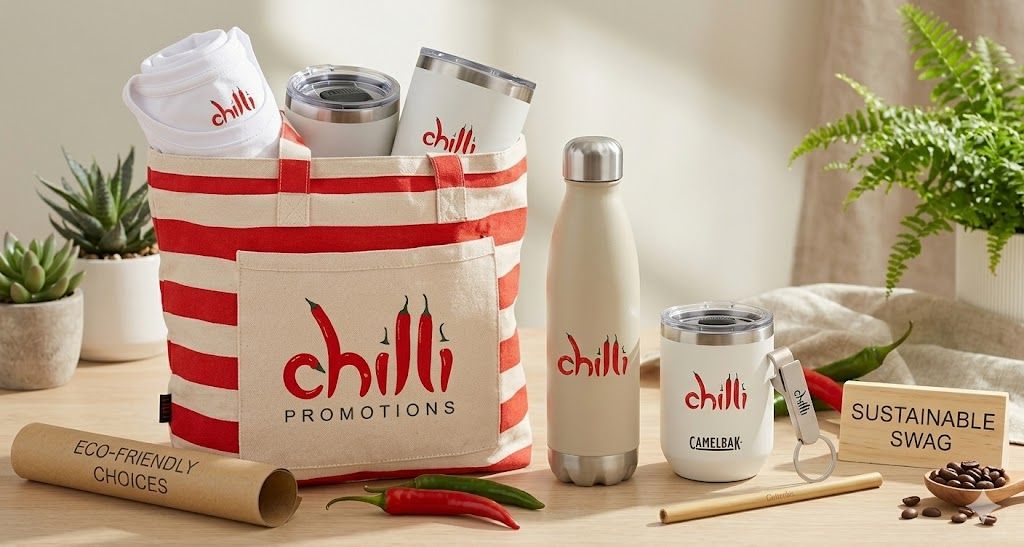
The practical advantages for HR event teams are concrete. Chilli Promotions supplies custom promotional products across the full range covered in this article, from budget lanyards and FSC-certified notebooks through to premium insulated bottles and curated VIP gift sets, all with carbon-offset options and documented sustainability credentials. Sample approvals are part of the standard process, not an add-on, so your team signs off on the physical product before a single unit goes into full production. Tiered fulfilment means you can order different pack configurations for general delegates, session attendees, and VIP guests from a single supplier relationship.
For HR teams ready to brief a supplier, the next step is straightforward: visit the Chilli Promotions product catalogue to browse options by category, or request a quote and sample pack directly. Get a Free Quote →
Key takeaways
Fewer, genuinely useful, sustainably certified items consistently outperform large volumes of cheap giveaways at HR conferences, delivering higher keep rates and measurable brand recall.
| Point | Details |
|---|---|
| Prioritise usefulness and quality | Choose items delegates use daily; 81% recall the brand on a well-made promotional item. |
| Plan lead times carefully | Standard Australian lead times are typically 10–15 business days; brief your supplier 6–8 weeks out minimum. |
| Certify your sustainability claims | Request written GOTS, FSC, or RPET certificates from suppliers, not just marketing language. |
| Use tiered or choice-based distribution | Earned and choice-based models reduce waste and increase keep rate compared with blanket giveaways. |
| Chilli Promotions for Australian orders | Chilli Promotions supplies certified, custom HR event merchandise across Australia with sample approvals and carbon-offset options. |
Why quality beats quantity at HR conferences
The promotional products industry has spent years defaulting to volume: order more, spend less per unit, fill the bag. The evidence now runs the other way. Poor-quality items do not just get thrown away; they actively harm brand perception. An HR professional who receives a pen that stops working on day two associates that failure with your organisation’s attention to detail, not with the supplier who made it.
The shift toward fewer, better items is not just a trend. It reflects a genuine change in how delegates evaluate the organisations they encounter at conferences. When the item is well-made, certified, and thoughtfully presented, it functions as a brand statement. When it is cheap and generic, it functions as noise. The role of merchandise in marketing is most powerful when the item earns a permanent place in the recipient’s daily routine, not when it fills a landfill bag on the way out of the venue.
Choice-based distribution and durable materials are the two levers that move the needle most reliably. Give delegates a choice, give them something built to last, and your brand travels with them long after the conference ends. Brief your supplier early, request samples, and choose intentionally.
Useful sources and certifications to check
Verify certificates and industry benchmarks before finalising any supplier. These are the most relevant authorities and standards for Australian HR event procurement:
- APPA (Australasian Promotional Products Association): The peak industry body for promotional products in Australia and New Zealand. APPA research provides benchmark data on brand recall, keep rates, and buyer behaviour — useful for building an internal business case for your merchandise budget.
- GOTS (Global Organic Textile Standard): The credible certification for organic textiles including cotton bags and apparel. Request the supplier’s GOTS transaction certificate, not just a product-level claim.
- FSC (Forest Stewardship Council): Relevant for notebooks, packaging, and seed paper products. FSC certification confirms the paper or board comes from responsibly managed forests.
- RPET (Recycled Polyethylene Terephthalate): The standard material descriptor for products made from post-consumer plastic bottles. Ask for the percentage of recycled content and whether the supplier can provide a material data sheet.
- PPAI (Promotional Products Association International): International research body whose studies on brand recall and consumer behaviour are widely cited in the Australian market. Their data on promotional product effectiveness supports procurement decisions.
- ISO 14001: The international standard for environmental management systems. A supplier holding ISO 14001 certification has a verified, audited approach to managing environmental impact across their operations.
Always request certificate copies directly from your supplier, not just a logo on a product listing. A certificate number you can verify independently is the only reliable proof.
FAQ
What are the most popular giveaways at HR conferences?
Reusable drinkware (keep cups and insulated bottles), custom tote bags, notebooks with pens, and USB power banks consistently rank as the most requested items at HR conferences because they combine daily utility with strong brand visibility.
What swag do employees and delegates actually want?
Research shows delegates most value items they will use regularly, particularly tech accessories, quality drinkware, and sustainable bags. Choice-based distribution, where attendees select their preferred item, produces the highest keep rates.
What are the latest trends in promotional products for events?
The dominant trends are retail-feel finishes, certified sustainable materials (GOTS, FSC, RPET), choice-based or tiered distribution models, and phygital activation through QR codes that connect physical items to digital follow-up content.
How far in advance should I order promotional items for an Australian conference?
Brief your supplier at least 6–8 weeks before the event. Standard Australian lead times are typically 10–15 business days once artwork is approved, and you need additional time for sample review and proof sign-off before production begins.
Can Chilli Promotions supply sustainable merchandise for HR events?
Yes. Chilli Promotions supplies certified sustainable promotional products across Australia, including items with GOTS, FSC, and RPET credentials, with carbon-offset options and sample approvals built into the standard ordering process.