TL;DR:
- Branded merchandise builds lasting trust for banks through repeated physical brand exposure and emotional connections. High-quality, useful items like tote bags and staff apparel deliver cost-effective impressions and reinforce professionalism and reliability. Sustainable merchandise further enhances trust by aligning with environmental values and reducing carbon impact.
Branded merchandise is a proven trust-building tool for banks, turning abstract brand promises into physical, daily experiences that customers carry into their homes and offices. While digital advertising disappears the moment a customer closes a browser tab, a quality branded pen or tote bag stays on a desk for months. 81% of consumers require brand trust before engaging in financial transactions. That figure alone explains why the importance of branded merchandise has moved from marketing afterthought to front-line relationship strategy for financial institutions across Australia and beyond.
Why branded merchandise builds bank trust through repeated exposure
Physical branded items create a fundamentally different kind of brand contact than digital advertising. A screen ad lasts three seconds. A branded notebook sits on a customer’s desk for a year, delivering your logo into their personal space every single day. Consistency in brand exposure is cited by marketing experts as the foundation of trust in banking branding. Repeated visual contact shifts a logo from “advertising” to “familiar,” and familiarity is the precursor to trust.
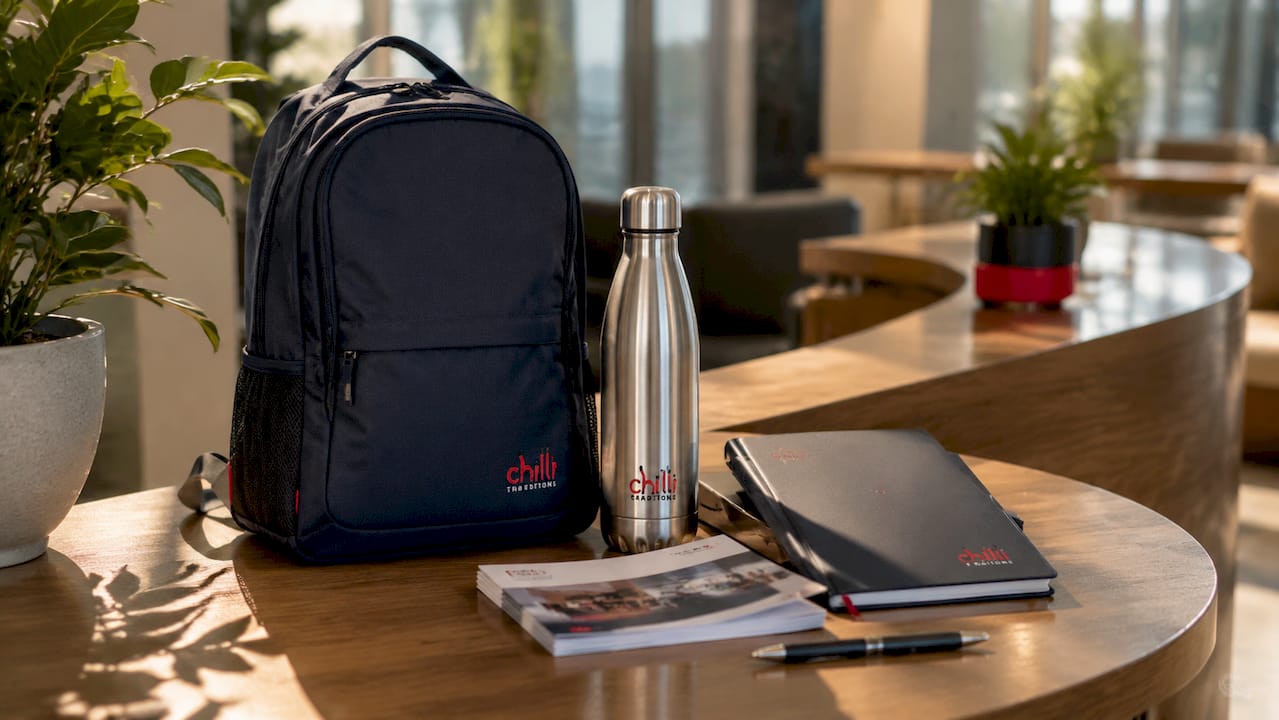
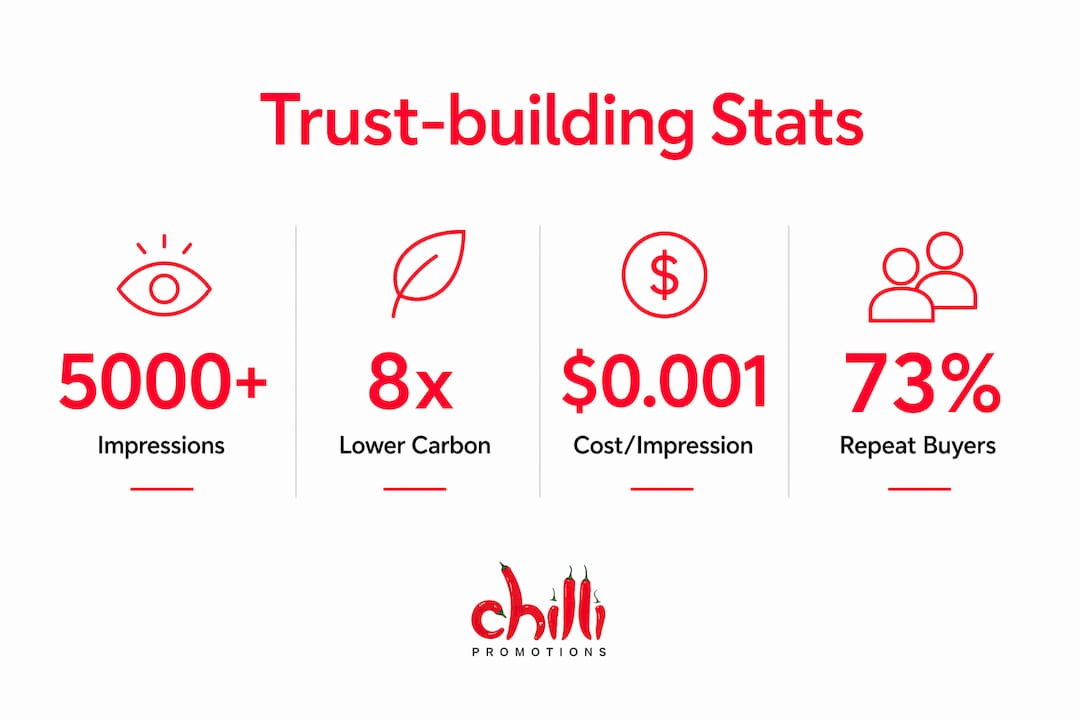
The cost efficiency of this exposure is striking. A $6 tote bag generates nearly 5,000 impressions with a cost-per-impression of just 1/10 of a cent. A $13 branded cap delivers impressions at roughly 3/10 of a cent each. Compare that to the cost of digital display advertising, where cost-per-impression figures run significantly higher and produce no lasting physical presence. For bank marketing teams managing tight budgets, this efficiency is material.
| Merchandise item | Approx. cost | Est. impressions | Cost per impression |
|---|---|---|---|
| Branded tote bag | $6 | ~5,000 | 0.1 cent |
| Branded baseball cap | $13 | ~4,300 | 0.3 cent |
| Branded pen | $2 | ~3,000 | 0.07 cent |
| Digital display ad (CPM) | Variable | 1,000 | $2.00+ |
The table above shows why merchandise marketing strategies consistently outperform digital channels on pure cost-per-impression terms. The gap is not marginal. It is structural.
Pro Tip: Distribute merchandise at branch openings, financial literacy events, and community sponsorships. These moments create positive emotional associations that compound the trust effect of every future brand impression.
How merchandise builds trust through emotional connection
Branded merchandise triggers psychological responses that digital marketing simply cannot replicate. The reciprocity principle is well established in behavioural economics: when a bank gives a customer something useful and well made, the customer feels a genuine obligation to reciprocate with loyalty and goodwill. High-quality merchandise activates this reciprocity effect and creates a “halo effect” of trust around the brand. Low-quality items do the opposite, signalling that the bank does not value the relationship.
60% of long-term bank customers use emotional language like “safe” or “professional” to describe their relationship with their bank. Merchandise reinforces exactly those feelings. A well-crafted branded item communicates care, quality, and permanence in a way that a social media post cannot.
The emotional benefits of well-chosen branded merchandise include:
- Belonging: Customers who carry or use a bank’s branded items feel part of a community, not just an account number.
- Safety: Quality merchandise signals financial stability and institutional permanence.
- Recognition: Familiar logos on useful objects build the kind of low-level, ongoing brand recognition that compounds into deep trust over time.
- Reciprocity: Receiving a thoughtful gift creates a genuine sense of goodwill toward the institution.
- Identity: Customers who align with a bank’s values are more likely to display branded items, becoming passive brand advocates.
Physical merchandise breaks through digital fatigue by entering customers’ personal spaces and earning minutes of attention. Digital ads earn milliseconds. That difference in attention quality is the difference between a brand impression and a brand memory.
Pro Tip: Match merchandise to life moments. New home loan customers appreciate a quality branded notebook or planner. First-time account holders respond well to a branded tote or reusable cup. Relevance amplifies the emotional impact.
Sustainability and professionalism as trust signals
Banks operate in one of the most scrutinised industries in Australia. Every customer-facing signal contributes to or detracts from perceived trustworthiness. Sustainable merchandise and professional branded apparel are two of the most underused trust signals available to bank marketing teams.
The sustainability advantage
Promotional products generate up to eight times less carbon impact per memorised impression than digital advertising. That finding reframes the sustainability conversation entirely. Choosing branded merchandise over a digital campaign is not just a marketing decision. It is an environmental one. For banks that have made public commitments to sustainability, this alignment between marketing channel and brand values is a genuine differentiator.
Eco-friendly materials and production methods enhance brand trust in financial sectors, particularly among customers who factor environmental responsibility into their banking choices. Recycled content, plant-based materials, and certified carbon-neutral production all send the same message: this institution means what it says.
Sustainable merchandise choices that align with bank values include:
- Reusable tote bags made from recycled or organic materials
- Bamboo or recycled-plastic stationery sets
- Stainless steel or plant-based reusable drink bottles
- Seed paper notepads that customers can plant after use
- Certified carbon-neutral branded apparel for staff and events
The professionalism signal from branded staff apparel
Branded apparel for bank staff serves as a critical visual cue for customer orientation and safety. Customers entering a branch scan the environment for signals of order and reliability. Consistent, professional staff uniforms deliver those signals immediately. Inconsistent or disorganised appearances create psychological hesitation, even when the underlying service is excellent.
Within branches, branded apparel is more than a uniform. It signals reliability and customer readiness, directly impacting psychological comfort and perceived trustworthiness. The role of consistent brand print across all physical touchpoints, from staff shirts to branded stationery at the counter, reinforces the same message: this bank is organised, professional, and here to stay.
Pro Tip: Extend branded apparel beyond branch staff. Relationship managers, financial advisers, and community event volunteers wearing consistent branded clothing multiply the professional trust signal across every customer interaction.
Best practices for banks using merchandise to build trust
A merchandise programme that builds genuine trust requires more than ordering items with a logo printed on them. The Merch Pyramid framework, used by experienced promotional product practitioners, prioritises three qualities in order: usefulness, aesthetic alignment with the brand, and emotional relevance to the recipient. Strategic merchandise campaigns built on these principles function as relationship builders rather than giveaways.
73% of financial sector buyers purchase promotional items monthly or quarterly, treating them as ongoing marketing tools rather than one-off campaigns. That frequency reflects a mature understanding of how merchandise works: trust is built through repetition, not a single transaction.
A practical framework for bank marketing teams:
- Define the trust objective. Are you building awareness with new customers, deepening loyalty with existing ones, or reinforcing professionalism at branch level? Each goal calls for different merchandise.
- Prioritise utility. Items customers use daily, such as pens, notebooks, tote bags, and drink bottles, deliver the most impressions and the strongest reciprocity effect.
- Match quality to brand positioning. A premium bank brand requires premium merchandise. Cheap items undermine the very trust you are trying to build.
- Align aesthetics with brand guidelines. Colour, typography, and material choices must reflect the bank’s visual identity consistently across all items.
- Integrate with campaigns. Merchandise works best when it reinforces a broader message. A financial wellness campaign paired with a branded planner creates a coherent, memorable experience.
- Measure beyond distribution numbers. Track brand recall, customer satisfaction scores, and net promoter scores in cohorts that received merchandise versus those that did not.
Physical brand consistency through merchandise reduces brand fragmentation and strengthens multi-market brand perceptions, which is particularly valuable for banks operating across regional Australia. A customer in Bendigo and a customer in Brisbane should receive the same quality of branded experience.
| Merchandise type | Trust-building strength | Best use case |
|---|---|---|
| Premium branded stationery | High | New account welcome packs |
| Reusable drink bottles | High | Community events, financial wellness campaigns |
| Branded apparel (staff) | Very high | Branch environments, customer-facing roles |
| Eco-friendly tote bags | High | Branch giveaways, sponsorships |
| Branded USB drives or tech | Medium | Business banking clients |
| Low-cost plastic novelties | Low | Avoid in banking contexts |
The table makes one point clearly: quality and utility determine trust impact. Novelty items that end up in a bin do not build trust. They erode it.
Key takeaways
Branded merchandise builds bank trust by delivering repeated, high-quality physical brand contact that activates reciprocity, signals professionalism, and creates emotional connections that digital advertising cannot achieve.
| Point | Details |
|---|---|
| Cost-efficient impressions | A $6 tote bag delivers ~5,000 impressions at 0.1 cent each, far below digital ad rates. |
| Emotional trust drivers | Quality merchandise activates reciprocity and a halo effect, making customers feel valued and safe. |
| Sustainability as a trust signal | Promotional products generate up to eight times less carbon impact per impression than digital ads. |
| Staff apparel builds branch trust | Consistent branded uniforms signal reliability and reduce psychological hesitation in customers. |
| Quality over quantity | Premium, useful items build trust; cheap novelties actively harm brand perception in financial services. |
What we have learned from 20+ years in the field
The most common mistake banks make with branded merchandise is treating it as a budget line item rather than a relationship investment. We have seen financial institutions spend significant sums on digital campaigns and then hand out a flimsy plastic pen at the branch counter. That pen undoes a lot of the brand work the campaign just paid for.
The banks that get merchandise right share one characteristic: they think about the customer’s daily life, not their own marketing calendar. A branded item that earns a permanent spot on a customer’s desk is doing more trust-building work than any quarterly campaign. It is a physical ambassador for the brand, present in moments when no marketer is in the room.
We have also noticed that merchandise performs differently across customer segments. Business banking clients respond strongly to premium, functional items like quality notebooks or leather cardholders. Retail customers at community events respond to practical, eco-conscious items that reflect shared values. The segmentation matters as much as the product choice.
One more observation worth sharing: in an era of AI-generated communications and automated customer service, physical merchandise is one of the few remaining signals that a real organisation made a deliberate choice to give you something. That human quality is increasingly rare. Banks that recognise this and invest accordingly will find merchandise delivers returns that go well beyond the cost-per-impression calculation.
— Chilli Promotions Team
Branded merchandise solutions for banks and financial institutions
Chilli Promotions has worked with financial institutions across Australia and New Zealand since 2001, developing promotional products for banking and finance that are built to the quality standards the sector demands. Every item is designed to make a genuine impression, not just fill a bag.
Whether you are building a new account welcome programme, equipping branch staff with professional apparel, or planning a community event, Chilli Promotions offers a full range of certified sustainable and premium-quality options. Explore the top corporate giveaway products to find items that align with your brand values and trust-building goals. You will notice a difference when you add Chilli.
FAQ
Why does branded merchandise build trust more effectively than digital ads?
Physical merchandise creates lasting brand impressions in customers’ personal spaces, activating reciprocity and familiarity that digital ads cannot replicate. A useful branded item earns daily attention for months, while a digital ad disappears in seconds.
What types of merchandise work best for banks?
Premium, useful items such as quality stationery, reusable drink bottles, branded tote bags, and professional staff apparel deliver the strongest trust signals in banking contexts. Low-cost novelty items actively harm brand perception and should be avoided.
How does sustainable merchandise support bank trust?
Promotional products generate up to eight times less carbon impact per memorised impression than digital advertising, making eco-friendly merchandise a credible signal of a bank’s environmental commitments. Customers increasingly factor sustainability into their banking choices.
How often should banks distribute branded merchandise?
73% of financial sector buyers purchase promotional items monthly or quarterly, reflecting the understanding that trust is built through consistent, repeated brand contact rather than single-event distribution.
Does merchandise quality really affect customer trust?
Quality directly affects the reciprocity and halo effects that merchandise creates. High-quality items signal that the bank values the relationship; cheap items signal the opposite, undermining the trust-building purpose of the programme entirely.