TL;DR:
- High-quality promotional products build stronger brand impressions and increase purchase intent. They also deliver better ROI through longer-lasting use and positive customer perception. Choosing sustainable and well-made items aligns with consumer values and enhances brand credibility.
Quality in promotional products is defined as the combination of material durability, functional design, and brand alignment that determines whether a recipient keeps, uses, and values an item. The promotional products industry calls this “perceived product quality,” and it is the single strongest predictor of brand recall and purchase intent. APPA research shows that 84% of Australians and New Zealanders feel more positive about a brand after receiving a quality promotional gift, and 77% have gone on to purchase from that brand. Those numbers make the case for why quality matters in promo products clearer than any marketing theory ever could.
How does quality in promo products shape customer behaviour?
Quality promotional products drive measurable changes in customer behaviour. The APPA figures are worth unpacking: 84% positive brand sentiment means that nearly nine in ten recipients walk away from a quality gift with a better opinion of your brand. That is a conversion rate most paid media channels cannot match.
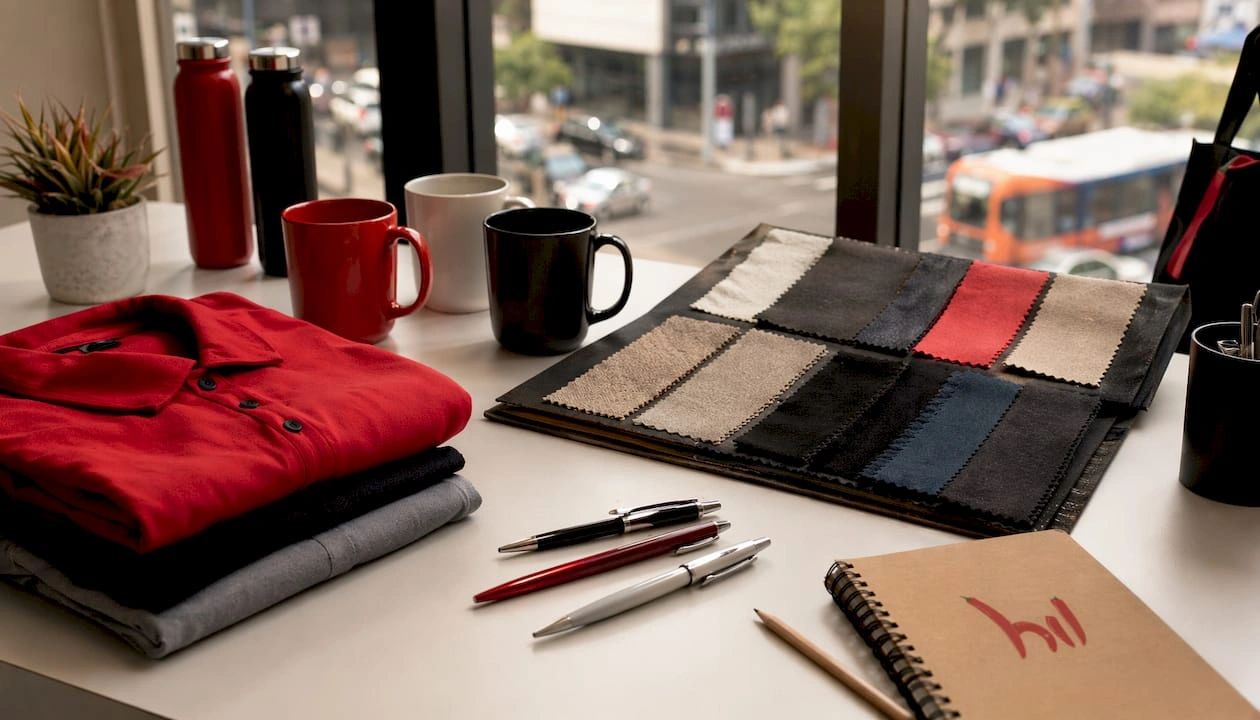
The mechanism is straightforward. A well-made item gets used repeatedly. Every use is a brand impression, and every impression reinforces familiarity and trust. A cheap pen that stops working after a week does the opposite. It signals that your brand cuts corners, and that association sticks.
66% of promotional product recipients visit a brand’s website or social media after receiving a physical gift. This means a quality promo item does not just sit on a desk. It actively drives digital engagement, connecting your physical marketing spend to measurable online behaviour.
The benefits of high-quality promo items extend to advocacy as well. Consider these outcomes that quality items consistently produce:
- Repeat engagement: Recipients return to a brand they associate with thoughtful, well-made gifts.
- Word-of-mouth referrals: A quality item sparks conversation. A flimsy one gets thrown in a drawer.
- Brand recall: Useful, durable items stay visible in workplaces and homes for months, not days.
- Purchase intent: The 77% purchase intent figure from APPA confirms that quality gifts translate directly into sales pipeline activity.
The impact of product quality on branding is not abstract. It shows up in customer actions you can track.
What are the financial benefits of choosing high-quality promotional products?
The return on investment from quality promotional products outperforms most traditional advertising channels. Promotional products deliver a cost-per-impression below $0.002 USD, which is lower than prime-time television and most digital display formats. That figure assumes average usage. Quality items push that advantage even further because they last longer and get used more often.
Branded wearables illustrate this clearly. Promotional wearable items are worn an average of 7–10 times before being retired. Each wear generates a brand impression in a new environment, in front of a new audience. A quality hoodie worn to a café, a gym, or a school pick-up reaches people your paid media budget never touches.
High-quality drinkware delivers the same principle. A durable, well-designed drink bottle used daily for two years generates thousands of impressions at a fraction of the cost of a single digital ad placement. Spending more per unit reduces the lifetime cost-per-impression significantly.
| Metric | High-quality item | Low-quality item |
|---|---|---|
| Average lifespan | 12–24 months | 1–4 weeks |
| Brand impressions per item | High, repeated daily use | Low, discarded quickly |
| Cost-per-impression | Decreases over time | Remains high relative to use |
| Recipient sentiment | Positive, associated with care | Neutral to negative |
| Waste and returns | Minimal | Higher, adds hidden cost |
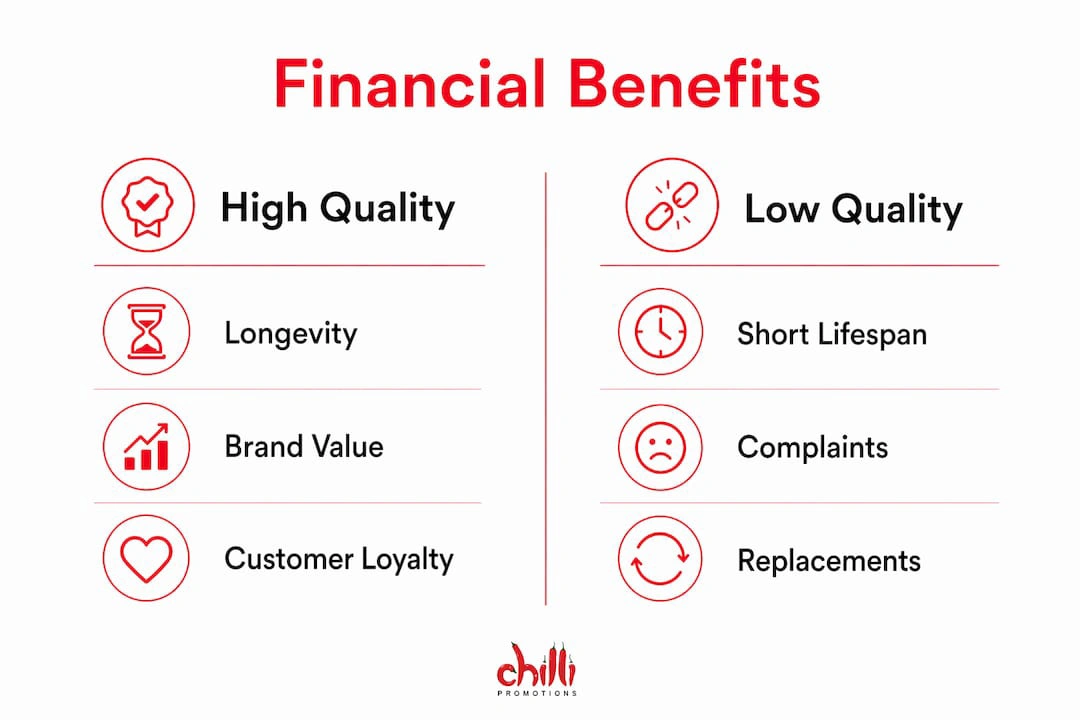
Choosing low-quality items also creates hidden costs. Complaints, replacements, and the reputational damage from a poorly received gift all add up. The quality over quantity shift now visible across the Australian market reflects exactly this calculation. Fewer, better items deliver stronger results than large volumes of forgettable ones.
Pro Tip: When calculating your promotional product budget, factor in the number of brand impressions per item, not just the unit cost. A $30 quality drink bottle used daily for a year almost always outperforms ten $3 items that get discarded within a month.
Understanding promotional products ROI in full means accounting for longevity, sentiment, and downstream purchase behaviour, not just the upfront spend.
How do sustainability and design values affect promotional product quality?
Australian consumers are more discerning than ever about the promotional items they receive. Modern buyers actively reject low-quality “landfill” items and gravitate toward products that reflect genuine brand values. This is not a fringe preference. It is a mainstream expectation that shapes how your brand is perceived the moment a recipient opens a gift.
Intentional, design-led, sustainably sourced merchandise communicates brand values more effectively than any tagline printed on a cheap item. When a recipient holds a product made from recycled content or certified sustainable materials, they draw a direct conclusion about the brand behind it. That conclusion is positive, and it lasts.
The intersection of quality and sustainability matters for several practical reasons:
- Material credibility: Items made from bamboo, recycled PET, or organic cotton signal that quality and environmental responsibility go together.
- ♻ Longevity as sustainability: A durable item that lasts two years is inherently more sustainable than a disposable one. Quality and eco-responsibility reinforce each other.
- Brand alignment: If your organisation has sustainability commitments, your promotional products must reflect them. A mismatch between stated values and gifted items damages credibility.
Choosing eco-friendly promotional products is no longer a niche consideration for Australian businesses. It is a quality standard in its own right. The sustainable promotional products guide from Chilli Promotions outlines how to align material choices with brand values without compromising on design or function.
Pro Tip: Before finalising any promotional product order, ask your supplier for material certifications and end-of-life disposal guidance. A supplier who cannot answer those questions is unlikely to be sourcing at the quality level your brand deserves.
A differentiation strategy built around quality and sustainability gives your brand a distinct position in the minds of recipients. That position is far harder to replicate than a logo on a cheap tote bag.
What criteria should Australian companies use to select quality promotional products?
Selecting quality promotional products requires a structured approach. The most common mistake Australian organisations make is choosing items based on price per unit alone. That metric ignores durability, usability, brand fit, and recipient sentiment, all of which determine whether the investment actually works.
A reliable quality assessment covers five criteria:
- Functionality: Does the item solve a real problem for the recipient? A quality product earns its place in daily life.
- Material standard: Is the material durable, certified where relevant, and appropriate for the intended use?
- Brand fit: Does the item reflect your brand’s values, aesthetic, and positioning?
- Sustainability credentials: Can the supplier provide material sourcing information and certifications?
- Supplier accountability: Does the supplier offer quality guarantees, samples, and transparent production information?
The promotional product checklist for Australian businesses provides a structured framework for applying these criteria before any order is placed.
| Assessment area | What to look for | Red flag |
|---|---|---|
| Material quality | Certifications, weight, finish | No samples available |
| Functionality | Practical daily use case | Novelty only, no utility |
| Brand alignment | Colour accuracy, logo placement | Generic catalogue item |
| Sustainability | Recycled content, eco certifications | No sourcing transparency |
| Supplier reliability | References, lead times, guarantees | Vague production details |
The quality versus quantity debate in promotional products has a clear answer for 2026: quality wins. A smaller number of well-chosen items generates more brand impressions, stronger sentiment, and better ROI than a large volume of low-grade giveaways. Branded apparel like quality t-shirts, hoodies, and polos becomes a walking billboard when recipients are proud to wear them. That pride only comes from quality.
Budget allocation should reflect this. Concentrating spend on fewer, better items is not a cost-cutting measure. It is a deliberate choice to maximise the return on every dollar invested in promotional marketing.
Key takeaways
Quality promotional products deliver stronger brand outcomes than volume-based approaches because durability, design, and sustainability directly determine recipient behaviour and long-term brand perception.
| Point | Details |
|---|---|
| Quality drives purchase intent | 77% of recipients buy from a brand after receiving a quality promotional item, per APPA research. |
| Cost-per-impression favours quality | Durable items generate more impressions over time, reducing the real cost per brand contact. |
| Sustainability is a quality standard | Australian consumers reject low-quality “landfill” items and respond positively to eco-conscious choices. |
| Fewer, better items outperform volume | Concentrating budget on high-quality products delivers stronger ROI than distributing large quantities of cheap items. |
| Supplier vetting is non-negotiable | Material certifications, samples, and transparent sourcing separate quality suppliers from price-only vendors. |
The uncomfortable truth about cheap promo products
After more than two decades working with Australian organisations on promotional programmes, the pattern is consistent. The brands that invest in quality promotional products build something that cheap giveaways simply cannot: genuine goodwill.
The most common mistake we see is treating promotional products as a line item to minimise rather than an investment to maximise. A procurement manager saves $2 per unit by choosing a lower-grade product, and the organisation ends up with 500 items that recipients discard within a fortnight. The brand impression left behind is not neutral. It is actively negative.
What the APPA research confirms, and what we see in practice, is that recipients are sophisticated. They notice the difference between a product chosen with care and one chosen for cost alone. That distinction shapes how they feel about your brand, sometimes permanently.
The shift toward quality over quantity is not a trend. It is a correction. Australian organisations are recognising that a well-made, thoughtfully designed promotional item is one of the most cost-effective brand-building tools available, provided it is chosen with the same rigour applied to any other marketing investment.
The brands that get this right are not necessarily spending more overall. They are spending more deliberately.
— Chilli Promotions Team
Quality promotional products from Chilli Promotions
Chilli Promotions has partnered with Australian organisations since 2001 to source and supply promotional products that reflect genuine brand values. The focus has always been on items that recipients keep, use, and associate positively with the brands behind them.
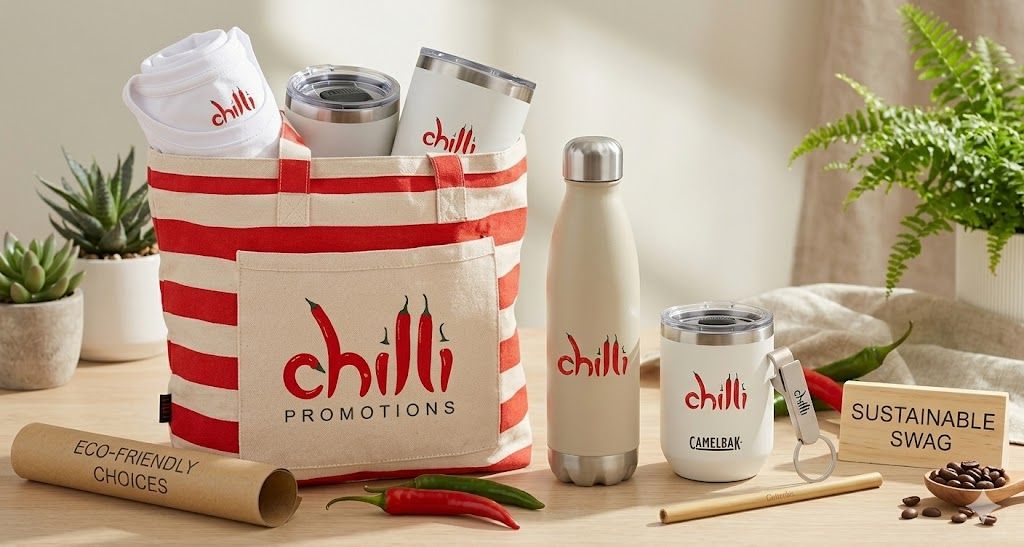
The corporate giveaway range covers quality-vetted options across drinkware, apparel, technology accessories, and eco-certified merchandise. Every product in the catalogue is assessed for material quality, brand fit, and sustainability credentials before it is recommended to a client. If you are ready to move from volume-based gifting to a quality-led approach, the Chilli Promotions team is ready to help you build a programme that makes a measurable difference.
FAQ
Why does quality matter more than quantity in promotional products?
Quality items generate more brand impressions, stronger recipient sentiment, and higher purchase intent than large volumes of cheap giveaways. APPA research confirms that 77% of recipients purchase from a brand after receiving a quality promotional item.
How does product quality affect brand perception?
A well-made promotional item signals that a brand values its customers and takes care in its choices. 84% of Australians report feeling more positive about a brand after receiving a quality promotional gift.
What is the cost-per-impression advantage of quality promo items?
Promotional products already deliver a cost-per-impression below $0.002 USD, outperforming most mainstream advertising. Quality items extend that advantage further because they last longer and generate more impressions per unit.
How do sustainability and quality connect in promotional products?
Durable items are inherently more sustainable because they avoid rapid disposal. Modern Australian consumers reject low-quality “landfill” items and respond more positively to eco-certified, design-led merchandise that reflects genuine brand values.
What should Australian companies look for when vetting a promotional product supplier?
The key indicators are material certifications, the availability of samples, transparent sourcing information, and clear quality guarantees. Suppliers who cannot provide these details are unlikely to meet the standard required for quality-led promotional programmes.