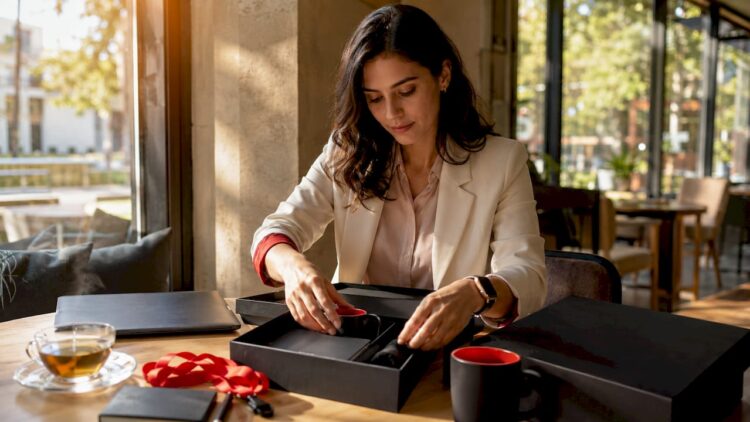
Branded merchandise is defined as a strategic HR tool that strengthens employee engagement by signalling organisational inclusion at critical moments. HR firms across Australia recommend promotional products not as perks but as deliberate relationship investments tied to employee lifecycle stages. Research from the International Journal of Economics and Management Research and Custom Ink’s 2026 Employee Onboarding Experience Audit confirms that well-timed, quality branded items directly improve morale, retention, and internal brand advocacy. Understanding why hr firms recommend branded merchandise starts with the psychology behind belonging and what tangible items communicate to your people.
Why HR firms recommend branded merchandise for engagement
Branded merchandise works because it gives employees a physical signal of group membership. That signal is not decorative. Organisational identification directly boosts employee psychological engagement and morale, according to a 2026 study in the International Journal of Economics and Management Research. When people feel they belong to something, they perform better and stay longer.
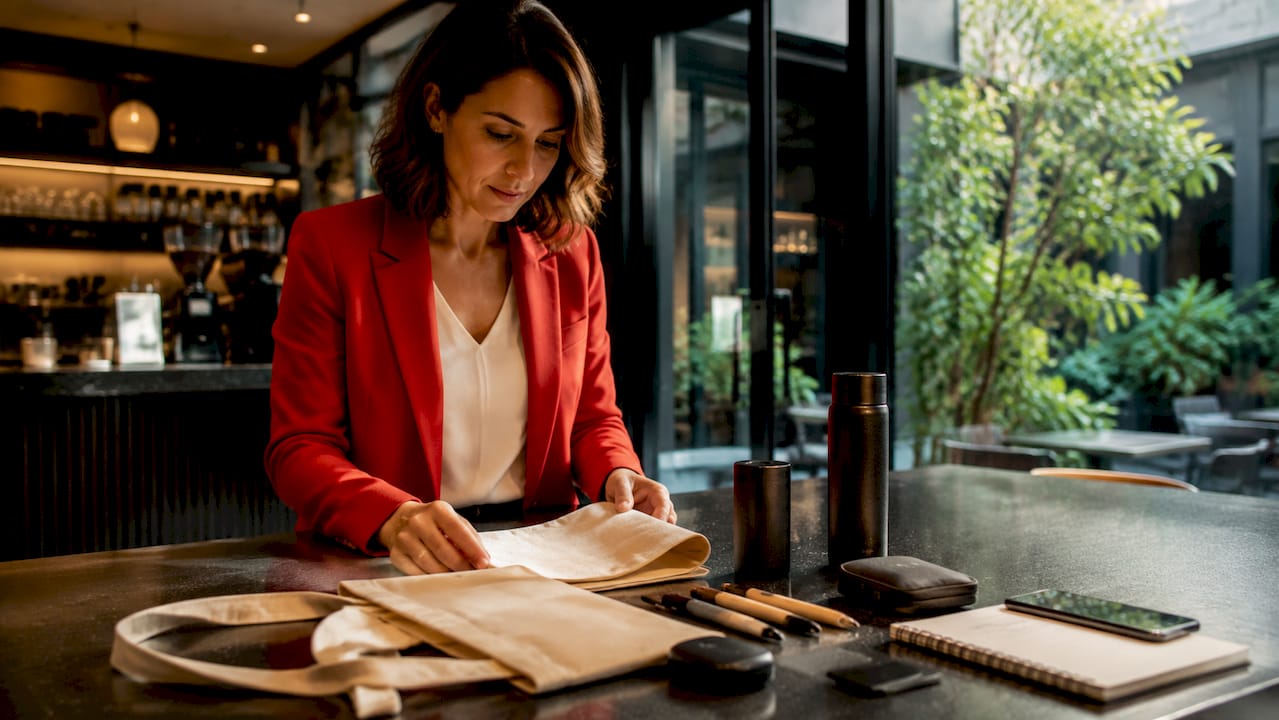
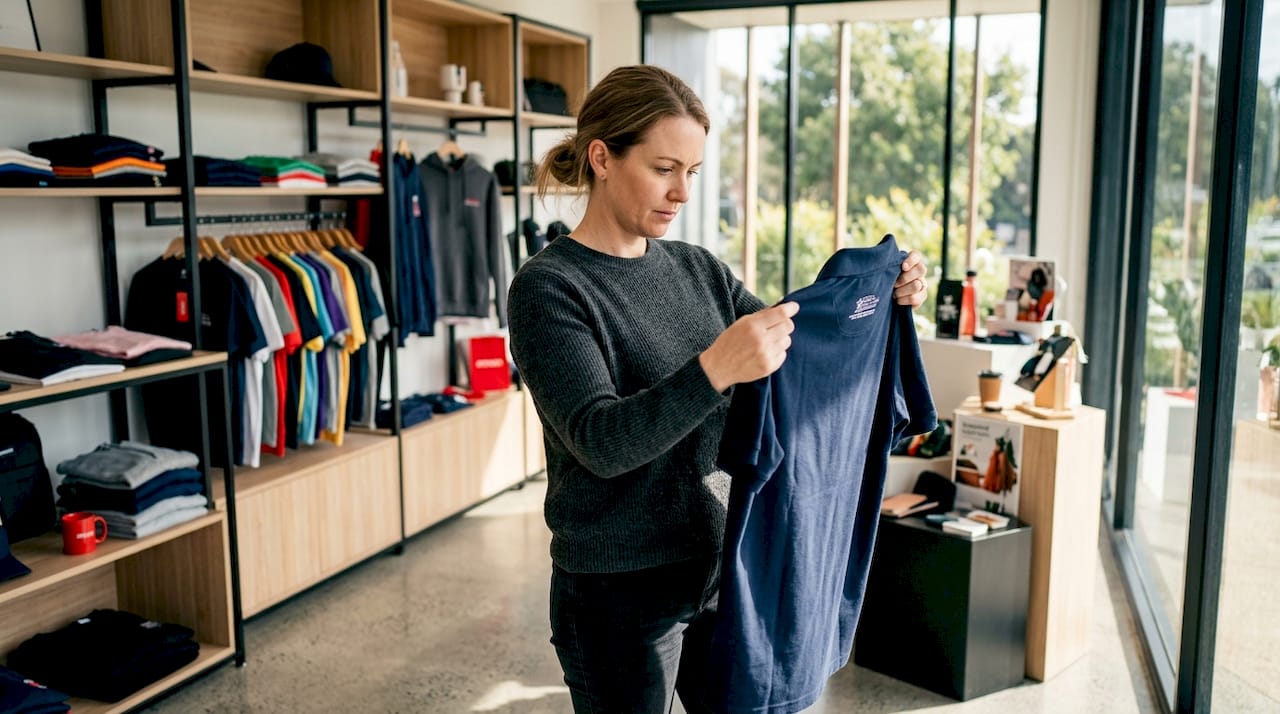
The mechanism is straightforward. Branded items act as tangible identity cues. A quality hoodie, a well-designed notebook, or a custom water bottle bearing the company logo tells an employee: “You are part of this.” That message, delivered at the right moment, reinforces organisational pride in a way that an email or a policy document simply cannot.
“Employees respond positively to branded merchandise that tangibly signals group membership and internal brand alignment, strengthening identity and loyalty.” — Organisational Behaviour Research, 2026
The practical implications for HR are significant:
- Branded merchandise creates visible, daily reminders of company identity.
- Items used in public extend brand reach beyond the workplace.
- Quality merchandise signals that the organisation values its people.
- Consistent branding across teams reinforces a shared culture.
Internal branding combined with merchandise delivers measurable improvements in employee engagement and brand advocacy, particularly among millennial employees who place high value on belonging. This is why branded merchandise supports HR campaigns far more effectively than generic recognition programmes.
Does timing and quality of branded merchandise actually matter?
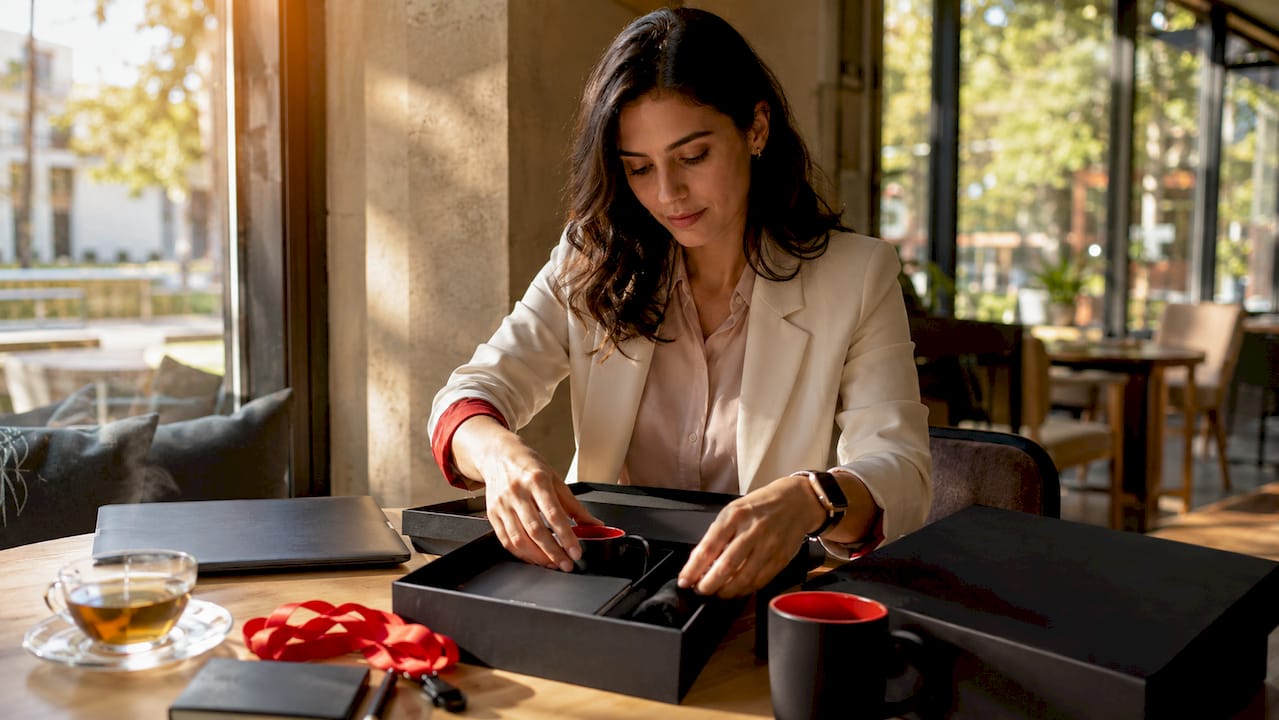
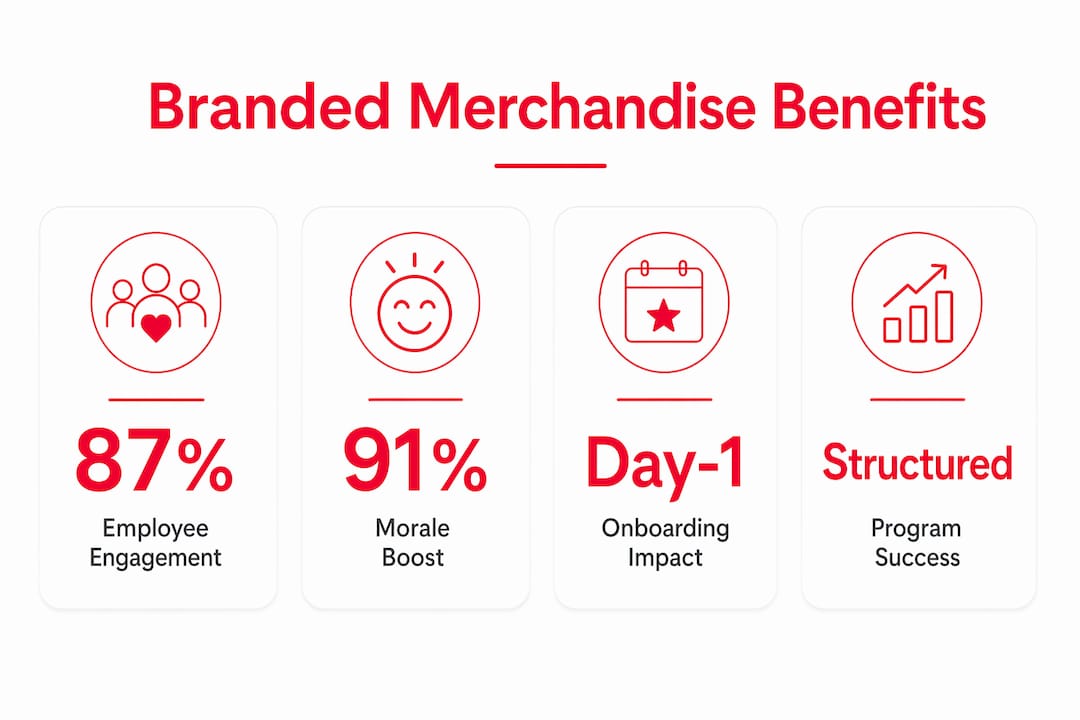
Timing is the single most underestimated variable in any branded merchandise programme. Custom Ink’s 2026 Employee Onboarding Experience Audit found that Day-1 welcome kit delivery strongly impacts new hire impressions and retention. A kit that arrives late performs no better than no kit at all. That finding should change how you plan your onboarding logistics.

The quality of items matters just as much as the timing. 91% of buyers believe their teams feel more valued when they receive recognised retail-brand merchandise compared to generic items. That figure reflects a simple truth: people read quality as a proxy for how much the organisation respects them.
Pro Tip: Prioritise three to five high-quality, genuinely useful items over a large volume of cheap giveaways. A premium branded item used daily creates far more lasting brand connection than ten items that end up in a drawer.
The logic here aligns with how HR branded merchandise improves morale. When a new hire opens a welcome kit on their first day and finds a quality insulated drink bottle, a branded notebook, and a well-fitted shirt, they form an immediate impression of the organisation’s culture. That impression is difficult to reverse. Conversely, a flimsy pen and a generic tote bag communicate the opposite.
Designing your employee onboarding kit around Day-1 delivery and curated, quality items is the most direct way to convert branded merchandise into measurable engagement outcomes.
How does strategic gift-giving logic apply to HR merchandise?
Marketing science provides a clear framework for understanding why branded merchandise influences employee behaviour. Strategic gift-giving evokes gratitude and obligation that influence loyalty variably by context, according to a 2026 article in the Journal of the Academy of Marketing Science. The key word is “variably.” Not all gifts produce the same response, and that distinction matters enormously for HR strategy.
Two psychological mechanisms are at work. Gratitude produces genuine loyalty and discretionary effort. Obligation produces compliance but rarely advocacy. The difference between the two outcomes comes down to three factors:
- Perceived value. Items that feel thoughtful and useful generate gratitude. Items that feel cheap or generic generate obligation at best, and resentment at worst.
- Relationship stage. A welcome kit on Day 1 carries different weight than the same items given six months later. Timing shapes the emotional context of the gift.
- Frequency and control. Overuse of gifts diminishes returns and can erode the psychological impact of each item. Controlled distribution at meaningful milestones preserves the signal value of branded merchandise.
This is why HR professionals are advised to treat branded merchandise as a structured programme rather than an ad-hoc perk. Random giveaways at every team meeting dilute the impact of a carefully curated onboarding kit or a milestone recognition gift. The role of branded items in HR programmes is most powerful when each distribution moment is deliberate and tied to a specific employee experience goal.
Applying this framework means mapping your merchandise calendar to your employee lifecycle. Onboarding, three-month check-ins, work anniversaries, and performance recognition are all high-value moments. Each one offers an opportunity to reinforce belonging and brand alignment through a well-chosen item.
What are the best practices for HR branded merchandise programmes?
Effective branded merchandise programmes require a structured approach. The following comparison shows the difference between a reactive giveaway approach and a strategic programme model.
| Approach | Reactive Giveaway | Strategic Programme |
|---|---|---|
| Timing | Ad-hoc or event-driven | Tied to employee lifecycle milestones |
| Item selection | Volume-focused, generic | Curated, quality, and useful |
| Success metric | Kits shipped or items distributed | Employee feelings of inclusion and belonging |
| Frequency | Frequent and inconsistent | Controlled and deliberate |
| Outcome | Low engagement impact | Measurable morale and retention improvement |
The most important shift in this table is the success metric. Measuring belonging on Day 1 provides a more valuable indicator of programme effectiveness than logistics numbers like kits shipped. Custom Ink research advises HR teams to track how included employees feel, not how many boxes were sent. That reframe changes what you optimise for.
Practical guidelines for HR teams designing or reviewing their branded merchandise approach:
- Link every merchandise distribution to a specific lifecycle moment with a defined engagement goal.
- Select items employees will actually use in their daily lives, at home or in the office.
- Source quality items from recognised brands where budget allows, as perceived value directly affects morale.
- Avoid distributing branded merchandise at every minor occasion, as frequency reduces psychological impact.
- Collect employee feedback on inclusion and brand connection after each programme touchpoint.
Pro Tip: Ask new hires at their two-week check-in how their welcome kit made them feel on Day 1. That single question gives you more useful programme data than any shipment report.
The benefits of branded merchandise are fully realised only when the programme is managed with the same rigour as any other HR initiative. Treat it as a relationship investment, not a line item in the events budget. For inspiration on corporate giveaway products that align with these principles, the right supplier partnership makes the curation process significantly more straightforward.
Key takeaways
Branded merchandise delivers measurable HR outcomes only when it is treated as a structured programme tied to employee lifecycle milestones, quality item selection, and belonging-focused measurement.
| Point | Details |
|---|---|
| Timing is critical | Day-1 delivery of welcome kits directly impacts new hire impressions and retention outcomes. |
| Quality signals respect | 91% of buyers report teams feel more valued with recognised retail-brand merchandise over generic items. |
| Gratitude beats obligation | Thoughtful, well-timed gifts generate genuine loyalty; cheap or frequent giveaways produce obligation at best. |
| Measure belonging, not logistics | Track employee feelings of inclusion rather than kits shipped to evaluate programme effectiveness. |
| Lifecycle alignment matters | Distribute branded merchandise at onboarding, anniversaries, and recognition moments for maximum psychological impact. |
The part most HR teams get wrong about branded merchandise
I have worked alongside HR teams at organisations ranging from 50-person professional services firms to large-scale national employers. The pattern I see most often is not a lack of investment in branded merchandise. It is a lack of intentionality about when and why items are distributed.
Teams spend real budget on quality products and then hand them out at a Friday afternoon team event with no connection to a meaningful moment. The item lands flat. The employee takes it home, and it sits in a cupboard. The HR manager concludes that branded merchandise does not work, when the actual problem was the absence of a programme structure.
The research from Custom Ink and the Journal of the Academy of Marketing Science confirms what I have observed in practice. The item itself is rarely the issue. The timing, the context, and the perceived intention behind the gift determine whether it generates genuine engagement or simply adds to the clutter on someone’s desk.
My honest advice: before you spend another dollar on branded merchandise, map your employee lifecycle and identify three to five moments where a physical item would reinforce a feeling you want employees to have. Onboarding is the obvious starting point, but work anniversaries and peer recognition programmes are equally powerful. Pair your comprehensive branding approach with merchandise that reflects your actual brand values, not just your logo on a product.
The organisations that get this right do not just have better-looking merchandise. They have employees who wear the shirt, use the bottle, and tell people where they work with genuine pride. That outcome is worth designing for.
— Priyadarshani
How Chillipromotions helps HR teams build merchandise programmes that work
Chillipromotions has partnered with HR teams across Australia and New Zealand since 2001, supplying promotional products that are designed to make a genuine difference. The focus is not on volume. It is on curating the right items for the right moments in your employee experience.
Whether you are building a Day-1 onboarding welcome kit, designing a milestone recognition programme, or sourcing quality items for a team engagement initiative, Chillipromotions brings the product expertise and programme thinking that HR professionals need. The range covers everything from premium branded apparel and desk accessories to work from home gift packs for distributed teams. Explore the full corporate giveaway range and find items your people will actually use and value. Get in touch with the Chillipromotions team to discuss a programme tailored to your organisation. →
FAQ
What is branded merchandise in an HR context?
Branded merchandise in HR refers to physical items carrying a company’s logo or identity that are distributed to employees at key lifecycle moments to reinforce belonging, morale, and organisational pride. These items function as tangible identity cues rather than simple gifts.
Why do HR firms recommend branded merchandise over other engagement tools?
HR firms recommend branded merchandise because physical items create lasting psychological signals of inclusion that digital communications cannot replicate. Research from the International Journal of Economics and Management Research confirms that organisational identification directly boosts employee engagement and morale.
When is the best time to distribute branded merchandise to employees?
Day-1 onboarding is the highest-impact moment, according to Custom Ink’s 2026 Employee Onboarding Experience Audit. Work anniversaries, milestone recognition, and performance acknowledgement are also high-value distribution points that reinforce belonging at meaningful stages of the employee journey.
How do you measure the success of a branded merchandise programme?
Custom Ink research recommends tracking employee feelings of inclusion and brand connection rather than logistics metrics like kits shipped. A simple two-week check-in question asking how the welcome kit made a new hire feel provides more useful programme data than any shipment report.
Does the quality of branded merchandise affect employee morale?
Quality directly affects morale. Research shows 91% of buyers believe their teams feel more valued when they receive recognised retail-brand merchandise compared to generic items. Employees read item quality as a signal of how much the organisation values them.