TL;DR:
- Branded HR gifts serve as tangible symbols of recognition that foster employee retention and loyalty. Properly timed, personalized gifts paired with genuine acknowledgment meet emotional needs and create lasting memories. They are most effective when integrated into a broader recognition strategy that aligns with organizational values and inclusivity efforts.
Branded HR gifts are defined as employer-provided, logo-bearing items given to employees as tangible expressions of appreciation and organisational belonging. The evidence is clear: employees receiving high-quality recognition are 45% less likely to leave within two years, regardless of compensation. That figure alone answers why branded HR gifts improve retention. Pair that with 49% of ANZ employees reporting that recognition improves their productivity, and the business case becomes undeniable. Chilli Promotions has worked with Australian organisations since 2001 to build gifting programmes that do exactly this: make employees feel seen, valued, and connected.
Why branded HR gifts improve retention: recognition vs. rewards
Recognition and rewards are not interchangeable. Recognition is relational. It says, “I see what you did, and it matters.” A reward is transactional. It says, “Here is something in exchange for your output.” Conflating the two is one of the most common and costly mistakes in HR practice.
Strong recognition programmes reduce voluntary turnover by 31%. That reduction comes from meeting a psychological need that a pay rise simply cannot address: the need to feel genuinely appreciated as a person, not just compensated as a resource. Branded gifts sit at the intersection of both. They are tangible and material, but when paired with a personal message or a specific acknowledgement, they carry relational weight.
The pitfall most HR teams fall into is using gifts as a substitute for authentic recognition. A branded item handed out without context, timing, or personalisation lands as a corporate gesture rather than a genuine thank you. The gift itself is not the recognition. It is the vehicle for it.
- Recognition meets the need for belonging, visibility, and emotional validation.
- Rewards meet the need for fairness, compensation, and material acknowledgement.
- Branded gifts work best when they function as recognition vehicles, not standalone rewards.
- Timing matters as much as the item itself. A gift given immediately after a specific achievement carries far more meaning than an annual hamper.
- Personalisation is the difference between a gift that gets used daily and one that ends up in a drawer.
Pro Tip: Write a specific, handwritten note with every branded gift. Name the exact behaviour or achievement you are recognising. That one sentence transforms a promotional item into a memory.
How do branded gifts create emotional connections that boost employee loyalty?
Employees consistently claim they prefer cash. Research consistently proves they are wrong about what actually motivates them. Non-cash incentives outperform cash in engagement and long-term memory across roles. Cash is absorbed into a budget and forgotten within days. A quality branded item sits on a desk, travels in a bag, and tells a story every time someone asks about it.
The mechanism behind this is straightforward. Physical objects carry memory and meaning in a way that a bank transfer cannot. When an employee uses a branded insulated drink bottle or wears a quality jacket with their company logo, they are reminded of the moment they received it and why. That daily reinforcement of belonging is what drives loyalty over time.
“Non-cash tangible gifts inspire employees by creating memories and emotional stories that cash cannot provide. The item becomes a physical anchor for the recognition moment, keeping that positive emotion alive long after the event.”
This effect is especially pronounced among Gen Z workers and the modern Australian workforce. Sustainability and high-quality, boutique-style branded items increase employee attachment and usage, particularly when they align with values like environmental responsibility. A carbon-neutral branded product signals that the organisation shares the employee’s values, not just their working hours.
Here is how the emotional connection builds through a well-chosen branded gift:
- The moment of receipt creates a positive emotional peak tied to the organisation.
- Daily use reinforces that memory and keeps the brand visible in the employee’s personal life.
- Social sharing occurs when colleagues or friends ask about the item, giving the employee a positive story to tell about their employer.
- Value alignment deepens attachment when the item reflects the employee’s personal values, such as sustainability or quality craftsmanship.
- Accumulated experiences across multiple gifting moments build a narrative of being valued, which is the foundation of long-term loyalty.
Understanding relationship marketing principles helps explain why this works internally too. The same emotional triggers that build customer loyalty apply directly to employee retention when the gifting is intentional and personal.
What evidence supports the impact of branded gifts on retention and productivity?

The data on recognition and branded gifts is consistent across multiple studies and sectors. Nearly 60% of managers believe they provide adequate recognition, but only 33% of employees feel recognised regularly. This gap is not a minor miscommunication. It is a structural failure that costs organisations their best people.
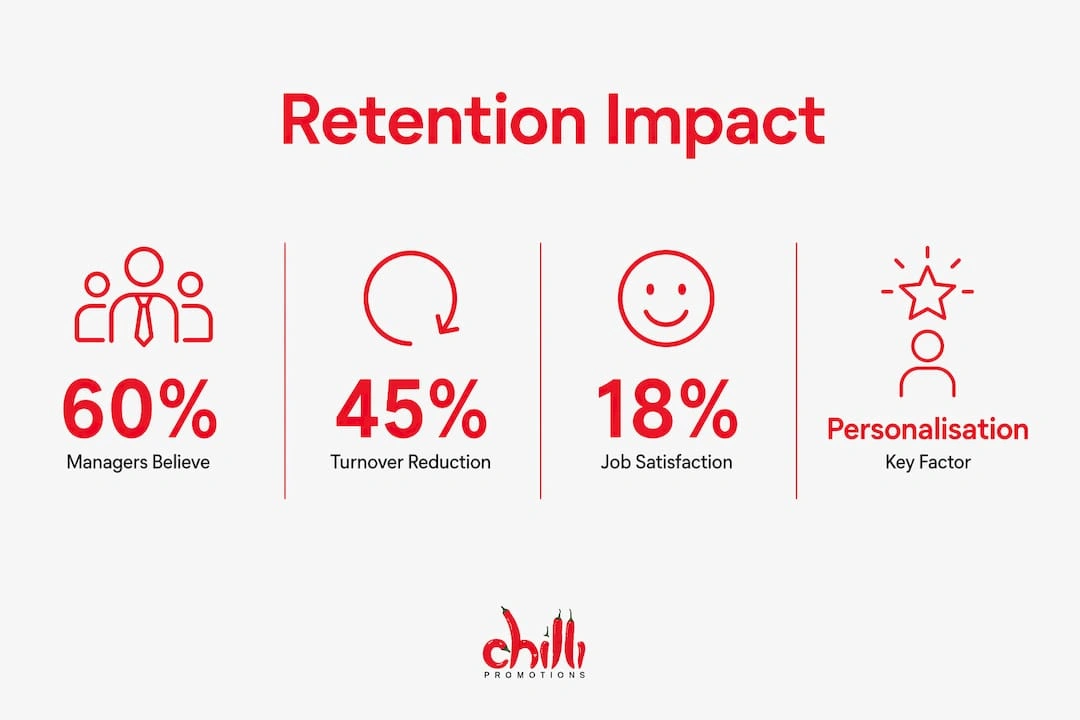
Consistent, personalised gratitude is linked to 18% improved job satisfaction and measurably better retention outcomes. That improvement does not require a large budget. It requires frequency, specificity, and a physical token that makes the recognition tangible and memorable.
Australian companies have demonstrated this in practice. BlueScope improved retention outcomes by pairing personalised gift cards with leader recognition messages. Employees valued both the monetary component and the accompanying appreciation message. The combination outperformed either element alone. That finding confirms what the research consistently shows: combining a tangible gift with a personal message multiplies the impact of both.
| Metric | Finding |
|---|---|
| Turnover reduction | Employees with high-quality recognition are 45% less likely to leave within two years |
| Productivity improvement | 49% of ANZ employees say recognition improves their productivity |
| Recognition gap | 60% of managers believe they recognise staff adequately; only 33% of employees agree |
| Job satisfaction | Consistent personalised gratitude linked to 18% improved job satisfaction |
| Voluntary turnover | Strong recognition programmes reduce voluntary turnover by 31% |
Career progression and recognition are often valued higher than salary once basic financial needs are met. This means branded gifts, when positioned correctly within a recognition framework, address the motivational needs that compensation alone cannot reach. The return on investment is not just emotional. It shows up directly in reduced recruitment costs, lower absenteeism, and stronger team performance.
How to choose and implement branded HR gifts effectively
Selecting the right branded item is not about spending the most money. It is about choosing something that reflects both the organisation’s values and the employee’s preferences. A poorly chosen gift signals that the giver did not think about the recipient. That message is worse than no gift at all.
Branded HR gifts must be chosen and timed carefully to avoid substituting for effective leadership or genuine personal recognition. Misuse of gifts without authenticity creates mixed messages and can actively disengage employees who feel the gesture is performative. The following criteria guide effective selection and implementation:
- Quality over quantity. A single retail-grade item used daily outperforms a bag of low-cost branded novelties. Choose items employees will actually use.
- Alignment with values. Eco-friendly options, such as sustainable corporate gifts, resonate strongly with employees who prioritise environmental responsibility.
- Personalisation. Add the employee’s name, a relevant message, or a reference to their specific achievement where possible.
- Timing. Gift immediately after the recognised behaviour or milestone, not weeks later at a scheduled event.
- Pairing with words. Every gift should come with a specific verbal or written acknowledgement of what is being recognised and why it matters.
- Avoid substitution. Gifts do not replace good leadership, clear communication, or fair workload management. They complement these things.
- Remote employees need consideration. Work-from-home gift packs ensure remote staff receive the same quality of recognition as those in the office.
Pro Tip: Build a gifting calendar tied to your recognition programme milestones: onboarding, six-month reviews, work anniversaries, and project completions. Predictable gifting moments create anticipation and reinforce a culture of appreciation year-round.
Sustainability is no longer optional in Australian workplaces. Gen Z employees, who now represent a growing share of the workforce, actively assess whether their employer’s actions align with stated values. A carbon-neutral branded item from a certified supplier signals genuine commitment. A cheap, unbranded equivalent signals the opposite.
Key takeaways
Branded HR gifts improve retention because they make recognition tangible, personal, and memorable, addressing the psychological needs that compensation alone cannot meet.
| Point | Details |
|---|---|
| Recognition beats rewards alone | Employees with high-quality recognition are 45% less likely to leave within two years. |
| Non-cash gifts outperform cash | Physical branded items create lasting emotional memories that drive long-term loyalty. |
| The recognition gap is real | 60% of managers think they recognise staff well; only 33% of employees agree. |
| Pairing gifts with words multiplies impact | A specific appreciation message alongside a gift, as BlueScope demonstrated, outperforms either element alone. |
| Quality and sustainability matter | Retail-grade, eco-conscious branded items increase usage, attachment, and perceived value among modern employees. |
What I have learned about gifts, recognition, and what actually keeps people
After working with Australian organisations across industries for over two decades, the Chilli Promotions team has seen one pattern repeat itself: the companies with the lowest turnover are not the ones with the biggest gift budgets. They are the ones where leaders use gifts as a deliberate act of recognition, not a routine HR task.
The uncomfortable truth is that a branded gift given without genuine intent can do more harm than good. Employees are perceptive. They know the difference between a manager who chose something specific for them and a procurement team that ordered 500 identical items. The former builds loyalty. The latter builds cynicism.
What actually works in Australian workplaces is a layered approach. Gifts sit within a broader framework that includes clear communication, fair workload, career development, and a culture where people feel psychologically safe. Remove any of those layers, and no amount of branded merchandise will compensate.
The 2026 shift toward tactile retention is real and measurable. Employees want to feel the organisation’s values in their hands, not just read them on a wall. A well-made, sustainably sourced branded item does that. It says: we thought about you, we care about the planet, and we are proud to have you here. That message, delivered consistently, is what keeps people.
Measure your gifting programme. Track whether recognition moments are tied to specific behaviours. Survey employees on whether they feel genuinely appreciated. Adjust based on what you hear. The data will tell you what is working, and the people will tell you what is not.
— Chilli Promotions Team
Branded HR gifting solutions from Chilli Promotions
Chilli Promotions has supplied Australian and New Zealand organisations with quality branded merchandise since 2001. The focus has always been on products that create a genuine impression, not just fill a gift bag.
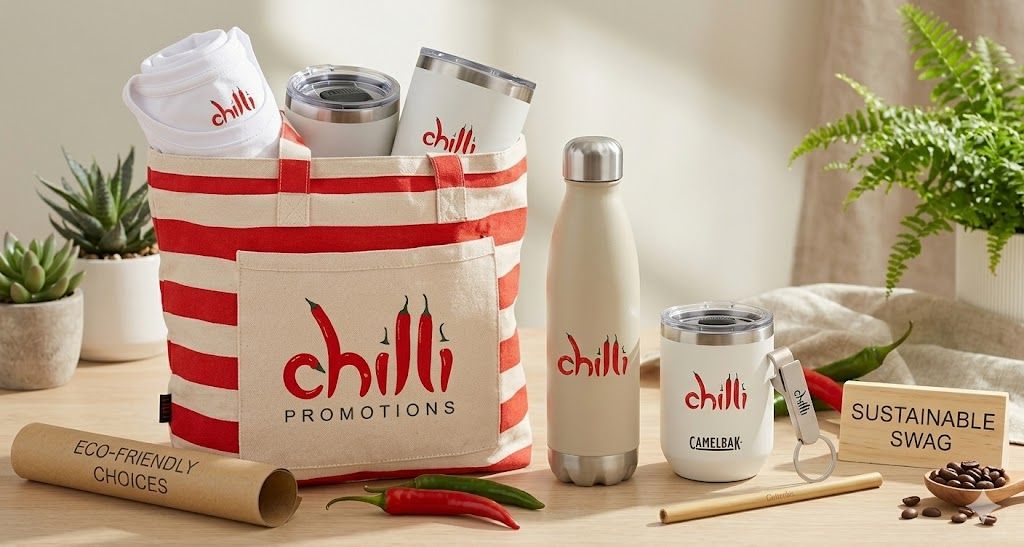
For HR teams building or refining a recognition programme, the top corporate giveaway products from Chilli Promotions cover everything from sustainable drinkware and premium apparel to desk accessories and onboarding gift packs. Every item is available with full customisation, including branding, personalisation, and eco-certified materials. The team works directly with HR and leadership to match products to your recognition strategy, your workforce values, and your budget. You will notice a difference when you add Chilli.
FAQ
What are branded HR gifts?
Branded HR gifts are employer-provided items featuring a company logo or message, given to employees as tangible expressions of recognition and appreciation. They are most effective when paired with a specific acknowledgement of the employee’s contribution.
Do branded gifts actually increase retention?
Yes. Employees who receive high-quality recognition, including tangible branded gifts, are 45% less likely to leave within two years, regardless of their compensation level.
How are recognition and rewards different in HR?
Recognition meets emotional and relational needs by making employees feel seen and valued. Rewards are transactional exchanges for performance. Conflating the two reduces the effectiveness of both.
What makes a branded gift effective for employee loyalty?
Quality, personalisation, and timing are the three critical factors. A retail-grade item given immediately after a specific achievement, accompanied by a personal message, creates a lasting emotional memory that drives loyalty.
Should remote employees receive branded gifts too?
Remote employees benefit equally from branded gifting programmes. Dedicated work-from-home gift packs maintain the same standard of recognition for distributed teams and prevent the disengagement that comes from feeling overlooked.