Tote bags fall into four broad size tiers: small (around 30×30 cm), standard or medium (about 38×42 cm), large (around 45×50 cm) and extra-large (55×60 cm and up). For most promotional and everyday needs, the standard 38×42 cm tote hits the sweet spot of capacity and comfort. Gusset depth and fabric weight then decide how much that size actually carries and how long it lasts.
TL;DR:
- The most common tote size for promotional use is 38×42 cm with an 8 to 10 cm gusset, offering a balance of capacity and comfort.
- Gusset depth has a large impact on actual capacity, with a 12 cm gusset nearly doubling the volume compared to a 10 cm gusset in the same size.
- Fabric weight determines lifespan, with 6 to 8 oz suited for short-term giveaways and 12 oz or more for heavy-duty, reusable totes.
- Handle length and reinforcement are critical for comfort, with shoulder handles around 55 to 60 cm and reinforced handles for heavier loads.
- Accurate sizing depends on contents and gusset specifications, not just face dimensions, requiring detailed specification and sample testing before bulk ordering.
Table of Contents
- Standard tote bag sizes: the size chart with conversions
- How gusset depth changes usable capacity
- Handle drop and how to choose the right carry length
- Fabric weight: matching oz to expected lifespan
- How to choose the right tote size for your campaign
- Chilli Promotions: sample testing and product examples
- What fits where: sizing totes to real contents
- Comparing tote sizes across common styles
- Size versus weight: portability trade-offs to plan for
- Storing and caring for totes by size
- Why sizing advice usually misses the point
- Order tote bags sized right the first time
- FAQ
Standard tote bag sizes: the size chart with conversions
Picking a tote size gets far easier once you can see the tiers side by side, with the metric measurement, the imperial equivalent and a sensible use case for each. These bands aren’t rigid engineering standards. They’re planning baselines that most manufacturers, including Chilli Promotions, work from when a client asks for “a normal-sized tote” or “something bigger for groceries.”
| Size tier | Dimensions (cm) | Dimensions (in) | Typical gusset | Best suited to |
|---|---|---|---|---|
| Small | 30×30 | 12×12 | 5 cm | Conference handouts, brochures, light retail bags |
| Standard/Medium | 38×42 | 14 to 16 × 14 to 16 | 8 to 10 cm | Everyday carry, promotional giveaways, trade shows |
| Large/Jumbo | 45×50 | 20×20 | 10 to 12 cm | Grocery shopping, retail merchandise, event kits |
| Extra-large | 55×60+ | 24×24+ | 12 cm+ | Laundry, market stalls, bulk trade displays |
These size ranges are common planning baselines across the promotional bag industry, though individual suppliers vary by a centimetre or two depending on their pattern.
A few conventions matter when you’re comparing quotes from different suppliers:
- Measurements are almost always taken flat, seam to seam, with the handles excluded from the height figure.
- Expect a sewing tolerance of around ±1 cm on most production runs. A “38×42” tote might land at 37×43 and still be within spec.
- Print-area margins typically allow around 2 cm per side for seams, with a further 1 cm safety buffer from any gusset fold.
- Converting is simple: 1 inch equals 2.54 cm, so a “14 to 16 inch” tote lands squarely in the 35 to 41 cm bracket.
How gusset depth changes usable capacity
A gusset is the panel of fabric at the base or sides of a tote that lets it stand open rather than collapse flat, and it’s the single biggest lever on real-world volume. A side gusset adds width at the bottom seam; a base gusset adds depth by folding the bag’s floor outward. Both do the same job: they turn a flat pouch into something with actual internal volume.
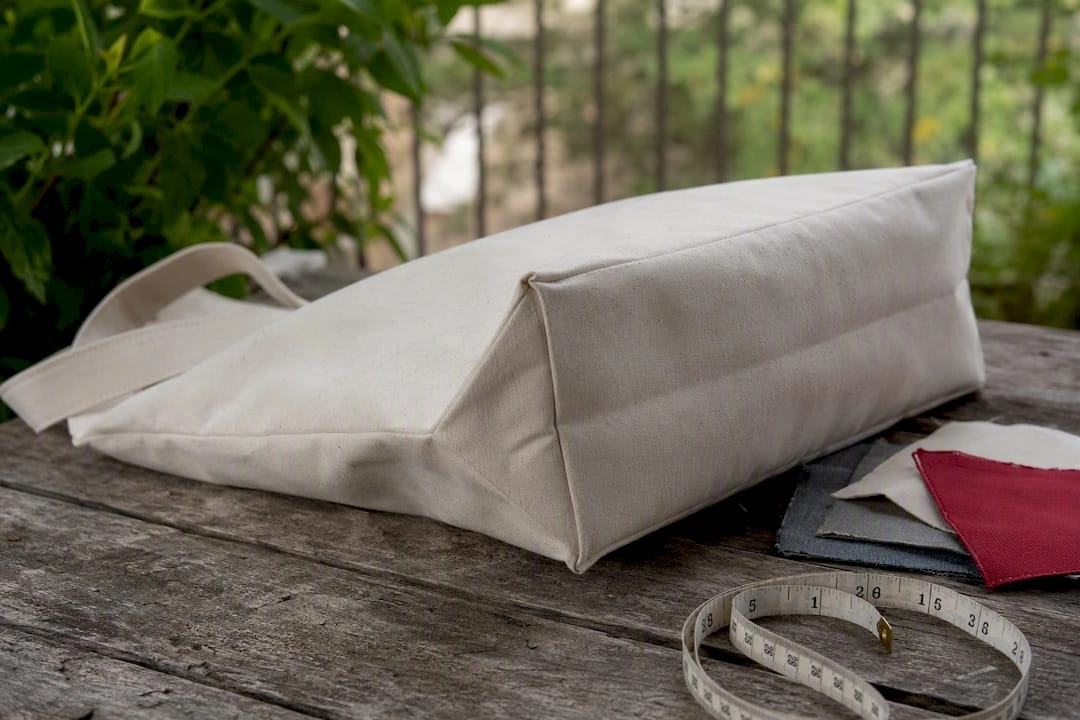
The numbers back this up clearly. A standard 38×42 cm tote with a 10 cm gusset holds roughly 15 to 16 litres, while stepping up to an extra-large 46×51 cm tote with a 12 cm gusset takes that to around 27 litres, nearly double the capacity for a size increase that looks modest on paper.
Pro Tip: Don’t judge capacity by width and height alone. Two totes with identical face dimensions can differ by 10 litres or more depending purely on gusset depth.
Specify a gusset whenever the bag needs to hold rigid or bulky items:
- Grocery and retail merchandise bags almost always need at least an 8 to 10 cm gusset to stand upright on a counter.
- Conference or event kits with folders, bottles and printed material benefit from a 5 to 8 cm gusset.
- Flat promotional giveaways (a single brochure, a lanyard) rarely need a gusset at all, and skipping it keeps unit cost down.
Handle drop and how to choose the right carry length
Handle drop is the measured distance from the top seam of the bag to the top of the handle loop, and it’s what decides whether a tote sits comfortably in the hand or over the shoulder. A drop of 55 to 60 cm suits shoulder carry for most adults, while a shorter 30 to 35 cm drop works better for hand carry or when the bag needs to sit under a counter without dragging.
Handle width and reinforcement matter just as much as length. Narrow handles under 2 cm dig into the shoulder under load, so anything destined for groceries or heavier merchandise should carry stitched or webbing-reinforced handles. Longer handles also shift where artwork can safely sit without overlap.
- Commuters and shoppers: 55 to 60 cm shoulder-carry handles, reinforced at the stitch point.
- Event attendees: 30 to 40 cm hand-carry handles are usually enough for light giveaways.
- Retail merchandise: longer, wider handles that can take repeated loading and unloading.
Fabric weight: matching oz to expected lifespan
Fabric weight, expressed in ounces per square yard (oz) or grams per square metre (gsm), is the most reliable shorthand for how long a tote will survive real use. It’s also one of the most commonly under-specified details on a purchase order, which is exactly where budget totes go wrong.
Common weight bands break down clearly: 6 to 8 oz suits short-term event giveaways where the bag might be used once or twice. 10 oz is the standard weight for branded merchandise expected to survive weeks of regular use. 12 oz and above is the band for grocery or everyday retail totes that need to handle repeated loading without stretching or tearing at the seams.
- 6 to 8 oz canvas or cotton: cheapest per unit, fine for single-use conference or trade show handouts.
- 10 oz cotton or canvas: the workhorse weight for most branded merchandise programs.
- 12 oz+ canvas: reinforced bases and stitched handles become worth specifying at this weight, since the fabric itself will outlast a basic handle.
- Non-woven polypropylene: the economy option, lighter on cost but shorter on lifespan than woven cotton or canvas.
Reinforcement points (box-stitched handle bases, bar-tacked corners) and washing expectations should scale with the weight band. A 12 oz retail tote that’s expected to be relaunder-able needs reinforced seams; a 6 oz giveaway generally doesn’t.
How to choose the right tote size for your campaign
Getting tote sizing right before you place a bulk order saves reprints, freight blowouts and awkward conversations with a client who expected something bigger. Work through this in order:
- Define the primary load. A folded A4 flyer needs almost nothing; a 6 pack of drink bottles needs real gusset depth. Measure the actual contents before picking a size tier.
- Match the recipient profile to the size. Conference attendees carrying one brochure don’t need the same tote as a retail customer doing a grocery run.
- Confirm the gusset. If contents are rigid or bulky, specify gusset depth as its own line item, not as an assumption baked into “standard size.”
- Set the handle drop. Shoulder carry for anything heavier than a light giveaway; hand carry is fine for flat, light contents.
- Lock in fabric weight. Treat oz as a contract term, not an optional note, particularly for retail merchandise expected to survive multiple uses.
- Check the print area. Confirm margins around seams and gusset folds so artwork doesn’t get lost in a fold when the bag is full.
- Request a physical sample. Run a fit test with the actual intended contents before signing off on a bulk run.
- Factor shipping and pallet implications. Extra-large totes take up meaningfully more pallet space per unit, which affects freight cost on large runs.
Pro Tip: When in doubt, default to the standard 38×42 cm size with a 10 cm gusset. It’s the safest all-round choice for most campaigns, and upsizing from there is a cost decision, not a capacity one.
Upsizing always costs more per unit in fabric and freight, so only step up to large or extra-large when the contents genuinely demand it.
Chilli Promotions: sample testing and product examples
Chilli Promotions recommends requesting physical samples and running a fit test with your actual promotional items before approving a bulk run. It’s the single best way to catch a capacity or handle-comfort issue before it becomes 500 wrong-sized bags.
Mapping the size tiers to real Chilli Promotions products makes this concrete. The Stuff Tote Bag suits smaller, flatter loads like brochures or single-item giveaways. The Carnaby Cotton Tote Bag sits in the standard tier, the natural choice for everyday branded merchandise. The Karryall Nylon Shopping Tote is built for the large end, with the gusset depth and fabric durability grocery and retail use demands.
Production tip: aligning your requested dimensions to standard fabric roll widths, often around 140 cm, can meaningfully cut per-unit cost without changing the bag’s perceived size. It’s worth raising with your supplier before finalising a spec.
What fits where: sizing totes to real contents
Numbers on a spec sheet are useful, but picturing what actually goes inside each tier is what settles most sizing decisions.
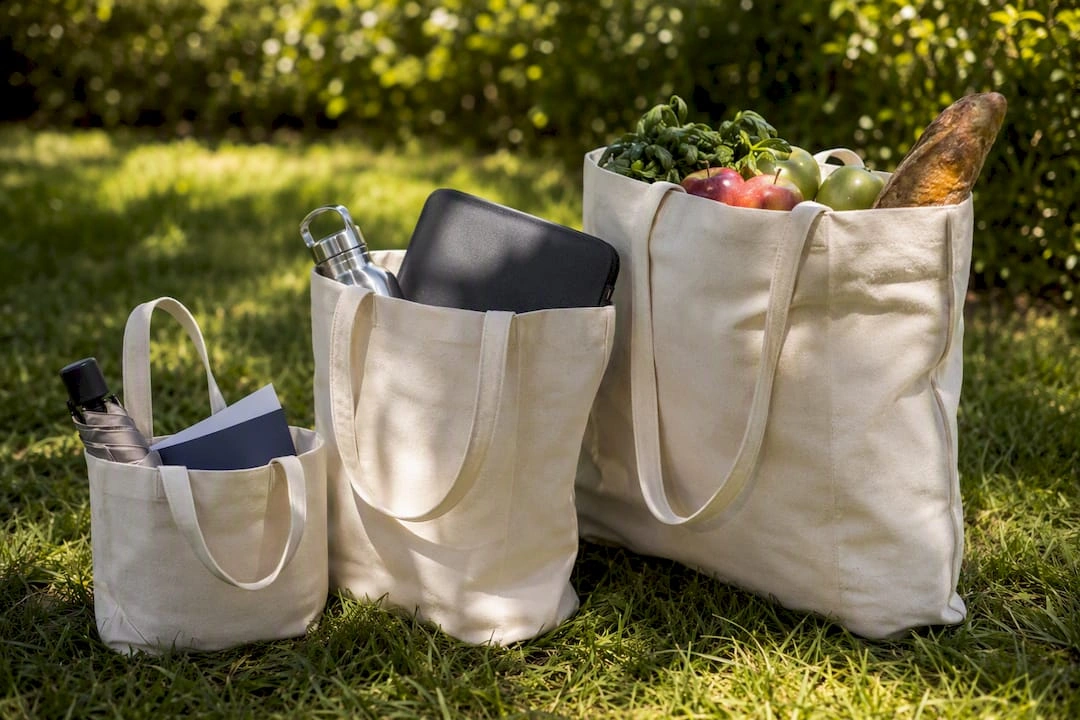
A small tote (30×30 cm) comfortably holds a folded A4 brochure, a notebook, a phone and a set of keys. It’s the size for conference lanyards, product samples or a single-item retail bag.
A standard tote (38×42 cm) takes a laptop sleeve, a lunchbox, a water bottle and a light jacket without straining the seams. It’s also the size that handles a modest grocery top-up, four or five items, without needing a deep gusset.
A large tote (45×50 cm), with its 10 to 12 cm gusset, fits a proper grocery shop: bread, a carton of eggs, a couple of bottles and packaged goods stacked without crushing anything at the bottom.
An extra-large tote (55×60 cm+) is built for volume rather than delicacy: laundry, market stall stock, or a full day’s worth of trade show collateral including folders and merchandise samples.
Matching contents to size this way avoids the common mistake of choosing by appearance alone. A tote that looks generously sized in a supplier photo can still be the wrong pick if the gusset is shallow and the load is bulky rather than flat.
Comparing tote sizes across common styles
Not every “standard” tote is built the same, even when suppliers use the same size label. A flat, ungusseted cotton tote sold under a “medium” label might match the 38×42 cm face dimensions of a gusseted canvas equivalent, yet carry noticeably less because it has nowhere for volume to sit once loaded.
Non-woven polypropylene totes, common in retail and event giveaways, tend to run slightly smaller than their cotton or canvas counterparts at the same nominal size, since the stiffer material needs less seam allowance. Canvas totes at 12 oz and above often ship marginally larger than their stated dimensions to account for stretch under load. None of this is deceptive. It’s simply a reminder that “standard size” is a planning label, not a guaranteed identical spec across every material and supplier.
The practical benchmark: when comparing quotes, ask for the flat, seam-to-seam measurement and the gusset depth as two separate figures, rather than accepting a single size name at face value. That’s the only way to compare a polypropylene shopper against a canvas tote on genuinely equal terms.
Size versus weight: portability trade-offs to plan for
Bigger totes carry more, but they also weigh more, both empty and loaded, and that trade-off matters more than most buyers expect at the ordering stage. An extra-large 55×60 cm canvas tote in 12 oz fabric weighs meaningfully more empty than a small 30×30 cm tote in 6 oz cotton, before either bag holds a single item.
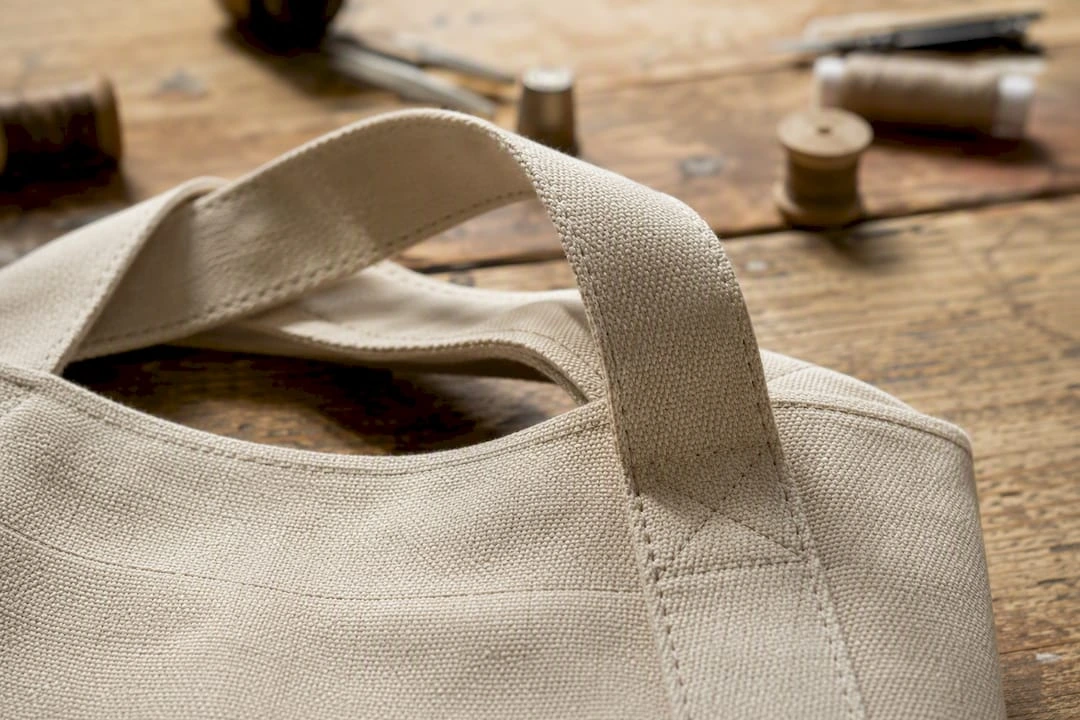
That empty weight compounds once contents go in. A large gusseted tote loaded with groceries can become genuinely awkward to carry any distance, particularly with a hand-carry handle drop rather than a shoulder-length one. This is why handle drop and fabric weight decisions shouldn’t be made independently of size. A heavier fabric on a bigger bag needs a longer, better-reinforced handle to stay comfortable.
For promotional giveaways handed out at events, portability often matters more than raw capacity. A recipient carrying a tote through a conference floor for hours will judge it on comfort, not on how much it could theoretically hold. That favours smaller, lighter builds (6 to 8 oz fabric, modest or no gusset) even when a bigger bag would fit more.
For retail and grocery use, the calculation flips. Recipients accept extra weight in exchange for capacity, provided the handle and fabric can bear the load without straining. Getting this balance right is as much about the intended journey from shop to home as it is about the bag’s stated dimensions.
Storing and caring for totes by size
Storage habits differ across the size tiers more than most buyers realise, mostly because larger totes don’t fold or stack the way smaller ones do. Small and standard totes flatten easily and store well in drawers or on hooks, since they lack the structural gusset that keeps larger bags rigid.
Large and extra-large gusseted totes hold their shape even empty, which means they take up genuine shelf or cupboard space rather than folding flat. If storage space is limited, factor that into a bulk order. A stack of 500 extra-large totes takes up considerably more room than the same count in standard size.
Care requirements track fabric weight more than size. Lighter 6 to 8 oz cotton totes can generally handle a gentle machine wash, though colour retention on printed logos drops with repeated washing. Heavier 10 to 12 oz canvas holds its shape and print better over time but is better spot-cleaned than machine washed, since repeated washing can loosen box-stitched handle reinforcements. Non-woven polypropylene totes shouldn’t be machine washed at all. A damp wipe is the safest option, and that’s worth flagging to end users if the bags are going out as branded merchandise expected to last.
For anyone managing a fleet of promotional totes across an office or event kit, storing them flat where possible and away from direct sunlight preserves both the fabric and the print longer than any washing routine can compensate for.
Why sizing advice usually misses the point
Most tote bag guides treat sizing as a naming exercise: pick “small,” “medium” or “large” and move on. That’s backwards. The size label tells you almost nothing about how a bag will actually perform once it’s loaded and carried, which is the only thing a recipient ever notices.
The gap that matters is between the face dimensions on a spec sheet and the gusset depth that determines real capacity. Two totes can share identical width and height and differ by ten litres of usable volume, simply because one supplier quoted a gusset and the other didn’t. That’s the detail worth interrogating on every quote, not the size name attached to it.
The other underrated factor is fabric weight as a contract term. Treating it as a footnote rather than a locked specification is how buyers end up with 500 totes that tear at the handle seam within a month. If there’s one thing this guide argues for above all else, it’s specifying gusset depth and fabric weight with the same rigour as width and height, not as an afterthought to a size label.
— Allissar Tawadros
Order tote bags sized right the first time
Chilli Promotions manufactures and supplies custom-branded tote bags across the full size range covered here, from lightweight event giveaways through to gusseted retail-grade totes, with sample fit-testing available before you commit to a bulk run.

That’s the practical advantage over guessing from a size chart alone: you get an actual sample in hand, loaded with your intended contents, before a single unit goes to production. For procurement and marketing teams choosing between the Stuff Tote Bag, the Carnaby Cotton Tote Bag or the Karryall Nylon Shopping Tote, that fit-test step removes the guesswork a spec sheet can’t. Chilli Promotions also offers carbon-offset and sustainable fabric options for teams prioritising environmental credentials alongside size and durability, detailed in its sustainable promotional products guide. If your artwork needs specific placement, it’s worth consulting how to choose a branding agency for brand success before finalising dimensions. Browse the current promotional tote bag range and request a sample to confirm size and capacity before you place your next bulk order.
FAQ
What is the standard size for a tote bag?
The standard or medium tote bag measures roughly 38×42 cm, or 14 to 16 inches wide and high, making it the most common size for promotional and everyday use.
What are the standard dimensions of a tote bag across sizes?
Dimensions typically run from small (around 30×30 cm) through standard (38×42 cm) and large (45×50 cm) up to extra-large (55×60 cm and above), with gusset depth adding further capacity at each tier.
What is a standard tote size in litres?
A standard 38×42 cm tote with a 10 cm gusset holds roughly 15 to 16 litres, enough for a light grocery top-up or a day’s worth of event materials.
What is the most popular tote bag size?
The 38×42 cm standard size is the most widely chosen for promotional campaigns, since it balances comfortable carry with enough capacity for everyday contents, and it’s the size Chilli Promotions recommends as the default starting point for most orders.
How much does gusset depth actually change capacity?
Significantly. Stepping from a 38×42 cm tote with a 10 cm gusset to an extra-large 46×51 cm tote with a 12 cm gusset roughly doubles usable volume to around 27 litres.