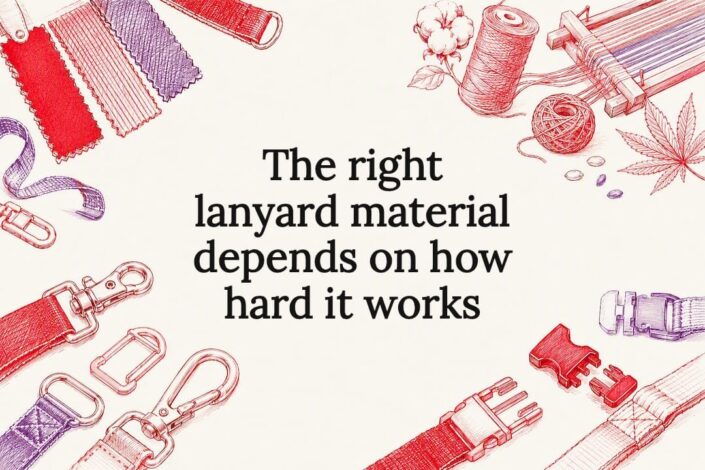
For most events and daily staff wear, polyester is the safe default: it prints beautifully, holds up to regular use and keeps unit costs down. If you need a premium feel for VIP passes or conference credentials, woven jacquard delivers sharper, longer lasting logos. Sustainability-focused organisations should look at RPET or bamboo fibre blends, while nylon suits heavy-duty or higher-sheen applications like security or corporate ID programs.
Whatever you choose, one rule overrides material preference: always confirm the breakaway specification is verified, not just claimed, especially in schools, healthcare, industrial sites or anywhere near machinery.
- Events and conferences: polyester (standard) or woven jacquard (premium)
- Daily staff wear: polyester or nylon
- Heavy-duty/industrial: nylon with verified breakaway
- Phone carry: reinforced polyester or nylon with tested tether tabs
- Sustainability-led brands: RPET or bamboo fibre
Chilli Promotions supplies each of these as sample-ready options, including verified breakaway hardware, so you can compare feel and finish before committing to a bulk order.
Key Takeaways
Polyester remains the default lanyard material for most organisations, but the right choice depends on durability needs, print requirements and verified safety specifications.
| Point | Details |
|---|---|
| Polyester is the default | Balances cost, durability and dye-sublimation print quality for most bulk orders. |
| Woven jacquard for longevity | Logos woven into the strap resist fading far longer than surface printing. |
| Breakaway needs verification | Ask suppliers for the actual release-force figure, not just a generic safety claim. |
| Width affects legibility | Standard widths run 10mm to 25mm; wider straps suit multi-colour or text-heavy branding. |
| Chilli Promotions supplies verified options | Its Taurus range includes eco fabric and full-colour lanyards with checked breakaway hardware. |
Table of Contents
- Lanyard material options explained: polyester, nylon, satin, tubular, woven and eco fibres
- Which printing method suits which lanyard material?
- Attachments, breakaways and phone-lanyard safety specs
- How to choose the right lanyard material for your organisation
- What sustainability evidence should you request from a lanyard supplier?
- What lanyards cost at different order quantities
- An editorial note on getting lanyard specs right
- Get lanyard samples and a quote from Chilli Promotions
- FAQ
Lanyard material options explained: polyester, nylon, satin, tubular, woven and eco fibres
Choosing between lanyard material options comes down to four practical questions: how it prints, how long it lasts, how it feels against skin or clothing, and what it costs at your order volume. Here’s how the common options stack up.
- Polyester. This is the workhorse of the industry and the most popular choice for polyester screen printed lanyards in Australia. It takes both screen printing and dye-sublimation cleanly, resists fraying under daily handling, and sits at the lower end of the cost curve. It’s the right call for staff ID badges, conference passes and any bulk order where budget and turnaround matter more than a luxury finish.
- Nylon. Slightly glossier than polyester, with a smoother hand-feel and better resistance to moisture and abrasion. Nylon holds up well in outdoor events, security roles and industrial settings where lanyards get knocked around all day. It costs a bit more than polyester but earns that premium in durability.
- Satin. A softer, more luxurious finish often used for award ceremonies, VIP access or hospitality staff where presentation matters as much as function. Satin doesn’t handle heavy daily wear as well as polyester or nylon, so it suits shorter-run, higher-impact applications rather than everyday staff use.
- Tubular. Constructed as a hollow woven tube rather than a flat strap, tubular lanyards feel more substantial and drape differently around the neck. They’re a good middle ground between cost and perceived quality, often chosen for trade shows where the lanyard itself becomes part of the branded experience.
- Woven or jacquard. Instead of printing a design onto the surface, woven lanyards weave the logo directly into the strap’s threads. That construction method is why woven jacquard is positioned as the premium, long-lasting alternative to surface print for organisations that want their branding to survive years of use without fading or peeling. Expect a higher unit price and longer lead time, since weaving takes more setup than printing.
- RPET and bamboo fibre. Made from recycled plastic bottles or bamboo pulp, these materials appeal directly to sustainability-conscious procurement teams. They typically carry a modest cost premium over standard polyester, and recyclability depends on the local textile recovery stream your organisation has access to rather than being universal.
Width matters as much as fibre choice. Standard lanyard widths run 10mm, 15mm, 20mm and 25mm, with a common flat length around 900mm. Narrower straps (10mm to 15mm) suit subtle branding or smaller logos, while 20mm and 25mm widths give you room for legible text and multi-colour artwork, and they sit more comfortably for staff wearing a lanyard all day.
One more practical point: locally manufactured lanyards generally offer faster turnaround and easier sample verification, while imported stock can be cheaper at very high volumes but adds shipping time and makes it harder to confirm breakaway performance before the goods land. For time-sensitive events, factor that into your ordering timeline early.
Which printing method suits which lanyard material?
The decoration method you choose depends on the artwork, the material, and how long you need the branding to last.
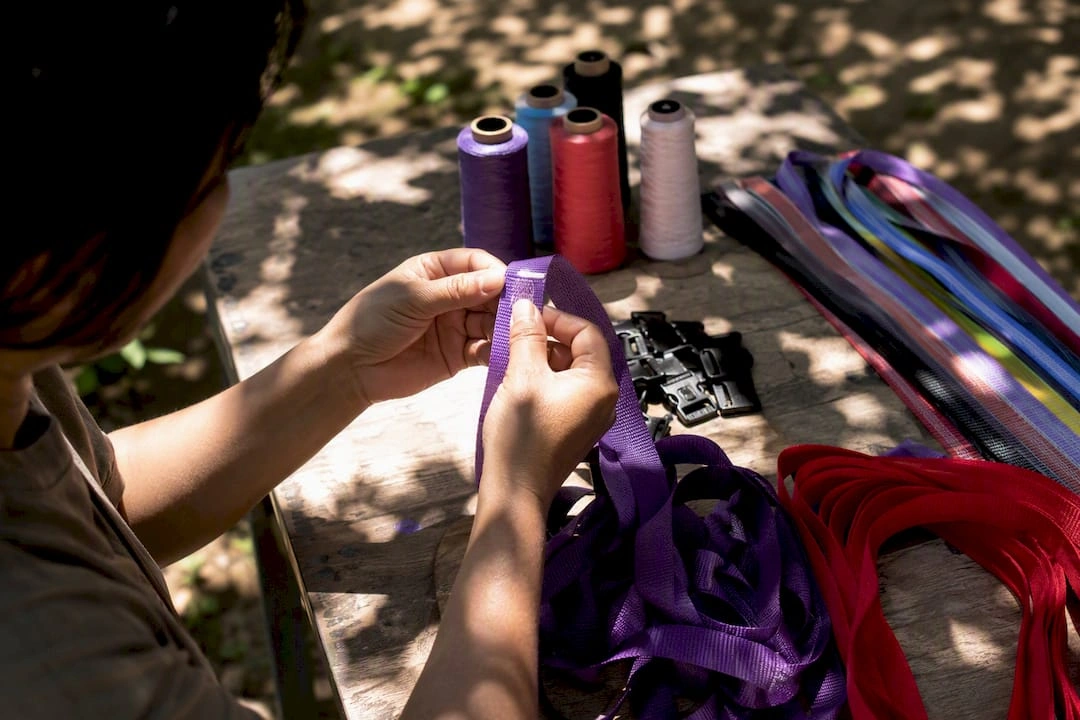
- Screen printing applies spot colours directly onto polyester or nylon webbing. It’s cost-effective for simple logos with one to three colours and holds PMS matching well for brand consistency.
- Dye-sublimation infuses colour into the fibre itself, giving you edge-to-edge, full-colour results. It’s the method of choice for photographic artwork, gradients or complex multi-colour designs on polyester.
- Woven jacquard builds the logo into the weave structure rather than printing over it, which is why it outlasts surface-applied methods on colour durability and resistance to fading.
Choose sublimation when your artwork has photographic detail or a busy colour palette. Choose woven when the design is simple text or a clean logo mark that needs to survive years of handling. Finishing options like edge sealing prevent fraying on cut ends, and heat transfer patches can add a badge-style element without disrupting the base print.
Attachments, breakaways and phone-lanyard safety specs
The attachment hardware matters just as much as the strap material, particularly in workplaces where lanyards are worn constantly.
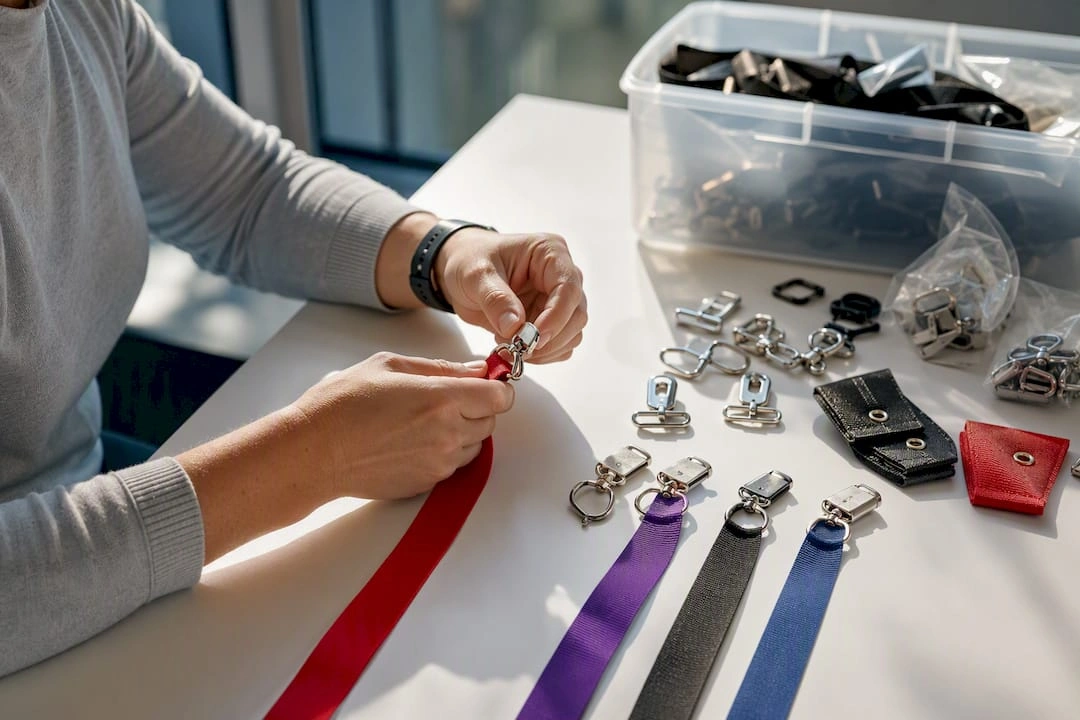
- Swivel J-hook: rotates freely so ID badges face forward, ideal for staff who need their photo visible.
- Lobster claw: a secure spring-loaded clasp, good for higher-security environments where accidental detachment isn’t acceptable.
- Split ring: best for permanent attachments like keys that shouldn’t come loose during normal use.
- Bulldog clip: flat clip suited to paper credentials or single-sided badges.
- Badge reel: retractable cord for high-frequency scan environments like access-controlled buildings.
Safety breakaways matter wherever a lanyard could catch on machinery, doors or play equipment. Guidance typically cites release forces in the region of 2 to 4 pounds, though published figures vary by manufacturer, so ask suppliers for actual test data rather than accepting a generic “breakaway included” claim.
Phone lanyards carry different risks again. Reinforced tether tabs and swivel lobster clasps rated for the phone’s weight prevent common failure points like tab tearing, and it’s worth confirming case-fit compatibility before ordering.
Pro Tip: Ask any lanyard supplier for the specific breakaway release-force figure in writing, not just the word “safety” on a spec sheet. It’s a measurable number, and a supplier who can’t produce it probably hasn’t tested it.
How to choose the right lanyard material for your organisation
Work through this sequence before you request quotes, and you’ll avoid the two most common procurement mistakes: choosing on price alone, or discovering safety gaps after the order has shipped.
- Define the use case. Event, daily staff wear, industrial, or phone carry each point to a different starting material.
- Set the durability bar. A one-day conference lanyard has different requirements to one worn eight hours a day, five days a week.
- Confirm print needs. Simple one-colour logo, full-colour photographic artwork, or long-term woven branding each favour a different decoration method.
- Lock in safety requirements. Any setting with machinery, children or restricted areas needs a verified breakaway spec, not an assumed one.
- Weigh sustainability preference. If recycled content matters to your brand or your tender requirements, factor RPET or bamboo into the shortlist early.
- Set budget and quantity. Larger runs bring the unit price down but extend lead time on premium finishes like woven jacquard.
When drafting your RFQ, include these fields: material, width, length, print method, attachment type, breakaway specification, sample requirement, turnaround time and packaging. A supplier that skips over any of these in their reply is worth a second look.
Watch for red flags in supplier responses: vague breakaway claims with no release-force figure, no sample photos offered before bulk commitment, and recycled-content statements with no batch or mill reference behind them. Requesting an RFQ spec sheet that lists attachment material and breakaway verification protects you from exactly these gaps.
What sustainability evidence should you request from a lanyard supplier?
RPET fibre comes from recycled plastic bottles reprocessed into polyester yarn, while bamboo fibre is derived from bamboo pulp. Both sit at a modest premium over standard polyester, and neither is universally recyclable at end of life. It depends on what your local textile recovery stream accepts.
Before you commit to an eco claim, request the paperwork behind it:
- A written recycled-content statement, not just a marketing label
- Mill certificates or batch IDs tracing the fibre source
- Country of manufacture, since supply chain transparency affects verification
- A physical sample, so you can compare feel and print quality against standard polyester
Procurement teams should treat sustainability claims the same way they treat breakaway claims: as a measurable spec to verify, not a marketing word to take on faith.
Chilli Promotions’ Taurus Lanyard-Eco Fabric with Breakaway pairs recycled fabric with a verified breakaway mechanism, giving procurement teams both the sustainability credential and the safety documentation in one product rather than having to source them separately.
What lanyards cost at different order quantities
Unit price drops as quantity rises, which is standard across the promotional products industry. Expect a noticeably lower per-unit cost moving from sample quantities to 250 units, and a further step down at 500 and 1,000-plus units, particularly for standard polyester with screen printing.
- Setup fees typically cover colour separations for multi-colour screen printing or the tooling required for woven jacquard; simpler single-colour jobs often carry lower or no setup charge.
- Sample costs are common practice before bulk commitment, and many suppliers credit that sample cost against your final order if you proceed.
- Lead times differ meaningfully between locally manufactured stock, which turns around faster and is easier to expedite for a fixed event date, and offshore production, which can be cheaper at scale but needs longer scheduling buffers and makes last-minute changes harder.
Build your event timeline backwards from the date lanyards need to be on site, not forward from your order date, particularly if you’re specifying woven jacquard or an eco fabric with longer production runs.
An editorial note on getting lanyard specs right
The biggest mistake I see in lanyard procurement isn’t picking the wrong material. It’s treating “breakaway included” as a checkbox rather than a number you can ask for. A verified release-force figure costs nothing to request and tells you far more than a marketing claim ever will. Chilli Promotions checks breakaway performance and print quality before anything ships. So, ask for that documentation alongside your samples.
— Allissar Tawadros
Get lanyard samples and a quote from Chilli Promotions
Chilli Promotions manufactures and supplies the full range of lanyard material options covered here, from everyday polyester through to woven jacquard for premium branding and eco fabric for sustainability-led programs. Every eco line, including the Taurus Lanyard Full Colour with Breakaway, ships with breakaway hardware that’s been checked before dispatch rather than assumed to be compliant.
If you’re weighing up material, width, attachment type or breakaway spec for an upcoming order, the fastest way forward is to request physical samples against your own RFQ criteria rather than deciding from a catalogue photo. Browse the current range on Chilli Promotions’ promotional products page and submit your specifications for a quote, including quantity, material preference and any safety requirements specific to your site.
FAQ
What is the best material for a lanyard?
Polyester suits most general and bulk uses because it balances cost, durability and print quality, while woven jacquard is better for premium, long-lasting branding and nylon suits heavy-duty or outdoor use.
What material is used to make lanyards?
Lanyards are commonly made from polyester, nylon, satin, tubular weave, woven jacquard, or eco fibres like RPET (recycled plastic) and bamboo, each suited to different budgets and use cases.
What fabric are lanyards made from?
Most lanyards use polyester or nylon webbing, with satin, tubular and eco fabrics like RPET or bamboo fibre available for specific finish, sustainability or presentation needs.
What are the three types of lanyards?
There’s no single official classification, but lanyards are commonly grouped by construction (flat printed, woven jacquard, tubular), by material (polyester, nylon, eco fibre), or by attachment style (swivel hook, lobster claw, badge reel). Chilli Promotions offers options across all these groupings, including verified breakaway versions.