Swag kitting is the right move whenever you need consistent, on-brand kits at scale without babysitting five suppliers. It bundles sourcing, decoration, assembly and shipping into one programme, so your onboarding pack, event bag, or VIP gift always looks the same, whether it’s kit one or kit five hundred. If you’re testing the concept, start with a small pilot batch and one approved sample before committing to a full run.
TL;DR:
- Building around a single hero item ensures meaningful impact and controls costs more effectively than spreading budget across multiple mediocre products.
- Mockups and samples must be approved before production to prevent costly reprints and packaging issues, especially for large or international orders.
- Standardizing SKUs and limiting size and color variations at launch simplifies packing and reduces errors during reorders.
- Full-service kitting offers end-to-end management, ideal for large, recurring programmes with multiple distribution points, while DIY suits small, one-off runs.
- A small pilot batch with a clear approval process minimizes risks and helps optimize kit design before full-scale production.
Table of Contents
- What is swag kitting, and where do teams actually use it?
- How do you choose what goes in the kit?
- What does the swag kitting process actually involve?
- What does a swag kit actually cost?
- DIY, partial outsource, or full-service: how do you decide?
- What does a well-run kitting programme look like in practice?
- Three lessons from running kitting programmes
- How Chilli Promotions can help with your next kit
- FAQ
What is swag kitting, and where do teams actually use it?
Swag kitting is the process of sourcing, branding, assembling and shipping a curated set of promotional items as one packaged unit rather than as separate purchases. You’ll also see it called swag boxes, welcome packs, or corporate gift kits. All three terms describe the same operational idea: bundling sourcing, decoration, assembly and shipping into a single turnkey programme that works across very different briefs.
The reason this matters is friction. Ordering a hoodie from one supplier, a notebook from another, and a drink bottle from a third, then hand-packing them in-house, multiplies your lead times and your chances of a mismatched logo. Centralised kitting removes that patchwork.
Common use cases include:
- Onboarding: a Day 1 welcome pack that gives new hires a consistent first impression, regardless of whether they’re remote, hybrid or in the office.
- Events and conferences: bulk kits handed out at a booth or delegate registration desk, built for speed of assembly rather than individual customisation.
- VIP and client gifting: smaller, higher-value runs where presentation carries more weight than volume.
- Recurring appreciation programmes: quarterly or annual gifting where centralised inventory means procurement doesn’t restart from scratch every cycle.
How do you choose what goes in the kit?
The single biggest reason a branded kit falls flat isn’t the budget. It’s the mix. Kits fail when items go unused, spend is spread too thin, or the final pack looks thrown together rather than designed — and the fix for all three is the same: build around a hero item.
The hero-item approach
Pick one piece the recipient will actually notice, and give it most of the budget. A quality hoodie, an insulated drink bottle, or a decent tech accessory sets the perceived value of the whole kit. Everything else, notebooks, pens, stickers, exists to support that hero piece, not compete with it for attention. Practitioners consistently favour allocating the bulk of spend to one standout item rather than spreading it evenly across five mediocre ones.
Match the hero item to the occasion:
- Onboarding kits lean toward apparel: a hoodie or polo the new hire will wear outside work.
- Event kits favour tech accessories: power banks, cables, or badge holders that get pocketed and used.
- VIP packs justify a genuinely premium item, drinkware or leather goods, where quality reads at a glance.
Decoration and sizing decisions
Embroidery reads as premium and suits apparel hero items; screen print is faster and cheaper for bulk event runs. Labels and pad printing work best on hard goods like bottles or tech accessories. Whatever method you choose, keeping SKU colour and size variations tight at launch avoids the packing headaches that come from juggling six sizes across four colourways in the same shipment.
Pro Tip: Run your first kit with two sizes only (M and L, or S/M and L/XL) and expand the size range once the reorder is proven. It’s far easier to add variety later than to unpick a packing mess.
For a broader look at product selection across different occasions, our guide to team building branded merchandise walks through the trade offs in more detail.
What does the swag kitting process actually involve?
Kitting runs through a predictable sequence, and skipping a step is where most delays and reprints come from.
- Sourcing: confirm stock availability and decoration minimums early. Popular apparel styles and colours sell through fast around peak conference and end-of-year gifting seasons, so lock stock before you lock a delivery date.
- Decoration: embroidery and print both carry setup lead times separate from production. Get artwork approved before the run starts, not during it.
- Mockup and sample check: build a full mockup that includes every branded item plus the packaging insert, then photograph and review it assembled, in the same condition it will be shipped or handed over. This is where a wrong thread colour or a poorly placed logo gets caught before it’s stitched into five hundred units.
- Assembly: decide between a centralised pack (one location assembles every kit) or fulfil-from-supplier (the decorator ships directly). Centralised packing gives you tighter quality control; supplier fulfilment is usually faster for large, geographically spread rollouts.
- Storage and fulfilment: choose between bulk drops to a single event address or direct-to-door shipping for distributed teams. International shipping adds customs paperwork and longer lead times, so factor that into your timeline if any recipients are overseas.
Getting mockups signed off is not a box-ticking exercise. It’s the single cheapest insurance against a costly reprint.
What does a swag kit actually cost?
Per-kit cost breaks into five components: the products themselves, decoration, packaging, assembly/fulfilment labour, and shipping. Each one moves independently, which is why two kits with the same items can cost noticeably different amounts depending on where they’re shipped and how they’re packed.
- Product cost: usually the largest single line, and where the hero-item rule applies directly.
- Decoration: embroidery costs more per unit than screen print but scales better across multiple item types.
- Packaging: a clean box with a well-designed printed insert routinely outperforms expensive rigid packaging that doesn’t survive freight — impressive packaging that arrives crushed defeats its own purpose.
- Fulfilment and shipping: direct-to-door for a distributed team costs more per unit than one bulk pallet to an event venue.
Illustrative cost bands (indicative only, not quoted pricing): an economy kit might centre on a notebook and pen with light single-colour print; a mid-tier kit adds an apparel hero item with embroidery and a printed box insert; a premium kit adds drinkware or tech, full-colour decoration and a sturdier presentation box. The gap between bands comes almost entirely from the hero item and decoration method, not from packaging flourish.
Standardising SKUs and batching decoration runs across similar items are the two most reliable levers for controlling cost without dropping perceived quality. Durable, simple packaging beats fragile premium boxes in almost every shipping scenario.
DIY, partial outsource, or full-service: how do you decide?
Match the approach to four factors: volume, timeline, in-house capacity, and how often you’ll need to repeat the run.
Decision criteria at a glance:
- Under 50 kits, one-off, with someone in-house who has time to pack? DIY can work.
- Fifty to a few hundred kits, or a recurring quarterly programme? Partial outsource (decoration plus fulfilment) usually pays for itself in saved hours.
- Hundreds of kits, tight timeline, or distribution across multiple sites or countries? Full-service kitting is the safer bet.
Questions to ask any supplier before you brief them:
- What’s the minimum order quantity, and does it change per item in the kit?
- What’s the sample and proof approval process, and is it included or charged separately?
- Are warehousing and storage fees charged monthly, or only when you use them?
- Do they provide tracking and delivery reporting, especially for direct-to-door runs?
- What’s the returns process for damaged or incorrect items?
Red flags to walk away from: vague lead times with no firm date, no formal sample sign-off step before full production, or fulfilment fees that only get itemised after you’ve committed to the order.
A simple start-up checklist: run a small pilot batch first, approve a physical sample against your mockup, roll out a modest first shipment, then measure uptake and iterate before scaling. A pilot run with a clear approval step is the single most effective way to de-risk a full production run, and it costs a fraction of what a full reprint does.
What does a well-run kitting programme look like in practice?
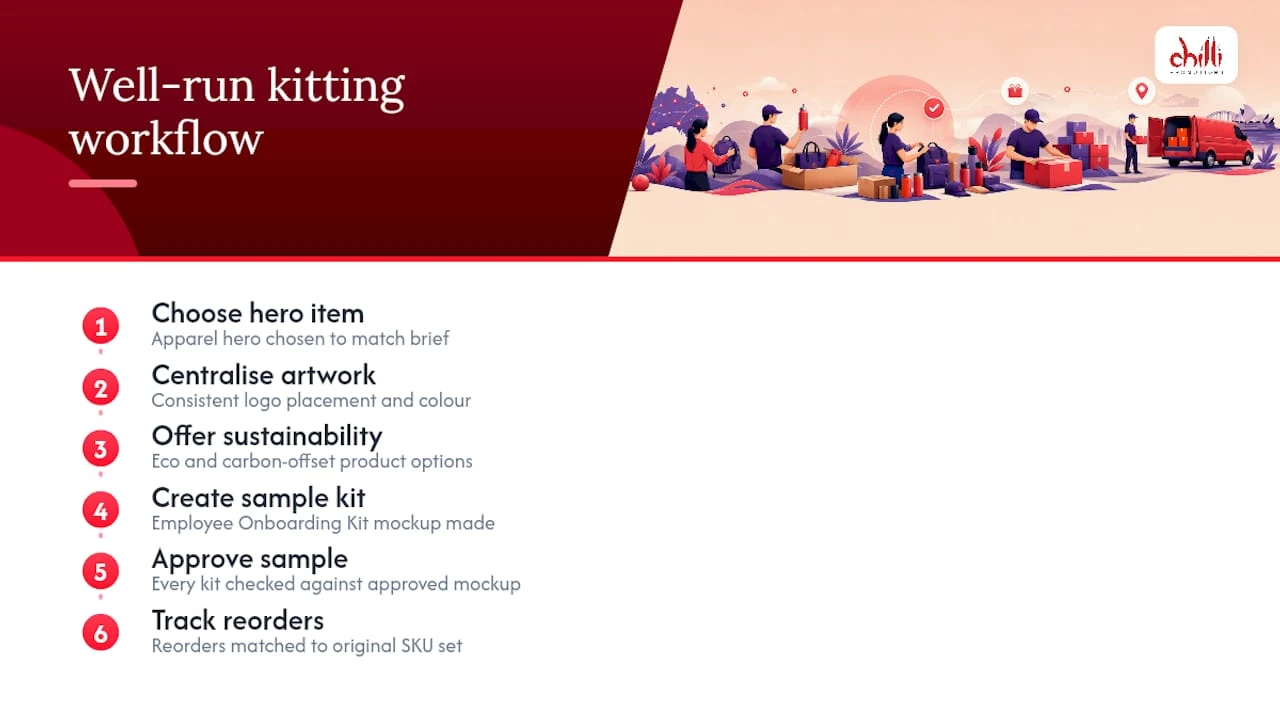
A seasoned supplier has manufactured and supplied branded promotional products across Australia and New Zealand since 2001, working with clients as a partner rather than a one-off order desk. That history shows up in how kits get built: hero items chosen to match the brief, artwork centralised so every piece carries the same logo placement and colour, with eco-friendly and carbon-offset product options available where sustainability is part of the client’s brand story.
A typical example is an Employee Onboarding Kit, built around an apparel hero item with supporting stationery and tech pieces, packed and mockup-approved before the full batch runs. Every kit goes through a sample check against the approved mockup before production, with reorders tracked against the original SKU set to keep future batches consistent. If you’re planning your first run, request a quote and a physical sample before committing to volume.
Three lessons from running kitting programmes
Overstuffing is the most common mistake: cramming six items into a box dilutes the hero piece and inflates cost without lifting perceived value. Trim to one hero and two or three supporting items instead.
Skipping the physical mockup is the second. A screen mockup hides thread colour mismatches and packaging fit problems that only show up once everything’s assembled together.
Poor SKU control is the third, and the quiet cost driver most teams miss until reorder time, when six sizes across four colours turn a simple top-up into a packing puzzle.
— Allissar Tawadros
How Chilli Promotions can help with your next kit
A full-service supplier runs the entire kitting workflow end to end: sourcing, branding, packing and fulfilment, with eco-friendly and carbon-offset product options included in the range rather than bolted on as an afterthought.
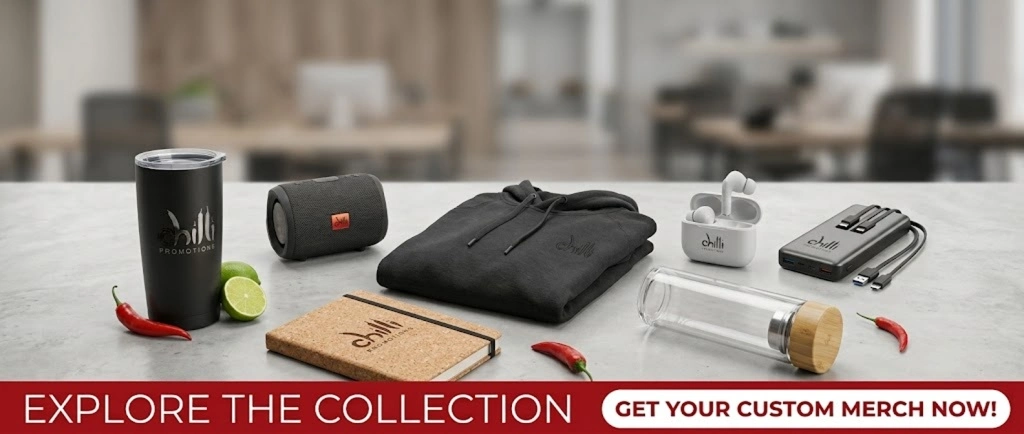
When you brief a kitting supplier, expect a quote that walks through hero-item options for your budget, a physical sample or mockup before full production, and clear fulfilment terms whether you need one bulk drop to an event venue or hundreds of parcels sent direct to your team’s doors. For inspiration on what a strong hero item looks like, browse corporate giveaway ideas or head straight to the promotional products range to start your quote.
FAQ
What are swag kits?
A swag kit is a curated set of branded items, packaged together as one unit for a specific purpose such as onboarding, an event, or client gifting, rather than sourced and packed piece by piece.
How can I make my own swag kit?
Pick one hero item to anchor the budget, add two or three supporting pieces that suit the occasion, get a physical sample approved before ordering in bulk, and keep sizes and colours limited on the first run.
What’s the difference between DIY and full-service swag kitting?
DIY suits small, one-off runs where someone in-house has time to pack; full-service kitting through a supplier like Chilli Promotions suits larger, recurring or geographically spread programmes where consistency and fulfilment logistics matter more.
How long does a swag kitting project take from start to finish?
Timelines depend on decoration method and order size, but sourcing, artwork approval, sample sign-off, production and fulfilment together usually need several weeks, longer if any items ship internationally.
What’s the biggest mistake to avoid in swag kitting?
Skipping the full mockup and sample approval step before committing to a full production run, since that’s where mismatched branding or poor packaging fit gets caught cheaply instead of expensively.