TL;DR:
- Branded merchandise outperforms cash in motivating employees by creating visible, memorable proof of achievement. It activates social and aspirational drivers that cash cannot replicate, leading to higher performance levels. Effective reward programs match merchandise types to specific goals and participant profiles, ensuring sustainability and compliance.
Branded merchandise creates stronger, longer-lasting motivation than cash for most recognition and aspiration goals inside employee incentive programmes. That is not opinion — BI WORLDWIDE’s research consistently shows non-cash rewards drive higher performance lifts than equivalent cash awards, and their 2026 global findings confirm employees report feeling more inspired by merchandise and experiences than by cash alone. The role of merch in performance reward programs is, at its core, a behavioural one: it creates visible, social, memorable proof of achievement that cash simply cannot replicate.
Here is how to act on that immediately:
- Favour merchandise when your goal is aspiration, recognition, culture-building, or long-term retention. Trophy value and social visibility are the mechanism.
- Use gift cards when you need scale, audience diversity, or flexibility across a large, varied workforce. They bridge the gap between cash and merchandise without the logistics overhead.
- Reserve cash for compliance-sensitive situations, contractual bonuses, or where tax and FBT obligations make non-cash impractical.
- Your next step: audit your current programme goals, segment participants by role and motivation profile, then run a 90-day pilot comparing a merchandise-based tier against your existing reward.
Table of Contents
- Why does merchandise motivate more than cash?
- How does merchandise compare with gift cards and cash?
- How do you map programme goals to the right merch role?
- How do you choose the right merchandise for your programme?
- What does good programme fulfilment look like in Australia?
- How do you measure the impact of merchandise rewards?
- What does the research say, and how does it apply in Australia?
- What merch categories work best in Australian programmes?
- Five steps to launch or refresh your merchandise reward programme
- Key takeaways
- The case for merchandise that most HR teams miss
- Chilli Promotions: end-to-end merchandise programmes for Australian organisations
- Useful sources
- FAQ
Why does merchandise motivate more than cash?
The answer sits in behavioural economics, not intuition. Merchandise activates hedonic reward pathways — the part of the brain that processes pleasure, memory, and social identity — in ways that cash does not. Cash is absorbed into general income within days; a quality branded item sits on a desk, travels in a bag, or gets worn to work, generating repeated recognition moments long after the award date.
BI WORLDWIDE identifies four specific mechanisms that explain this effect:
- Mental accounting: — People treat cash as fungible income and spend it on bills. Merchandise is mentally categorised as a reward, preserving its motivational meaning.
There is also the entitlement trap to consider. When cash becomes a regular feature of a programme, employees begin to expect it as part of their compensation rather than as a reward for discretionary effort. Merchandise sidesteps this because it is clearly outside the salary structure — it reads as recognition, not remuneration.
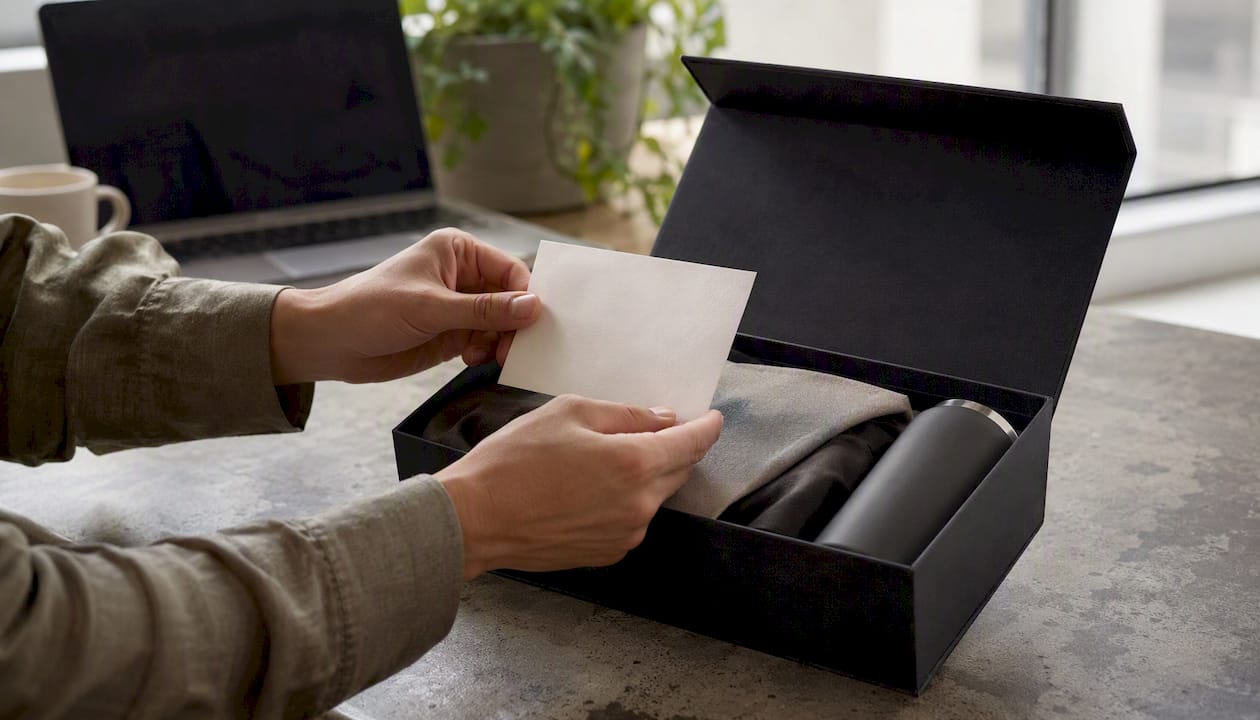
Pro Tip: Position merchandise with a narrative. A brief, personalised note explaining why the item was chosen for this recipient increases perceived value significantly, because it signals that the reward was deliberate, not automated.
BI WORLDWIDE’s case studies include a frozen foods manufacturer that switched from merchandise to cash rewards and experienced a decline in sales performance. That outcome is consistent with the broader pattern: non-cash rewards tend to produce higher performance lifts precisely because they operate on motivational levers that cash bypasses entirely.
How does merchandise compare with gift cards and cash?
Choose your reward type based on three factors: your programme objective, your participant mix, and your operational capacity. Each reward type has a distinct profile.
Gift cards occupy a useful middle ground — they offer flexibility and can be scaled across large, diverse workforces without the logistics complexity of physical fulfilment. Merchandise delivers trophy value and aspirational pull that gift cards cannot match for top-tier recognition. Cash remains appropriate for contractual or compliance-sensitive contexts.
| Dimension | Merchandise | Gift cards | Cash |
|---|---|---|---|
| Best for | Aspiration, recognition, culture | Scale, diversity, flexibility | Compliance, contractual bonuses |
| Trophy value | High — visible, social, lasting | Moderate — personal but private | None — absorbed into income |
| Cost per participant | Moderate to high; tiering helps | Low to moderate; highly scalable | Variable; tax/FBT obligations apply |
| Logistics complexity | Moderate — fulfilment, customisation | Low — digital delivery available | Low — payroll integration |
| Sustainability | Certifiable — eco lines, carbon offset | Minimal | None |
| Flexibility | Curated choice or catalogue | High — participant chooses | Complete |
Concrete use cases:
- High-volume broad engagement — (safety milestones, attendance, onboarding completion): gift cards or low-tier branded merchandise at scale.
How do you map programme goals to the right merch role?
Different programme objectives call for different merchandise roles. Recognition rewards need immediate visibility. Aspiration rewards need perceived value that exceeds the participant’s everyday experience. Habit-formation rewards need frequency and consistency. Culture-building rewards need brand alignment and shared identity.
| Programme goal | Merchandise role | Recommended item types | Distribution approach |
|---|---|---|---|
| Recognition | Visible proof of achievement | Premium drinkware, branded apparel, desk accessories | Presented publicly, ideally at a team event |
| Aspiration | Stretch-goal motivator | Tech accessories, quality bags, experience-adjacent items | Direct-ship to home for remote staff; presented at office |
| Habit formation | Frequent, low-cost reinforcement | Branded notebooks, reusable cups, wellness items | Automated on milestone trigger |
| Culture building | Shared identity and belonging | Team-branded apparel, eco packs, onboarding kits | Cohort-based distribution, simultaneous |
A few practical examples: for recognition, a quality insulated bottle with the recipient’s name and award year engraved creates a lasting trophy. For aspiration, a premium tech accessory — a wireless charging pad or noise-cancelling earbuds — sits above the everyday and signals that the achievement was genuinely significant. For habit formation, a branded notebook distributed at each quarterly milestone keeps the programme visible without budget strain. For culture building, team-building branded merchandise distributed simultaneously across a cohort creates shared identity that individual rewards cannot.
How do you choose the right merchandise for your programme?
Segment your audience first, then select items that create trophy value within each segment. A one-size-fits-all catalogue rarely motivates anyone strongly. The items that resonate with a field sales team in Queensland will not necessarily land with a software engineering team in Sydney.
Selection checklist:
- ♻ Audience data: survey or analyse what participants actually use and value. Age, role, location, and lifestyle all influence item relevance.
- 🌿 Cultural fit: items must align with your organisation’s values. Eco-certified lines (recycled content, carbon-offset, plant-based materials) are increasingly expected by Australian workforces.
- Perceived value: the item should feel worth more than its cost. Quality of finish, brand of the item itself, and packaging all contribute.
- Stock vs on-demand: stocked items ship faster; custom items take longer but carry stronger brand identity. Plan lead times accordingly.
- Sustainability credentials: look for suppliers with verified certifications — ISO 14001, EcoVadis Silver, or NoCO2 documentation — rather than unverified “eco” claims.
- Compliance: in Australia, non-cash employee rewards may attract Fringe Benefits Tax (FBT). Items under the minor benefit exemption threshold (currently $300 per benefit, per employee, per occasion under ATO guidelines) are generally exempt, but confirm with your tax adviser for your specific circumstances.
A worked example: a national retailer with 200 participants across three tiers might allocate $30 per person for the broad recognition tier (branded drinkware or notebook), $80 for the mid-tier (quality bag or apparel), and $200 for the top tier (premium tech or experience-adjacent item). The perceived value at each tier exceeds the cost because the items are well-chosen and well-presented.
Pro Tip: Resist the urge to offer too much variety at each tier. Two or three curated options per tier outperform a catalogue of twenty, because choice overload reduces engagement and dilutes the aspirational signal.
What does good programme fulfilment look like in Australia?
The most common operational model for Australian merchandise reward programmes combines a points-based earning structure with a curated online redemption portal and direct-ship fulfilment. Participants earn points for defined behaviours, redeem through a branded portal, and receive items shipped directly — including to remote and regional addresses.
The process flow looks like this:
For remote and regional staff — a significant consideration in Australia — direct-ship work-from-home gift packs solve the last-mile problem without requiring a central distribution point. Suppliers offering end-to-end fulfilment, including corporate merchandise fulfilment models with personalised apparel and high-end tech, reduce the administrative burden on HR teams considerably.
Australian-specific notes:
- GST: — merchandise purchased for employee rewards is generally subject to GST. Suppliers should provide tax invoices with GST clearly itemised.
Pro Tip: For programmes with more than 50 participants, request a dedicated account manager from your supplier. Consistent contact reduces errors, speeds up reorders, and means your programme brief is understood from the start.
How do you measure the impact of merchandise rewards?
Measure behaviour change first, then lag outcomes. The most common mistake is tracking only sales lift or retention and missing the leading indicators that tell you whether the programme is working before the financial results appear.
BI WORLDWIDE’s guidance on reward impact recommends tying KPIs directly to the programme’s stated goals and reviewing them on a regular cadence rather than waiting for an annual review.
| KPI | Data source | Reporting cadence |
|---|---|---|
| Programme engagement rate | Portal logins, nominations submitted | Monthly |
| Redemption rate | Fulfilment system | Monthly |
| Incremental performance lift | Sales data, productivity metrics | Quarterly |
| Employee retention (programme cohort vs control) | HRIS | Bi-annually |
| Employee Net Promoter Score (eNPS) | Pulse survey | Quarterly |
| Internal social mentions / peer recognition | Intranet, recognition platform | Monthly |
| Cost per impact | Finance / programme budget | Quarterly |
For causal inference, run a pilot with a control group. Assign a comparable cohort to the existing reward structure and the pilot group to the merchandise-based programme. Compare performance lift, redemption, and eNPS across both groups after 90 days. This does not require a formal randomised trial — a matched-cohort design is sufficient for most internal business cases.
The Incentive Research Foundation provides industry benchmarks for engagement and redemption rates that can serve as a baseline when your programme is new and internal comparators are unavailable.
What does the research say, and how does it apply in Australia?
Non-cash rewards consistently outperform cash in controlled comparisons. BI WORLDWIDE’s case studies show performance declines when organisations switch from merchandise to cash-only programmes, and their 2026 global research confirms the inspiration gap: employees report non-cash rewards as more motivating than cash equivalents. The Incentive Research Foundation supports this with industry-wide data on programme effectiveness and best-practice design.
Applied to the Australian context, this matters for two reasons. First, the World Economic Forum’s Future of Jobs research highlights skills retention and workforce engagement as critical priorities for 2026 and beyond — merchandise-based programmes directly address both by reinforcing desired behaviours and creating visible cultural signals. Second, Australian workforces are geographically dispersed, with significant remote and regional populations who benefit from direct-ship fulfilment models that keep them included in recognition programmes.
A practical local example: a national logistics company running a safety-behaviour programme could use tiered merchandise (branded safety gear at the broad tier, premium apparel at the mid-tier, tech accessories at the top tier) distributed via direct-ship to drivers across regional Australia. The programme creates consistent recognition regardless of location, which cash bonuses processed through payroll cannot replicate in terms of visibility or social impact.
Supplier checklist when briefing a merchandise partner:
- ✅ Sustainability proof: certified eco lines, carbon-offset documentation, recycled content verification
- ✅ Lead times: confirmed for both stocked and custom items, with buffer for import
- ✅ SKU-level pricing: transparent per-unit costs across tiers, including setup and decoration fees
- ✅ Customisation options: print methods, colour matching, packaging options
- ✅ Returns policy: clear process for damaged or incorrect items
- ✅ GST/invoicing: compliant Australian tax invoices for all transactions
- ✅ Fulfilment model: bulk delivery to a central point vs direct-ship to individuals
What merch categories work best in Australian programmes?
Use everyday items for mass recognition, aspirational items for stretch goals, and high-value merchandise or experiences for once-in-a-career recognition.
Everyday tier (broad recognition, $15–$50 per item):
- Branded reusable drinkware (insulated bottles, keep cups) — high daily visibility, eco-aligned
- Quality notebooks and stationery packs — relevant across roles, low logistics complexity
- Branded apparel (t-shirts, caps, polos) — strong for culture-building and team identity
- Tech accessories (cable organisers, USB hubs, screen cleaners) — relevant for office and remote workers; see promotional products for IT sectors for sector-specific ideas
Aspirational tier (stretch goals, $50–$150 per item):
- Premium bags (backpacks, tote bags with quality finish) — functional and visible
- Wireless charging pads, Bluetooth speakers, or quality headphones — perceived value well above cost
- Branded wellness kits (quality skincare, fitness accessories) — resonates with health-conscious workforces
Top-tier recognition ($150+ or experience-adjacent):
- High-end tech (noise-cancelling earbuds, smart home devices)
- Curated gift packs combining multiple quality items
- Experience vouchers paired with a branded keepsake
🌿 Sustainability note: Australian workforces increasingly expect eco credentials. Suppliers offering plant-based materials, recycled content, or carbon-offset programmes add genuine value to your programme’s brand story. Chilli Promotions’ eco-friendly lines include certified options with NoCO2 documentation, which you can reference in your programme communications to reinforce your organisation’s sustainability commitments.
Logistics note: stocked items typically ship within 5–7 business days across Australia. Custom-decorated items require 2–4 weeks domestically and 6–10 weeks for offshore production. Plan your programme calendar around these lead times, particularly for peak periods.
Five steps to launch or refresh your merchandise reward programme
- Select your reward mix (Week 3–4): — Choose merchandise tiers aligned to your goals and budget. Confirm supplier lead times, sustainability credentials, and GST compliance. Use the supplier checklist above when briefing vendors.
One-sentence evaluation method: compare the pilot cohort’s performance lift and eNPS against the control group at the 90-day mark, and use that delta to build your internal business case for full rollout.
Key takeaways
Merchandise creates stronger, more lasting motivation than cash for most incentive goals because it operates on hedonic, social, and aspirational drivers that cash bypasses entirely.
| Point | Details |
|---|---|
| Merchandise outperforms cash | Non-cash rewards drive higher performance lifts in controlled comparisons, per BI WORLDWIDE case studies. |
| Match reward type to objective | Use merchandise for aspiration and recognition, gift cards for scale and diversity, cash for compliance contexts. |
| FBT and GST apply in Australia | Items under the $300 minor benefit exemption are generally FBT-exempt; confirm with a tax adviser for your programme. |
| Measure leading indicators first | Track engagement rate, redemption rate, and eNPS monthly before waiting for quarterly sales or retention data. |
| Chilli Promotions for Australian programmes | Chilli Promotions offers custom-branded merchandise, eco-certified lines, and direct-ship fulfilment across Australia and New Zealand. |
The case for merchandise that most HR teams miss
There is a tendency in Australian organisations to default to cash bonuses because they feel fair and simple. They are neither, in the context of discretionary performance programmes. Cash disappears into a bank account within a pay cycle and leaves no trace in the recipient’s daily life or in the team’s culture. The research on this is not ambiguous.
What gets underestimated is the social architecture of a good merchandise programme. When a team member receives a quality, well-chosen item and it is presented publicly, every other team member witnesses the recognition. That visibility is doing motivational work that no payroll entry can replicate. The strategic role of merchandise in marketing and recognition is precisely this: it makes achievement tangible and public.
The other thing HR teams miss is the sustainability signal. Choosing certified eco merchandise is not just a procurement decision — it tells your workforce that the organisation’s values extend to how it recognises people. That alignment between stated values and actual behaviour is what builds the kind of trust that retains people. A carbon-offset, plant-based drinkware set says something about your organisation that a gift card simply does not.
The programmes that fail are not the ones that chose merchandise over cash. They are the ones that chose merchandise without a clear goal, without audience segmentation, and without a measurement plan. Get those three things right, and the motivational science does the rest.
Chilli Promotions: end-to-end merchandise programmes for Australian organisations
For HR teams ready to move from cash-heavy reward structures to merchandise-based programmes, Chilli Promotions offers a concrete alternative: custom-branded products, eco-certified lines, and direct-ship fulfilment across Australia and New Zealand, without the complexity of managing multiple suppliers.
Founded in 2001, Chilli Promotions works as a programme partner rather than a catalogue vendor. That means helping you select items that match your tiers and goals, confirming lead times before you commit, and providing GST-compliant invoicing throughout. The promotional products range covers drinkware, apparel, tech accessories, bags, stationery, and eco-friendly options with verified sustainability credentials — all available with custom branding.
For remote and regional teams, work-from-home gift packs with direct-ship fulfilment solve the distribution problem that stops many Australian programmes from including their entire workforce. For organisations with sustainability requirements, the eco-friendly lines include carbon-offset and recycled-content options with NoCO2 documentation.

To see which items suit your programme tiers, browse the top corporate giveaway products or contact Chilli Promotions directly to request a sample pack and programme brief. 🌿
Useful sources
The following sources informed this article and are recommended for further reading:
- What Rewards Are Most Effective? – Australia
- The Right Reward – Australia
- Inspiration vs compensation – Australia
- Cash vs Non-Cash Rewards: What Works Best in Incentive Programs – Incremental
- How do rewards impact employee performance?
- HWH Corporate Merchandise: Product and Gift Fulfillment
- incentivemarketing.org
FAQ
What is the purpose of merch in a reward programme?
Merchandise creates visible, lasting proof of achievement that reinforces the motivational value of recognition. Unlike cash, it operates on hedonic and social drivers — it can be seen, shared, and remembered.
How does merchandise compare with cash for employee performance?
BI WORLDWIDE’s research shows non-cash rewards consistently produce higher performance lifts than cash equivalents, because merchandise avoids the entitlement trap and activates aspirational motivation that cash does not.
What is merchandising incentives in marketing?
Merchandising incentives are non-cash rewards — typically branded physical products — used within structured programmes to motivate specific behaviours such as sales performance, safety compliance, or employee retention. The Incentive Marketing Association defines the broader category as incentive marketing, which encompasses merchandise, experiences, and gift cards.
Why is merchandise good for a performance campaign?
Merchandise delivers trophy value, social visibility, and brand alignment that cash cannot. A well-chosen item is used and seen repeatedly, generating ongoing recognition long after the award date and reinforcing the behaviours the programme is designed to encourage.
How do you choose the best merch for performance rewards?
Segment your audience by role and motivation profile, then select items that create genuine trophy value within each segment. Confirm sustainability credentials, lead times, and FBT compliance before committing, and tier your selection from everyday recognition items through to aspirational top-tier rewards.