TL;DR:
- Branded merchandise for EV launches are high-utility, lifestyle-aligned items used early to increase brand awareness and consideration. Distributing practical items like insulated drinkware and charging accessories during active research periods boosts brand recall and converts interest into sales. Planning a coordinated, sustainable program before dealer visits maximizes impact on potential buyers’ decision-making process.
Branded merchandise for EV launches is high-utility, lifestyle-aligned physical items used to accelerate awareness, consideration and purchase intent for new electric vehicles. Chilli Promotions defines these as planned promotional programmes, not one-off giveaways, where every item is chosen to reinforce the EV brand’s values and move buyers through the funnel. The evidence supports the investment: Half of Australian EV buyers decide on their preferred brand before they ever visit a dealership, and 77% of people who receive well-chosen branded merchandise go on to purchase from that brand.
Three item types consistently perform across Australian EV launches:
- Eco drinkware — insulated stainless-steel bottles or tumblers that fit standard cupholders, with a tone-on-tone logo and recycled-content credentials printed on the base
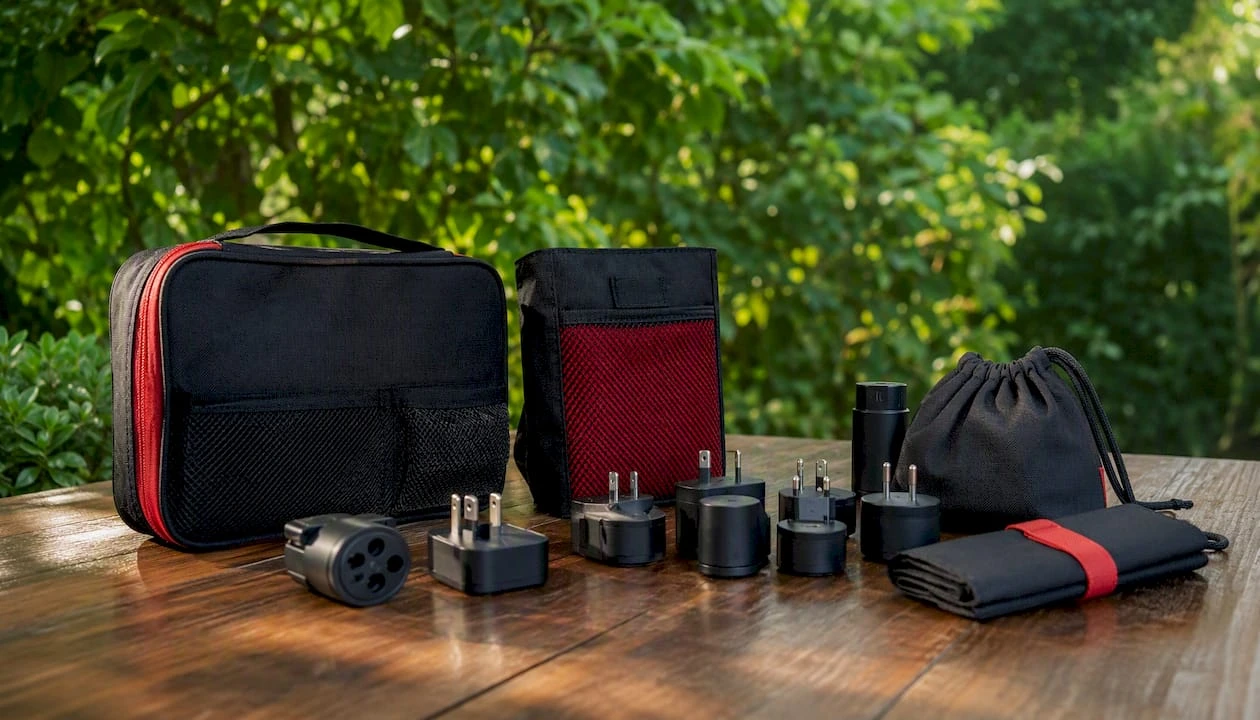
- Charging accessories — branded cable organisers, portable charging bags or EV adaptor pouches that solve a real daily problem for new owners
- Premium owner welcome kits — curated sets combining a quality item, a personalised card and sustainability documentation, delivered at vehicle handover
Table of Contents
- Why merchandise works so well for EV launches
- Which types of merchandise perform best for EV launches?
- Design and brand-fit principles for EV merchandise
- Sustainability and Australian compliance for EV launch merch
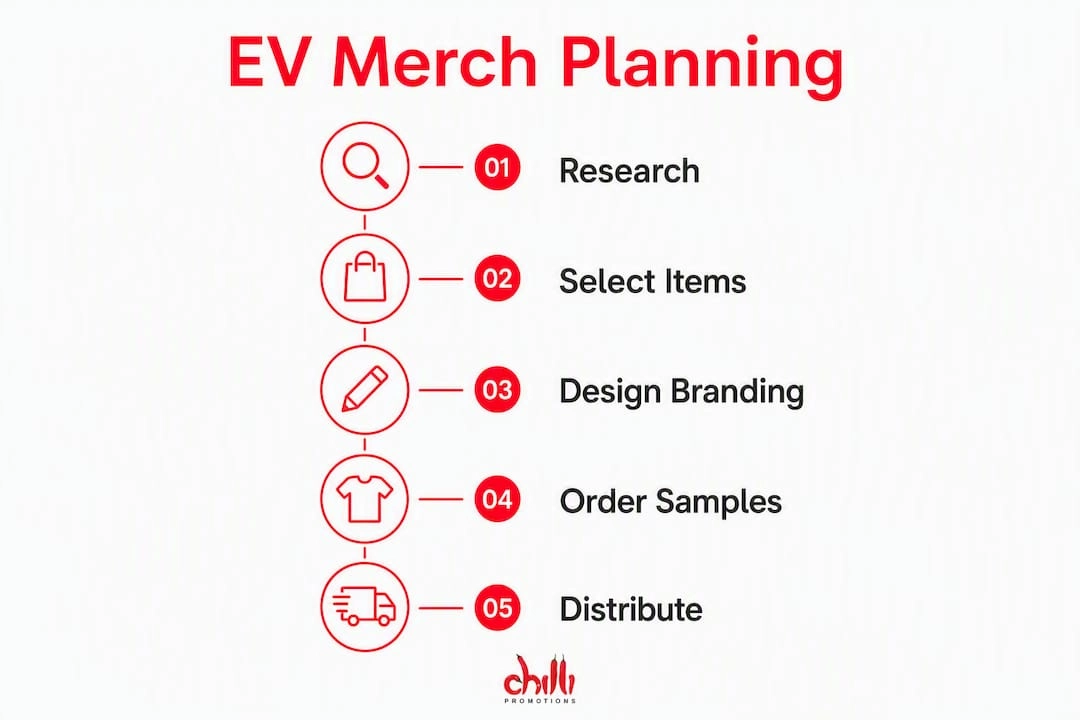
- How to plan and order EV launch merchandise step by step
- When and how to distribute merchandise across launch touchpoints
- How to measure the impact of EV launch merchandise
- Procurement checklist and budget bands for EV launch items in Australia
- What Australian EV buyer behaviour means for your merch strategy
- Key takeaways
- Our perspective on EV launch merchandise
- Chilli Promotions can help you plan your EV launch programme
- Useful sources
- FAQ
Why merchandise works so well for EV launches
Physical items do something digital advertising cannot: they create a tangible, repeatable brand impression during the 60–90 day window when EV buyers are actively researching. APPA research confirms that planned, calendar-led merchandise programmes consistently outperform ad-hoc giveaways in ROI, precisely because each distribution moment is tied to a decision-stage moment.
EV launches face a specific challenge that makes merchandise especially valuable: buyers are evaluating unfamiliar technology, often without a strong prior brand relationship. A well-chosen physical item reduces that “fear of the new” by making the brand feel tangible and trustworthy before the test drive. BYD’s Australian CMO has publicly emphasised human-centric messaging and long-term brand building as the foundation of a successful EV launch, and physical merchandise is one of the most direct expressions of that approach.
The physical-to-digital bridge matters too. APPA data shows a notable share of branded merchandise recipients visit a brand’s website or social media after receiving a physical item, meaning a well-timed piece of merch can drive measurable digital engagement. For EV brands building awareness from scratch, that cross-channel lift is genuinely useful.
Three activation moments where this dynamic is strongest:
- Test-drive incentives — a useful item offered at booking confirmation increases show rates and creates a positive first impression before the buyer sits in the vehicle
- Pre-launch PR kits — curated packs sent to media, influencers and fleet decision-makers establish credibility and generate organic content ahead of the official launch date
- Owner handover kits — a premium set delivered with the keys converts a transaction into a brand experience, encouraging word-of-mouth and social sharing
Which types of merchandise perform best for EV launches?
Category selection is where most EV launch programmes either earn their budget or waste it. The guiding principle is utility: 86% of branded merchandise recipients say usefulness is the top driver of whether they keep and use an item. For EV audiences, utility intersects with lifestyle, sustainability and tech-savviness, which narrows the field considerably.
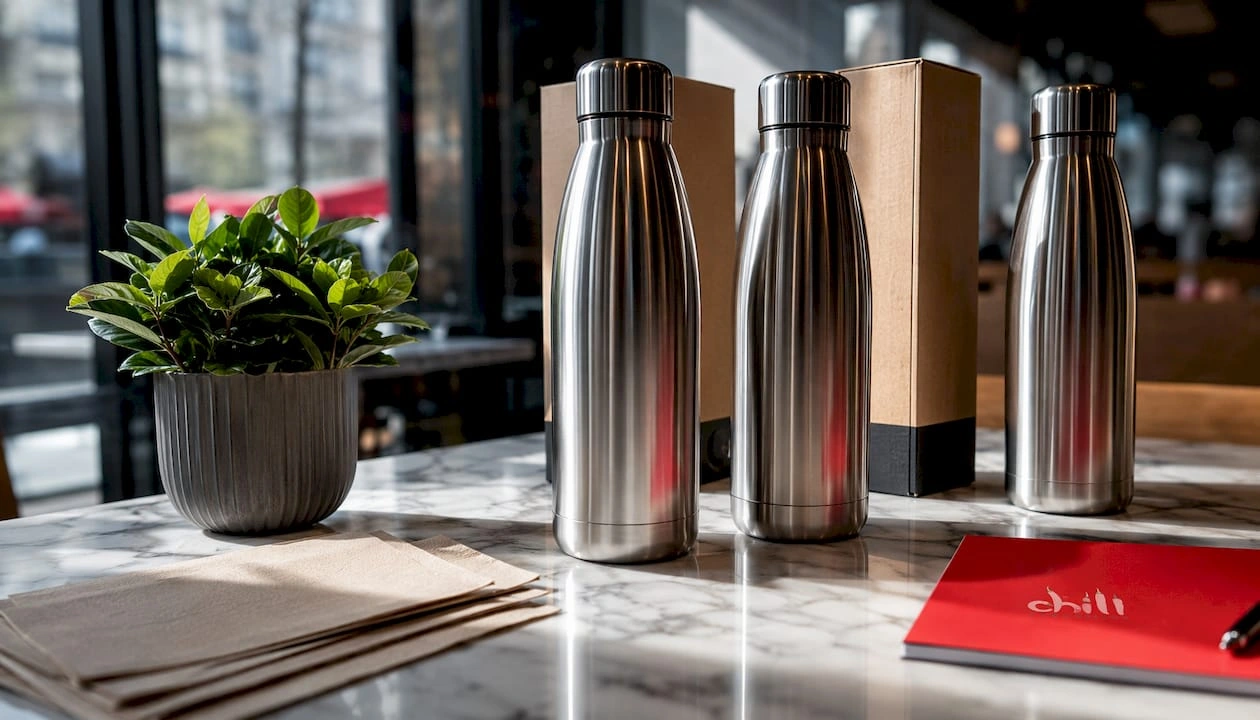
- Daily-use drinkware — insulated bottles and travel mugs deliver the highest cost-per-impression of any category. Australian studies show drinkware and apparel lead on longevity and impressions, with brand recall exceeding 85% among recipients. Choose recycled stainless steel with a cupholder-compatible diameter and minimal, considered branding.
- Tech and charging accessories — cable organisers, EV adaptor pouches, portable power banks and key fob cases with subtle embossing speak directly to the EV buyer’s daily reality. These items are used repeatedly and often travel outside the home, extending brand visibility.
- Apparel and premium owner kits — a quality merino or organic-cotton tee, a structured cap or a premium tote communicates brand confidence. Owner kits that combine two or three complementary items in minimal, recyclable packaging feel considered rather than promotional.
- Lifestyle and outdoor items — collapsible water bottles, picnic blankets, reusable shopping bags and compact umbrellas align with the EV buyer’s self-image as a sustainability-conscious, active consumer. These items travel to place a digital ad never reaches.
- Event-ready items — lanyards, branded tote bags, reusable coffee cups and notebook sets work at launch events, motor shows and dealer open days where volume distribution is needed quickly.
Pro Tip: Pick one or two hero items and do them exceptionally well rather than spreading budget across five mediocre giveaways. A single premium insulated bottle with thoughtful branding will generate more impressions and more goodwill than a bag of mixed low-utility items.
Design and brand-fit principles for EV merchandise
The single most important design rule: the item must be useful and contextually appropriate before any branding decision is made. A beautifully branded item that nobody uses is a wasted impression.
Logo treatment is where EV brands most often over-reach. A small, tone-on-tone brandmark or a debossed logo on a quality item communicates confidence. An oversized, full-colour logo on a cheap substrate communicates the opposite. For premium EV launches, restraint in logo size and placement is almost always the right call. The item’s quality should do the talking; the logo is simply a reminder of who gave it to you.
Material and finish choices carry their own brand message. Recycled stainless steel, certified organic cotton, plant-based inks and FSC-certified paper packaging all signal that the brand’s sustainability commitments extend beyond the vehicle itself. These choices matter to EV buyers in a way they simply do not for other automotive segments. The Australian market shift toward curated, eco-friendly items is well documented, and EV audiences are at the leading edge of that shift.
Pro Tip: Print or emboss your material credentials directly on the product artwork or base, not just the packaging. Packaging gets discarded; the item stays. A line reading “Made from 90% recycled stainless steel” on the base of a bottle communicates your brand values every time the recipient refills it.
Sustainability and Australian compliance for EV launch merch
Sustainability is both a purchase driver and a reputational risk for EV brands. Choosing certified materials and transparent supply chains is not optional for this audience. EV buyers are among the most environmentally aware consumers in Australia, and a merchandise choice that contradicts the brand’s green positioning will be noticed.
Australian compliance covers several practical areas your procurement process must address:
- Product safety — items must comply with the Australian Consumer Law (ACL) and, where applicable, the mandatory safety standards administered by the ACCC (particularly for items like drinkware, electrical accessories and children’s products if relevant)
- Labelling — country-of-origin labelling requirements under the ACL apply to many promotional goods; confirm with your supplier
- Packaging — avoid single-use plastic packaging; the Australian Packaging Covenant Organisation (APCO) guidelines provide a practical framework for sustainable packaging choices
- Electrical accessories — any powered item (power banks, USB hubs) must carry RCM (Regulatory Compliance Mark) certification for the Australian market
- Chemical safety — drinkware and apparel must meet REACH-equivalent standards; request supplier compliance documentation
Sustainable merchandise choices also extend to end-of-life messaging. Including a short note on how to recycle or repurpose the item at the end of its life is a small addition that resonates strongly with EV audiences.
Pro Tip: Ask your supplier for carbon-offset documentation, such as NoCO2 certification, and include that credential in your campaign communications. For EV buyers, knowing that the merchandise itself is carbon-neutral reinforces the brand’s overall sustainability story.
How to plan and order EV launch merchandise step by step
Plan merchandise as a programme with milestones and budget lines, not as a last-minute procurement task. The lead times involved make late decisions expensive and quality-limiting.
Step-by-step process:
- Brief — define objectives (awareness, test-drive conversion, owner advocacy), target audience segments, distribution moments and budget envelope
- Concept — shortlist two or three hero items per activation moment; confirm they align with brand guidelines and sustainability requirements
- Sample — order physical samples from your shortlisted suppliers before committing to production; always approve a production sample, not just a digital proof
- Approvals — route samples through brand, legal and sustainability sign-off; confirm ACL and RCM compliance documentation is in hand
- Production — confirm print method, colour matching, MOQ and production timeline in writing; build in a buffer of at least two weeks for quality issues
- Delivery — confirm freight routing (direct to dealer, to a fulfilment warehouse, or to an event venue); factor in customs clearance time for imported items
Recommended lead times
| Stage | Standard lead time | Rush lead time |
|---|---|---|
| Sample production | 10–15 business days | 5 business days |
| Branded production run | 15 business days | 10–15 business days |
| Domestic freight | 3 business days | 1–3 business days (express) |
| Import freight (sea) | 25 business days | N/A |
| Import freight (air) | 5–10 business days | 3–5 business days |
Supplier selection checklist
When briefing suppliers, confirm each of the following:
- Sustainability certifications (ISO 14001, EcoVadis, B Corp, or equivalent)
- Sample policy and cost (free, charged, or credited against order)
- Minimum order quantities (MOQ) per SKU
- Print techniques available (screen print, laser engraving, embroidery, pad print, digital transfer)
- Pre-production proof process and approval steps
- Freight options, lead times and customs handling for imported goods
- Carbon-offset or NoCO2 documentation availability
Pro Tip: Always order a physical production sample, not just a digital mockup, before authorising the full run. A small pilot distribution of 50–100 units to a representative audience will validate fit, finish and usage assumptions before you commit to thousands of units.
When and how to distribute merchandise across launch touchpoints
Time merchandise to influence the 60–90 day consideration window where possible. Buyers who receive a useful, quality item during active research are far more likely to retain a positive brand impression through to purchase than those who receive something at the point of sale, when the decision is already made.
Distribution moments and recommended item mixes
| Activation moment | Recommended items | Distribution method |
|---|---|---|
| Pre-launch media kit | Premium insulated bottle, branded notebook, brand story card | Direct mail to journalists, influencers, fleet managers |
| Test-drive booking confirmation | Branded cable organiser or adaptor pouch | Mail fulfilment or dealer handover at arrival |
| Launch event | Tote bag, reusable coffee cup, lanyard/badge | Onsite staff distribution |
| Vehicle delivery/handover | Premium welcome kit (bottle + tee + card) | Dealer handover, packaged in branded box |
| Post-purchase owner engagement | Lifestyle item (picnic blanket, outdoor kit) | Mail fulfilment 30 days post-delivery |
For dealer network distribution, a car dealership merchandise programme with pre-packed kits and clear stock management protocols keeps distribution consistent across multiple locations. Tracking options include serialised QR codes on packaging, unique promo codes per distribution batch, and dealer-level redemption reporting.
How to measure the impact of EV launch merchandise
Track both physical impressions and digital activation. A QR code on packaging or a unique URL on the item itself connects physical distribution to measurable web traffic and conversion data.
KPIs to measure:
- Impressions — estimated based on item type, usage frequency and recipient demographics (drinkware averages significantly more impressions per unit than a single-use item)
- Engagement lift — website visits, social follows or enquiry form completions attributable to recipients in the 30 days post-distribution
- Test-drive conversion rate — percentage of recipients who book a test drive within the distribution window
- Cost-per-impression — total programme cost divided by total estimated impressions; compare against digital display benchmarks
- Incremental sales — correlation analysis between merchandise distribution batches and dealer conversion data in the same postcode or region
- Recipient NPS — short post-receipt survey (3–5 questions) measuring item satisfaction, brand perception shift and likelihood to recommend
Simplified ROI example: 500 premium insulated bottles distributed to test-drive enquiries at $28 AUD per unit (including freight and setup) = $14,000 total. If 15% of recipients convert to a test drive and 30% of those purchase, that is 22–23 incremental sales. At an average gross margin contribution per vehicle, the ROI calculation becomes straightforward to present to finance. The full ROI methodology for Australian promotional products provides a more detailed framework for this calculation.
Procurement checklist and budget bands for EV launch items in Australia
Budget depends on item quality, customisation complexity and order volumes. Setup fees, freight and turnaround costs materially affect true cost-per-unit and must be included in your planning figures, not treated as extras.
Procurement checklist:
- Artwork files in correct format (vector AI or EPS, correct Pantone references)
- Print method confirmed and matched to substrate
- MOQ confirmed per SKU
- Lead times locked in against launch date
- Freight routing and delivery address confirmed
- Packaging specification (sustainable, branded, or plain)
- Taxes and duties confirmed for imported goods
- Sustainability premium budgeted (recycled materials typically carry a 10–20% premium over standard)
Budget bands for common EV launch items (AUD per unit, indicative)
| Category | Low (entry) | Mid (recommended) | Premium |
|---|---|---|---|
| Insulated drinkware | $8–$15 | $30 | $60 |
| Apparel (tee/cap) | $10 | $22 | $80 |
| Tech accessories | $20 | $25 | $50–$100+ |
| Premium welcome kits | $35 | $60 | $100 |
Rush production typically adds 15–30% to unit costs. Low MOQ orders (under 100 units) carry proportionally higher setup fees per unit. Complex print finishes (embossing, laser engraving, multi-colour screen print) add $2–$8 per unit depending on technique. Budget for these line items from the outset rather than absorbing them as surprises at invoice stage.
What Australian EV buyer behaviour means for your merch strategy
Australian EV buyers often decide on their preferred brand before they engage with a dealership. That single insight should reshape when and where you distribute merchandise.
Key implications for your planning:
- Distribute earlier in the funnel — target online enquiry confirmations, test-drive booking emails and pre-launch media outreach rather than waiting for showroom visits
- Prioritise sustainability credentials — EV buyers are more likely to retain and use items made from recycled or certified materials; eco credentials on the item itself reinforce the brand’s positioning
- Use merchandise to reduce unfamiliarity — a useful, quality item that solves an EV-specific problem (charging organisation, cable management) makes the technology feel accessible before the buyer has driven the vehicle
- Map distribution to the 60–90 day window — delivering hero items 60–90 days before typical purchase intent peaks maximises repeated impressions during active consideration
Three-step playbook for immediate action:
- Identify your hero item — one high-utility, sustainability-credentialled item that fits the EV buyer’s daily life and your brand’s visual identity
- Map your distribution moments — pre-launch media kit, test-drive confirmation and owner handover are the three non-negotiable touchpoints
- Instrument your tracking — assign a unique QR code or promo code to each distribution batch so you can measure engagement lift and conversion by touchpoint
Key takeaways
Branded merchandise for EV launches works when it is planned as a programme, distributed early in the consideration window, and chosen for genuine utility and sustainability credentials.
| Point | Details |
|---|---|
| Distribute before the dealership | Half of Australian EV buyers decide on their preferred brand before visiting a dealer; target the 60–90 day pre-purchase window. |
| Usefulness drives retention | 86% of recipients cite usefulness as the top reason they keep branded merchandise; choose items that solve real EV owner problems. |
| Plan as a programme, not a giveaway | Calendar-led distribution mapped to test drives, media kits and handovers consistently outperforms ad-hoc distribution in ROI. |
| Budget for true unit cost | Include setup fees, freight and sustainability premiums in your per-unit cost from the outset to avoid budget surprises. |
| Chilli Promotions as your partner | Chilli Promotions offers sampling, small-batch pilot runs, carbon-offset options and dealer fulfilment for EV launch programmes across Australia. |
Our perspective on EV launch merchandise
The conversation about branded merchandise for EV launches often gets stuck on product selection, and that is the wrong starting point. The question that actually matters is: at which moment in the buyer’s journey does a physical item create the most meaningful impression? For EV launches specifically, that moment is almost always earlier than brands expect.
The data is consistent. Half of Australian EV buyers have already formed a strong brand preference before they walk into a dealership. That means the showroom floor, traditionally the primary distribution point for automotive merchandise, is often too late to influence the decision. Brands that wait until handover to deploy their best merchandise are essentially rewarding a decision that has already been made, rather than shaping one that is still forming.
There is also a sustainability dimension that the industry has not fully reckoned with. EV buyers are not a homogeneous group, but they do skew toward consumers who scrutinise brand claims carefully. A cheap, unbranded-feeling giveaway handed to an EV buyer does not just fail to impress; it actively undermines the brand’s credibility. The merchandise choice is a signal, and EV audiences read it clearly.
The programmes that perform best treat merchandise as a planned communication channel with its own brief, budget line and measurement framework, not as a line item on an event checklist. That shift in thinking is what separates brands that generate measurable conversion lift from those that simply spend money on items nobody keeps.
Chilli Promotions can help you plan your EV launch programme
Chilli Promotions has been manufacturing and supplying custom-branded promotional products across Australia and New Zealand since 2001, with specific experience in automotive and EV launch programmes. For expert support to scale your launch effectively, consider their digital acquisition and social scaling expertise. For marketing managers who need sampling, custom production and programme management without the complexity of managing multiple suppliers, that depth of sector experience is a practical advantage.
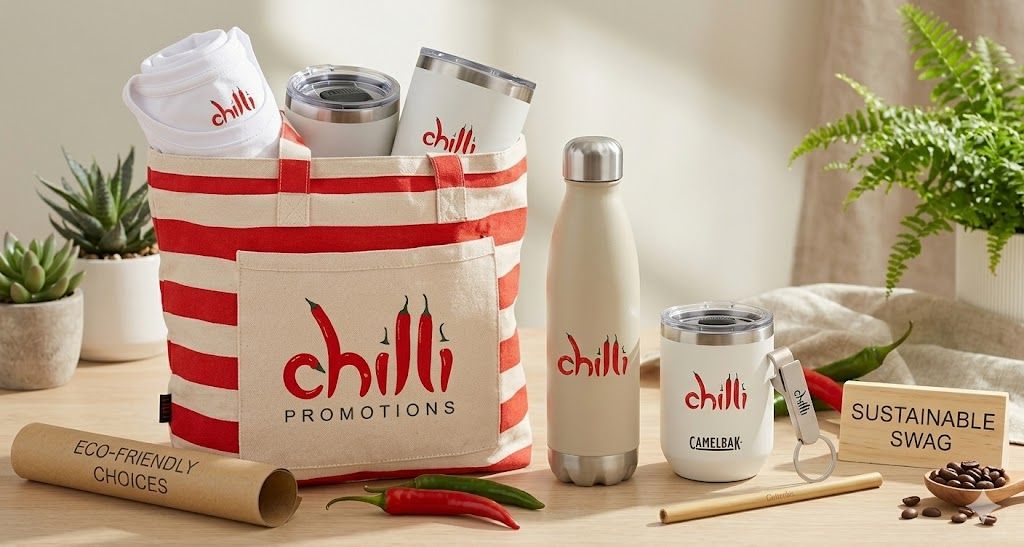
The service covers the full programme lifecycle: briefing and concept development, physical sampling, small-batch pilot runs to validate item selection before full production, carbon-offset and NoCO2-documented product options for sustainability-conscious EV brands, and fulfilment direct to dealer networks or event venues. You can browse promotional products for EV launches or explore eco-friendly corporate gift options suited to EV buyer audiences. To discuss your launch brief, request a sample pack, or get a quote, contact the Chilli Promotions team directly.
Useful sources
- APPA: 77% Purchase Intent research — Australian Promotional Products Association data on conversion rates and the role of usefulness in merchandise retention; primary source for purchase intent and programme ROI claims
- EV brand awareness merchandise strategy: 2026 guide (Chilli Promotions) — sector-specific playbook covering distribution timing, item selection and measurement for Australian EV launches
- Branded Merchandise ROI Data Australia (Custom Merch Co) — Australian market data on cost-per-impression, brand recall and the true cost of promotional products including freight and setup
- Branded Merchandise Market Research Australia — market research on the shift toward curated, eco-friendly items and the premium buyers place on sustainability credentials
- BYD’s CMO on building one of Australia’s fastest-rising car brands (Mumbrella) — industry perspective on human-centric EV brand building in Australia; useful for framing merchandise within a broader launch strategy
- Why branded accessories attract car buyers in Australia (Blogarama/APPA) — analysis of how branded accessories satisfy personal expression and control needs during high-stakes automotive purchases
- Farizon “Vantastic” launch case study (Traffic Brand Agency) — real-world example of a full EV brand ecosystem launch in the Australian market, including dealer materials and welcome packs
- Promotional products ROI explained for Australian marketers (Chilli Promotions) — practical ROI methodology and calculation framework for Australian promotional product programmes
FAQ
What is branded merchandise for EV launches?
Branded merchandise for EV launches are custom-branded physical items, such as insulated drinkware, charging accessories and premium owner kits, distributed at key moments in the EV buyer journey to build awareness, drive consideration and convert enquiries into sales.
What is considered the most useful branded merchandise for EV buyers?
High-utility items that solve real EV owner problems perform best. Insulated drinkware, cable organisers, EV adaptor pouches and premium welcome kits consistently generate the highest retention and brand recall, with usefulness cited as the top driver by 86% of recipients.
What are the four types of merchandise used in EV launches?
The four main categories are daily-use items (drinkware, bags), tech and charging accessories, apparel and owner kits, and lifestyle or outdoor items. Each category serves a different activation moment across the pre-launch, test-drive and handover stages of the buyer journey.
What is considered a branded item in a promotional context?
A branded item is any physical product carrying a company’s logo, name, colour or messaging, produced specifically to represent the brand. For EV launches, the most effective branded items are those where the branding is subtle and the item’s utility is high enough that recipients use it daily.
When should EV launch merchandise be distributed for maximum impact?
Distribute hero items 60–90 days before typical purchase intent peaks, targeting online enquiry confirmations and test-drive bookings rather than the dealership floor. Early-funnel distribution tied to test-drive bookings bridges awareness and dealer conversion more effectively than point-of-sale handouts.