TL;DR:
- Branded merchandise creates lasting contact with safety messages, improving recognition and behavior. Interactive and relevant items engage target audiences more effectively than fear-based campaigns and passive advertisements. Properly chosen products tied to campaign goals can lead to measurable safety improvements and long-term awareness.
Branded merchandise is defined as a physical product carrying an organisation’s identity, used to communicate a message and reinforce behaviour. In road safety, these products are not souvenirs. They are tangible tools that keep critical safety messages in front of drivers every single day. Pre-campaign data shows that 51% of young road users drove in heavy vehicle blind spots for extended periods. That figure tells you exactly why passive media campaigns fall short. Understanding why branded merchandise supports road safety means understanding how physical objects change behaviour in ways that a billboard or social post simply cannot.
Why branded merchandise supports road safety awareness
Branded merchandise works because it creates repeated, physical contact with a safety message. A poster fades from memory within hours. A hi-vis vest, a reflective keyring, or a parking timer disc stays in a person’s environment for months or years. Repeated exposure to a brand or safety message via merchandise increases recognition and trust, which directly improves message adoption.
The National Heavy Vehicle Regulator (NHVR) recognised this principle when it built its “Don’t #uck With A Truck” campaign around physical, interactive merchandise rather than traditional advertising. The campaign uses reflective mini trucks and educational games as branded tools to teach Gen Z drivers about truck blind spots. This approach puts the safety lesson in the hands of the audience, literally.
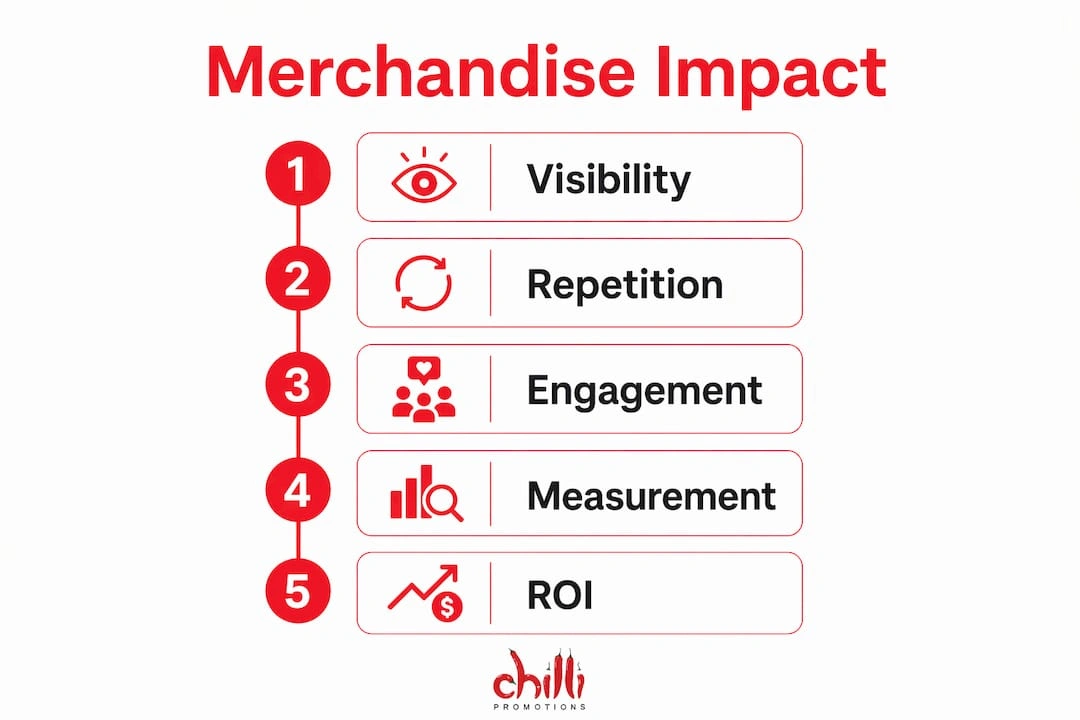
The benefits of branded merchandise in road safety come down to three core mechanisms: visibility, repetition, and relevance. Each mechanism reinforces the others. A product that is visible in daily life creates repetition. A product that is relevant to the audience’s actual behaviour creates genuine engagement. When all three align, the safety message becomes part of a person’s routine rather than a one-off encounter.
How merchandise increases visibility for road safety campaigns
Physical products create visibility in ways that digital content cannot replicate. A branded item placed in a car, worn on a worksite, or carried in a bag generates impressions every time it is seen. This is the core principle behind using promotional items for road safety.
The most effective merchandise categories for road safety campaigns include:
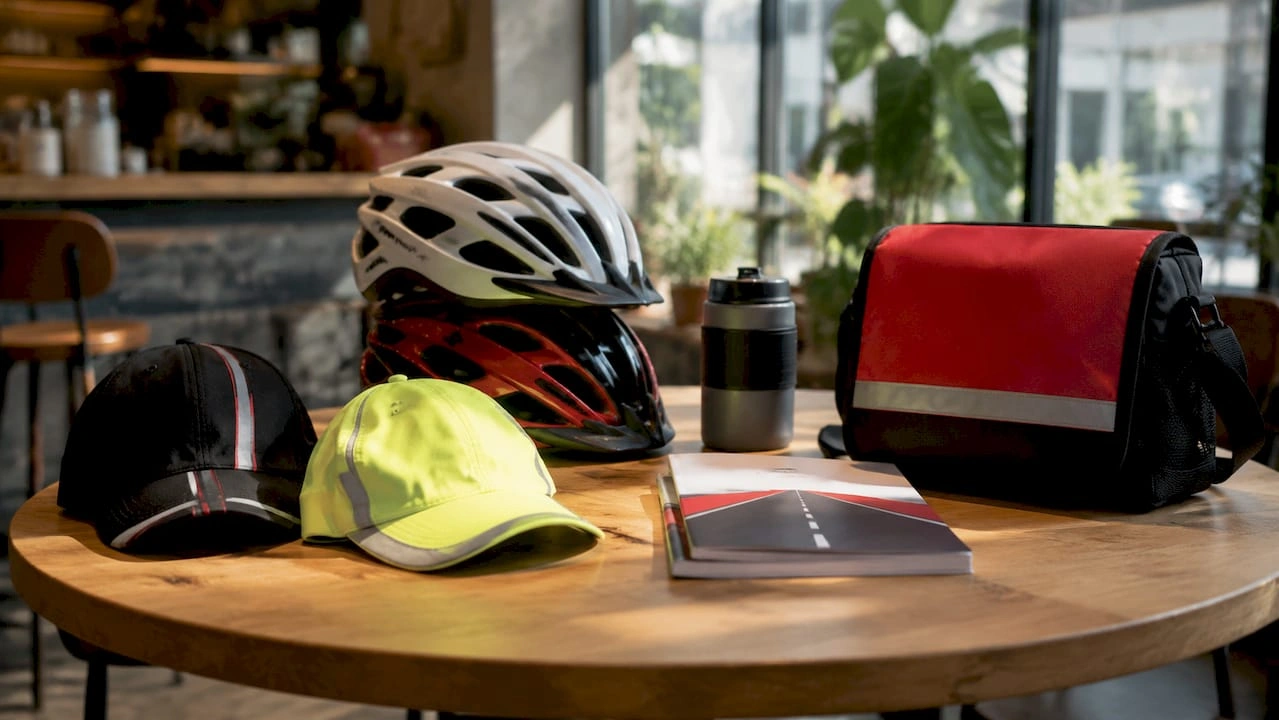
- Hi-vis and reflective clothing: Wearable items that serve a dual purpose. They protect the wearer and broadcast the safety message to everyone nearby.
- Reflective mini trucks: Used in NHVR’s campaign to physically demonstrate blind spot zones. Drivers can hold the model and immediately understand where they become invisible to a truck driver.
- Branded parking timer discs: These remain in vehicles indefinitely, generating continuous visibility and positive brand association every time a driver parks. Councils use them for exactly this reason.
- Educational giveaways: Items like branded booklets, stickers, and lanyards distributed at schools, community events, and licensing centres keep safety messaging in circulation long after the event ends.
- Wearable accessories: Branded wristbands, caps, and bags worn in public extend campaign reach to bystanders who were never directly targeted.
The psychology behind this is straightforward. The more often a person encounters a message, the more familiar and credible it becomes. Promotional marketing research consistently confirms that wearable or usable merchandise enhances recall far beyond what a single media impression achieves. For road safety professionals, this means merchandise is not a supplementary tactic. It is a primary engagement channel.
Why physical engagement outperforms fear-based campaigns
Fear-based road safety campaigns have a long history in Australia. Graphic imagery and confronting statistics have their place, but research shows they produce diminishing returns with younger audiences. Gen Z in particular responds poorly to scare tactics and disengages when messaging feels manipulative or preachy.
The NHVR’s approach with its Gen Z campaign is instructive. Campaigns that avoid fear-based tactics and instead use gamification achieve better youth engagement and measurable behavioural outcomes. The reflective mini truck is not just a giveaway. It is an interactive teaching tool that lets a young driver physically explore the blind spot zones around a heavy vehicle. That hands-on experience creates a memory that a television advertisement cannot.
The BRAKE programme, which targets 14 to 16 year olds, reinforces this finding. Post-course surveys show a 20% increase in viewing road safety as important, alongside 95% confidence in calling out unsafe behaviour among participants. The programme focuses on emotional regulation and decision-making before driving, and it pairs this education with physical resources that participants take home.
Physical merchandise extends the learning moment beyond the classroom or event. When a young driver takes home a branded item connected to a safety lesson, that item becomes a retrieval cue. Every time they see it, they are reminded of what they learned. This is how merchandise promotes safety at a neurological level, not just a marketing one.
Pro Tip: When designing merchandise for youth-focused road safety campaigns, prioritise items that require interaction. A product that a young person has to use, adjust, or engage with creates a stronger memory trace than a passive item like a pen or notepad.
Choosing the right promotional items for road safety objectives
Selecting merchandise without a clear campaign objective produces weak results. The right promotional item depends on three factors: the safety goal, the target audience, and the context in which the item will be used.
Effective merchandise choices align with campaign goals and audience profile, tailoring item type and message for maximum impact. A reflective vest is the right choice for a worksite visibility campaign. A parking disc is the right choice for a council parking compliance programme. An educational game is the right choice for a school-based blind spot awareness initiative.
| Merchandise type | Campaign goal | Primary audience | Key benefit |
|---|---|---|---|
| Reflective hi-vis clothing | Visibility and worker safety | Tradespeople, road workers | Dual-purpose: protection and brand exposure |
| Reflective mini trucks | Blind spot education | Young drivers, Gen Z | Interactive learning, high recall |
| Branded parking timer discs | Community compliance reminders | General drivers, council areas | Long-term in-vehicle visibility |
| Educational giveaways (booklets, stickers) | Knowledge building | School-aged youth, learner drivers | Reinforces classroom learning |
| Wearable accessories (wristbands, caps) | Broad awareness and community reach | Event attendees, general public | High visibility in public spaces |
Rural and regional communities require a different approach to metropolitan campaigns. In regional areas, drivers cover greater distances and have less access to public transport, which means driving behaviour has higher stakes. Merchandise distributed through local councils, agricultural shows, and community events reaches these audiences more effectively than digital channels.
Youth-focused campaigns benefit from merchandise that feels current and desirable. If a young person would not want to own the item independently of the safety message, the campaign loses its reach. The NHVR’s reflective mini truck succeeds partly because it is genuinely interesting as an object.
Pro Tip: Before finalising merchandise for a road safety campaign, test the item with a small sample of your target audience. Ask whether they would keep it, use it, and show it to others. If the answer to any of those questions is no, reconsider the product.
How do you measure the impact of branded merchandise on road safety?
Measuring the impact of branded merchandise requires a combination of behavioural data, survey research, and engagement metrics. No single measure tells the full story.
Pre and post campaign surveys are the most direct method. Road Safety Education Victoria uses periodic evaluations every three years to refine educational effectiveness using branded resources. This model gives organisations a clear before-and-after picture of attitude and behaviour change among their target audience.
Observational data adds a layer of real-world validation. The NHVR tracks indicators such as reduced blind spot incidents among young drivers as a measure of campaign effectiveness. When merchandise is tied to a specific behaviour, such as staying out of truck blind spots, changes in that behaviour can be tracked over time.
Engagement metrics provide a faster feedback loop. These include merchandise uptake rates at events, social media shares of campaign items, and event participation numbers. A high uptake rate signals that the merchandise is desirable and the message is resonating. Low uptake is an early warning that the product or message needs adjustment.
Return on investment for branded merchandise in road safety campaigns is calculated differently from commercial marketing. The primary return is not revenue. It is reduced incidents, improved community awareness, and measurable attitude change. Understanding promotional products ROI in this context means valuing long-term behaviour change over short-term impressions.
Key takeaways
Branded merchandise supports road safety most effectively when it is physical, interactive, and aligned with a specific safety behaviour rather than used as a generic awareness tool.
| Point | Details |
|---|---|
| Physical products outperform passive media | Merchandise creates daily contact with safety messages, building recall and behaviour change over time. |
| Gamification beats fear-based messaging | Interactive items like reflective mini trucks engage young drivers more effectively than graphic campaigns. |
| Match merchandise to campaign goals | Reflective gear suits visibility campaigns; parking discs suit compliance reminders; educational items suit youth programmes. |
| Measure with surveys and observational data | Pre and post campaign surveys combined with incident tracking give the clearest picture of merchandise impact. |
| Youth campaigns need desirable products | If a young person would not keep the item for its own sake, the campaign loses its reach and longevity. |
The Chilli Promotions team’s view on merchandise-led road safety campaigns
After more than two decades working with organisations across Australia and New Zealand, the pattern we see most often is this: campaigns that treat merchandise as an afterthought produce afterthought results. The organisations that achieve real behaviour change treat the physical product as the centrepiece of the campaign, not the tote bag you get at the end.
The NHVR’s Gen Z campaign is the clearest recent example of this done well. The reflective mini truck is not a branded trinket. It is the lesson. The merchandise and the message are the same object. That is the standard worth aiming for, and it is rarer than it should be.
We also see a persistent mistake in youth-focused campaigns: choosing merchandise that adults think young people will value rather than asking young people directly. A branded stress ball distributed at a school event will end up in a bin by the end of the day. A product that connects to something a young driver genuinely cares about, their car, their phone, their social identity, will travel home and stay there.
The most effective road safety merchandise we have seen in the field shares three qualities. It is useful in the context where the safety risk occurs. It carries the message without being preachy about it. And it is something the recipient would choose to keep even if the branding were removed. When you hit all three, the product does the work of a campaign long after the campaign budget has been spent.
— Chilli Promotions Team
Chilli Promotions and road safety merchandise that makes a difference
Road safety campaigns deserve merchandise that works as hard as the people running them.
Chilli Promotions has been supplying promotional products across Australia and New Zealand since 2001. We work with marketing managers and safety professionals to develop merchandise that fits the campaign goal, the audience, and the context. Whether you need reflective gear for a worksite visibility programme, educational giveaways for a school-based initiative, or community items for a council road safety drive, our corporate giveaway catalogue covers a broad range of options. You can also browse our full promotional products range to find items suited to your specific campaign objectives. Contact the Chilli Promotions team to discuss a merchandise solution built around your road safety goals.
FAQ
Why does branded merchandise support road safety better than media ads?
Branded merchandise creates repeated physical contact with a safety message over months or years. Media advertisements generate a single impression that fades quickly from memory.
What types of promotional items work best for road safety campaigns?
Reflective clothing, branded parking timer discs, reflective mini trucks, and educational giveaways are the most effective. The best choice depends on the specific safety goal and target audience.
How does merchandise engage young drivers in road safety?
Interactive and gamified merchandise, such as the NHVR’s reflective mini truck, engages young drivers by making the safety lesson physical and memorable rather than fear-based. Post-course surveys from programmes like BRAKE show a 20% increase in young people viewing road safety as important after hands-on engagement.
How do you measure whether road safety merchandise is working?
Pre and post campaign surveys, observational incident data, and merchandise uptake rates at events are the three primary measurement methods. Road Safety Education Victoria uses periodic evaluations every three years to track the effectiveness of branded educational resources.
Can small councils use branded merchandise effectively for road safety?
Yes. Branded parking timer discs are a cost-effective option for councils because they remain in vehicles indefinitely, generating continuous visibility and positive brand association without ongoing media spend.