Branded merchandise is defined as any physical product carrying a company’s logo or message, distributed to create lasting brand impressions with consumers. The 2026 ASI Global Advertising Impressions Study confirms why branded merchandise boosts awareness better than most channels: 85% of consumers remember the advertiser who gave them a logoed product, and 78% keep promotional items because they find them useful. Those numbers put promotional products ahead of television, social media, and digital display advertising on the metrics that matter most to brand managers: recall, retention, and repeat exposure. For marketing professionals allocating budgets in a crowded media environment, the importance of promotional products has never been clearer or better evidenced.
Why branded merchandise boosts awareness more than other ad channels
Promotional products are the consumers’ favourite advertising channel, outranking television and digital ads in positive consumer opinion. The ASI research reports that 75% of consumers hold a favourable view of branded merchandise, a figure that exceeds comparable sentiment scores for TV and online advertising. That preference gap is not marginal. It reflects a fundamental difference in how people experience physical objects versus screen-based interruptions.
The cost-per-impression (CPI) comparison makes the financial case just as clearly. A typical promotional product generates 3,300 brand views over its lifetime, with premium items maintaining a CPI of less than $0.004. Digital display advertising routinely costs between $0.50 and $3.00 per thousand impressions, making the gap in cost efficiency substantial.
“Promotional products have evolved from feel-good spends to among the most measurable, cost-efficient channels, consistently preferred by consumers over digital and TV.” — ASI Research, 2026
Physical branded items also trigger stronger memory encoding. 83% of consumers report genuine appreciation when receiving a physical promotional item. That emotional response is what makes the memory stick. Digital ads interrupt; promotional products are welcomed.
| Advertising Channel | Average CPI | Consumer Favourability |
|---|---|---|
| Promotional products | $0.006 | 75% positive |
| Television advertising | Higher | Lower than promo |
| Digital display ads | $0.50–$3.00 per 1,000 | Lower than promo |
| Out-of-home advertising | Varies | Comparable |

Which branded items deliver the best awareness impact?
Product selection is the single biggest variable in any promotional merchandise programme. Usefulness is the primary factor driving whether consumers keep an item. Nearly 80% of consumers cite usefulness as the key reason they hold onto a promotional product. An item that sits in a drawer generates zero impressions. An item used daily generates hundreds per year.
Longevity and utility vary significantly across product categories. The table below compares four common categories on the metrics that matter for brand awareness campaigns.
| Product Category | Estimated Lifespan | Daily Visibility | Best Use Case |
|---|---|---|---|
| Tote bags | 1–2 years | High (public use) | Events, retail, trade shows |
| Fleece jackets | 2–3 years | High (worn outdoors) | Corporate gifting, staff |
| Tech accessories | 1–2 years | Very high (desk use) | B2B, IT sector campaigns |
| Pens | 3–6 months | Moderate | High-volume, low-cost runs |
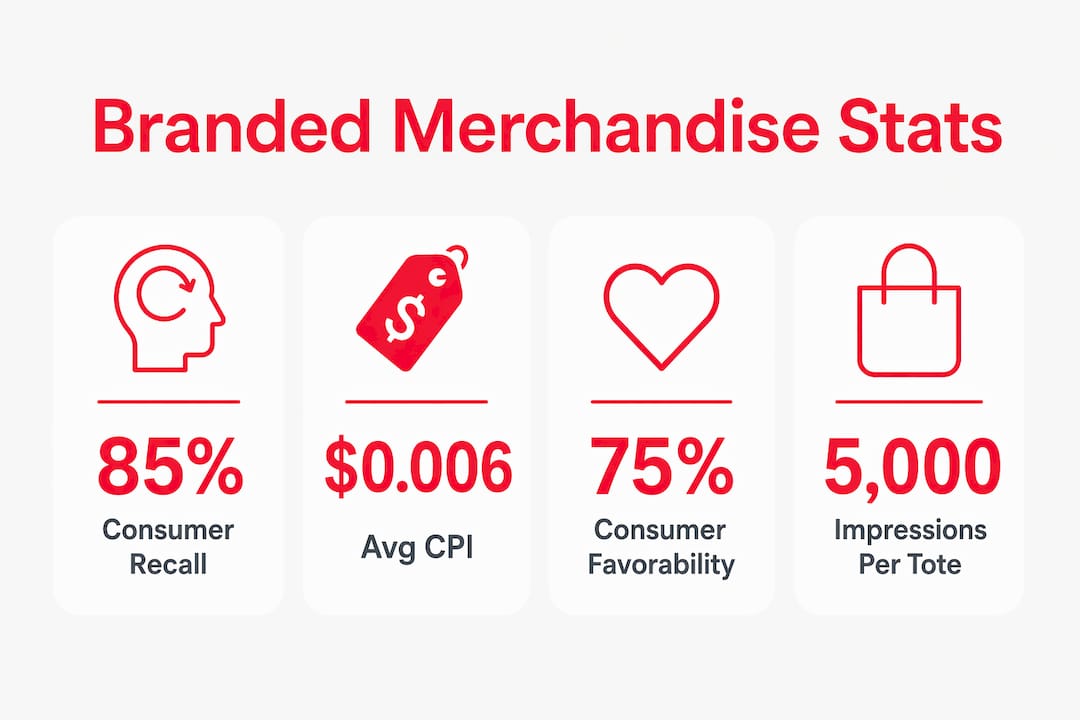
A $6 tote bag delivers nearly 5,000 impressions over its lifetime at a CPI of $0.001. That figure makes tote bags one of the most cost-efficient items in any marketer’s toolkit. Tech accessories like branded USB hubs and wireless chargers perform strongly in B2B environments because they live on desks and are used multiple times daily, generating consistent brand exposure in Australia and beyond.
Sustainability credentials are now a meaningful selection criterion. Items made from recycled content, certified organic materials, or plant-based inputs increase consumer favourability. The “Made in Australia” provenance signal carries similar weight with local audiences who prioritise supporting domestic supply chains.
Pro Tip: Select products your audience will actually use at work or in public. A branded item used in a coffee shop, gym, or office generates passive impressions for your brand every single time it appears.
How does branded merchandise align with sustainability goals?
Sustainability is no longer a secondary consideration for marketing teams. It is a primary one, and promotional products perform well on this measure. Promotional products generate up to eight times less carbon impact per memorised impression than digital advertising formats. They rank second only to out-of-home advertising in carbon efficiency across all major media channels.
That finding counters the common assumption that physical goods are inherently less sustainable than digital campaigns. The reality is that a well-chosen, durable promotional product spreads its carbon cost across thousands of impressions over years. A digital ad campaign generates server energy consumption, data centre load, and device power draw every single time it serves an impression.
Consumer expectations reinforce the sustainability case. 74% of consumers feel more favourable towards advertisers who give environmentally friendly promotional products. That is a direct brand equity gain, not just a feel-good metric.
Key sustainability considerations for marketing professionals selecting promotional items include:
- ♻ Recycled content: Products made from post-consumer recycled materials reduce virgin resource use and signal environmental commitment.
- Certified materials: Look for items carrying certifications such as FSC (Forest Stewardship Council) for paper goods or GOTS (Global Organic Textile Standard) for apparel.
- Carbon-offset programmes: Suppliers offering NoCO2 documentation or verified carbon-offset options allow brands to quantify and communicate their environmental commitment.
- Durability over volume: A smaller run of high-quality, long-lasting items generates more impressions and less waste than a large run of cheap items discarded within weeks.
Chillipromotions offers a range of eco-friendly promotional products designed to meet these criteria, including items with verified sustainability credentials suited to Australian and New Zealand markets.
What strategies maximise brand awareness through promotional merchandise?
Effective promotional merchandise campaigns require more than ordering items with a logo printed on them. The strategy behind product choice, design, distribution, and measurement determines whether a campaign delivers measurable awareness or simply generates waste.
1. Align product choice to audience behaviour
The product must fit naturally into your audience’s daily routine. A branded keep-cup works for a health-conscious consumer audience. A branded wireless charger works for a tech-sector B2B audience. Chillipromotions’ promotional products for IT sectors illustrates how product selection shifts when the audience changes. Misaligned products get discarded, and discarded products generate zero impressions.
2. Invest in logo placement and print quality
Logo size, placement, and print method directly affect recall. A logo printed clearly on a high-contrast surface in a prominent position generates more impressions per use than a small, faded imprint tucked under a collar. Work with your supplier to review print specifications before approving production runs.
3. Distribute where impressions multiply
Distribution strategy determines impression volume. Giving a branded tote bag at a trade show means it travels home on public transport, appears in supermarkets, and sits visible in offices. That single item generates impressions far beyond the event itself. Targeted distribution at high-traffic, public-facing moments multiplies the awareness value of every unit produced.
4. Measure lifespan and impression volume, not just unit cost
Measuring true ROI requires focusing on product lifespan and impression volume rather than unit cost alone. A $3 pen discarded in a fortnight delivers fewer total impressions than a $15 notebook used for six months. Build your ROI model around CPI and lifespan, not purchase price.
5. Avoid the cheap-item trap
Low-quality items that break, fade, or feel poor reflect directly on your brand. 76% of U.S. consumers are more likely to do business with brands that give them quality branded merchandise. A poor-quality item signals the opposite of what you intend.
Pro Tip: Before finalising your product selection, ask your supplier for a sample and use it yourself for a week. If you would not keep it, your audience will not either.
Key takeaways
Branded merchandise delivers measurable brand awareness through high consumer recall, low cost-per-impression, and durable physical engagement that digital advertising cannot replicate.
| Point | Details |
|---|---|
| Consumer recall is high | 85% of consumers remember the advertiser who gave them a logoed product. |
| CPI beats digital channels | A tote bag delivers nearly 5,000 impressions at a CPI of $0.001, far below digital display rates. |
| Usefulness drives retention | Nearly 80% of consumers keep promotional items because they find them useful. |
| Sustainability adds brand value | 74% of consumers favour advertisers who provide eco-friendly promotional products. |
| ROI requires lifespan thinking | Measure success by impression volume and product lifespan, not unit purchase price. |
The case for treating merch as a measured channel
I have spent years watching marketing teams treat promotional merchandise as a budget line they justify with gut feel rather than data. The 2026 ASI research changes that conversation entirely. The numbers are not ambiguous: promotional products outperform television and digital ads on consumer preference, recall, and cost efficiency. That is not a niche finding. It is a structural argument for rebalancing media mix decisions.
What I find most compelling is the sustainability angle. The assumption that physical goods carry a heavier environmental cost than digital campaigns does not hold up under scrutiny. When you spread a product’s carbon footprint across thousands of impressions over two years, the per-impression environmental cost is genuinely low. Brands that communicate this clearly gain a credibility advantage with consumers who are paying attention to these things.
The practical lesson I keep coming back to is product selection discipline. The difference between a campaign that builds brand loyalty and one that generates landfill is almost entirely determined by whether the product is genuinely useful to the recipient. Thoughtful product selection for sustainability and utility is not just good ethics. It is good marketing. The data backs it up, and the consumer behaviour confirms it every time someone pulls out a branded tote bag at the supermarket.
— Priyadarshani
How Chillipromotions helps you choose the right branded merchandise
Chillipromotions has worked with Australian and New Zealand marketing teams since 2001, helping brands select promotional products that deliver real awareness outcomes rather than short-lived giveaways.
Whether you are planning a corporate event, a trade show presence, or a sustained brand visibility programme, the right product selection makes the difference between impressions that last and items that disappear. Chillipromotions acts as a strategic partner in that selection process, not just a supplier. Explore the top corporate giveaway products curated for Australian brand campaigns, or browse the full promotional products range to find items matched to your audience, budget, and sustainability goals. You will notice a difference when you add Chilli.
FAQ
What is the average cost-per-impression for branded merchandise?
The average CPI for promotional products is $0.006, with high-use items like tote bags reaching as low as $0.001. This is significantly lower than digital display advertising, which typically costs $0.50 or more per thousand impressions.
Why do consumers keep promotional products longer than other ad formats?
Nearly 80% of consumers keep promotional items because they find them useful. Usefulness drives daily use, which in turn generates repeated brand impressions over months or years.
How do promotional products compare to digital ads on sustainability?
Promotional products generate up to eight times less carbon impact per memorised impression than digital advertising formats, according to ASI research. Durable, well-chosen items spread their environmental cost across thousands of impressions over their lifespan.
Which branded items generate the most brand awareness?
Tote bags, fleece jackets, and tech accessories consistently deliver the highest impression volumes due to their longevity and public visibility. A $6 tote bag generates nearly 5,000 impressions over its lifetime.
Does the quality of branded merchandise affect brand perception?
Yes. Research shows 76% of consumers are more likely to do business with a brand that provides quality branded merchandise. Low-quality items that break or fade quickly can actively damage brand perception rather than build it.