Custom branded apparel is defined as garments modified with a company’s logo, colours, or design to increase brand visibility and support promotional goals. From customised t-shirt designs worn at trade shows to embroidered polo shirts on the retail floor, the right types of custom branded apparel turn your team into walking brand ambassadors. Australian businesses across hospitality, construction, healthcare, and corporate sectors rely on branded clothing types to build recognition, unify teams, and leave lasting impressions. This guide covers every major category, the branding techniques that suit each one, and how to match your apparel choice to your marketing objectives.
1. What types of custom branded tops work best for business branding?
Tops are the foundation of any branded apparel programme. T-shirts, polo shirts, and button-down shirts each serve a distinct purpose, and choosing the right one depends on your industry, audience, and the impression you want to create.
T-shirts are the most versatile of all branded clothing types. Crew neck, V-neck, and long-sleeve options suit everything from community events and trade expos to casual Friday uniforms. Screen printing is the preferred method for bulk t-shirt orders because setup fees spread across many units, making the per-unit cost very competitive. For events where you need 250 or more pieces, screen printing is the clear choice.
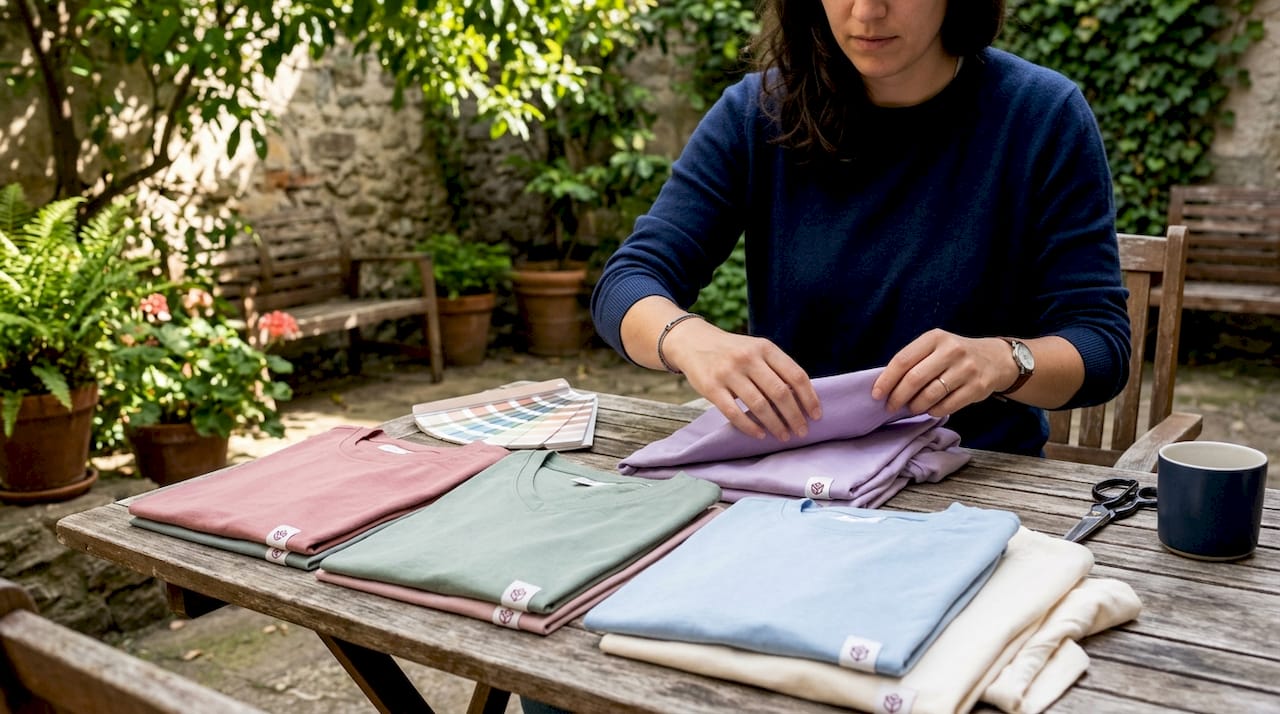
Polo shirts occupy the sweet spot between professional and approachable. They work well in retail, real estate, and office environments where staff need to look polished without wearing a full uniform. Custom polos suit embroidery particularly well, with a clean left-chest logo placement that reads as authoritative and considered. Embroidery stitches the design directly into the fabric, producing a textured finish that holds up through repeated washing.
Button-down shirts are the formal end of the branded tops spectrum. They suit conferences, client-facing roles, and hospitality settings where presentation matters. Logo placement is typically subtle, such as a small chest embroidery or a woven label, which keeps the look refined rather than promotional.
- T-shirts: best for events, casual uniforms, and high-volume giveaways
- Polo shirts: ideal for retail, trade, and professional services
- Button-downs: suited to conferences, hospitality, and client-facing roles
Pro Tip: Order a physical sample before committing to a bulk run. Fabric weight and weave affect how a printed or embroidered logo reads in person, and what looks sharp on screen can appear flat or distorted on the actual garment.
2. How do outerwear options enhance brand presence?
Outerwear extends your brand into environments where a t-shirt simply is not enough. Jackets, hoodies, and fleece garments are worn more often and in more visible settings than most other apparel types, which means they deliver more brand impressions per item.
Hoodies and sweatshirts are among the most effective personalised apparel styles for building genuine brand affinity. Hoodies create enthusiastic branding opportunities and generate far more repeat wear than standard compliance uniforms. Staff and customers actually want to wear them, which is the point. They suit employee welcome kits, team events, and casual brand activations.
- Hoodies and sweatshirts: employee swag, casual events, youth-oriented brands
- Soft-shell and waterproof jackets: outdoor staff, logistics, construction, field teams
- Fleece pullovers: warehouse teams, cold-climate retail, and hospitality back-of-house
Soft-shell jackets are the go-to for logistics teams, outdoor workers, and anyone operating in variable Australian conditions. Embroidery is the preferred branding method here because it withstands abrasion and weather exposure far better than a printed transfer. A well-placed chest or sleeve logo on a quality soft-shell jacket reads as professional in any setting.
Fleece garments serve warehouse and field teams who need warmth without bulk. Logo scaling matters on fleece because the textured surface can make fine-detail designs appear fuzzy. Stick to bold, simple logos with clear outlines when branding fleece.
Pro Tip: When ordering outerwear for mixed teams, consider a layering system. A branded polo worn under a branded jacket gives you two branding touchpoints and increases daily brand exposure across different environments.
3. Which accessories and specialised apparel support brand visibility?
Accessories and specialised garments round out a complete branded apparel programme. They often reach audiences that standard tops and outerwear do not, and they carry your brand into everyday moments.
- Caps and beanies. Caps and beanies deliver eye-level branding and are straightforward to distribute in small quantities. They are popular at outdoor events, sporting sponsorships, and retail promotions. For promotional caps, embroidery is standard because it survives sun, sweat, and repeated wear. Chillipromotions has a dedicated resource on ordering branded caps that covers logo placement, profile styles, and minimum order quantities.
- Aprons. Aprons are the signature garment for food service, hospitality, and demonstration environments. A branded apron at a trade show cooking demonstration or a café counter puts your logo directly in the sightline of customers. Placement options include chest, bib, and pocket positions, each with different visibility levels.
- Tote bags. Tote bags sit at the intersection of apparel and promotional merchandise. They are carried in public, reused repeatedly, and appreciated by recipients. Custom branded tote bags are one of the most cost-effective promotional giveaways available because each use generates a new brand impression.
- Performance activewear. Branded activewear, including moisture-wicking polos, training tees, and track jackets, suits businesses in health, fitness, sport, and active event sponsorship. The modern, sporty aesthetic also works well for tech companies and startups that want a less corporate brand image.
- Safety and hi-vis vests. For construction, mining, and utilities businesses, branded hi-vis vests are both a regulatory requirement and a branding opportunity. A company logo on a hi-vis vest is visible from a distance and reinforces professionalism on site.
4. How do branding techniques influence your apparel choice?
The customisation method you choose affects durability, cost, design complexity, and the overall look of the finished garment. Matching the right technique to the right garment type is as important as the apparel selection itself.
| Technique | Best for | Order volume | Design complexity |
|---|---|---|---|
| Screen printing | T-shirts, tote bags | 250+ units | Simple to medium |
| Embroidery | Polos, caps, jackets | Any volume | Simple to medium |
| Direct-to-Garment (DTG) | T-shirts, hoodies | Under 100 units | Complex, photographic |
| Heat transfer | Activewear, synthetic fabrics | Low to medium | Medium to complex |
Screen printing suits high-volume orders of 250 or more units because the per-unit cost drops significantly once setup fees are absorbed. It produces vibrant, durable results on cotton and cotton-blend fabrics.
DTG printing removes screen setup fees entirely, making it the right choice for short runs under 100 units or designs with many colours and fine gradients. The trade-off is a higher per-unit cost at scale.
Embroidery is the gold standard for corporate and client-facing garments. It works across polo shirts, caps, and jackets, and the textured finish communicates quality. The limitation is design complexity: embroidery does not reproduce fine photographic detail well, so logos need to be clean and bold.
Heat transfer and vinyl printing suit activewear and synthetic fabrics where embroidery needles can damage the material. They also work for names and numbers on sports uniforms.
Pro Tip: Always request a digital mockup that accounts for fabric texture and stretch before approving production. Logo scaling issues on textured fabrics are one of the most common and costly problems in branded apparel programmes.
5. How to select the right apparel for different roles and marketing goals
Tailoring apparel to the wearer’s role and environment improves comfort and strengthens positive brand perception. A one-size-fits-all approach to branded clothing types rarely serves a diverse workforce well.
- Field and outdoor staff: Performance fabrics, soft-shell jackets, and hi-vis vests. Prioritise durability and weather resistance. Embroidery over print for longevity.
- Customer-facing office staff: Polo shirts and button-down shirts in brand colours. Embroidery for a polished finish. Subtle logo placement reinforces professionalism without looking like a billboard.
- Warehouse and logistics teams: Fleece pullovers, vests, and durable tees. Consider fabric weight for the season and ensure logos are scaled for the garment size.
- Events and activations: T-shirts, caps, and tote bags for giveaways. Screen printing for volume. Bright colours and bold logos for visibility in crowded environments.
- Corporate gifting and welcome kits: Hoodies, quality polos, and accessories. Mix apparel types to suit diverse recipients and boost brand exposure across multiple touchpoints.
Seasonality matters in Australia. Winter promotional apparel, such as fleece and soft-shell jackets, gets worn daily and generates consistent impressions across the cooler months. Summer events call for lightweight tees and caps that people will actually reach for. Aligning your apparel programme with the calendar maximises the number of times each item is worn.
Testing logo scale and placement across each garment type before bulk production is non-negotiable. Discrepancies in logo size and fabric texture can degrade brand appearance and result in costly reprints. Request physical proofs for any new garment style.
Key takeaways
The most effective custom branded apparel programmes combine the right garment type, the right branding technique, and a clear understanding of where and by whom each item will be worn.
| Point | Details |
|---|---|
| Match garment to role | Field staff need durable outerwear; office staff need polished polos and button-downs. |
| Choose technique by volume | Screen printing suits 250+ units; DTG suits short runs with complex designs. |
| Embroidery for premium settings | Embroidery is the preferred method for corporate, client-facing, and healthcare uniforms. |
| Test before bulk production | Always request physical proofs to check logo scale and fabric compatibility. |
| Layer for more touchpoints | Combining polos with branded jackets creates multiple brand impressions daily. |
Why I think most businesses underestimate their apparel choices
After years of working with Australian organisations on their promotional programmes, the pattern I see most often is this: businesses spend considerable time choosing the right logo and brand colours, then rush the apparel selection. They pick a generic t-shirt, slap a logo on it, and wonder why staff leave it in the car.
The apparel type itself is a brand signal. A heavyweight fleece with a clean embroidered logo communicates something very different from a thin screen-printed tee. Neither is wrong. But they speak to different audiences and occasions, and confusing the two dilutes the message.
The businesses that get the most value from their branded clothing programmes are the ones that think about the wearer first. What will this person actually wear? Where will they wear it? What does that environment demand? When you answer those questions before you choose the garment, the branding almost takes care of itself.
The other mistake I see regularly is treating the entire team as one audience. A soft-shell jacket for a site manager and a fitted polo for a sales consultant are both valid choices. Mixing apparel types to suit diverse roles is not a complexity problem. It is a sign that you understand your people and your brand.
— Allisar
How Chillipromotions can help you build a branded apparel programme
Chillipromotions has been supplying promotional products and branded apparel to Australian and New Zealand businesses since 2001. Whether you need screen-printed t-shirts for a product launch, embroidered polo shirts for your retail team, or a complete corporate giveaway programme that includes apparel, headwear, and accessories, the team brings genuine expertise to every brief.
Chillipromotions works as a partner in your promotional strategy, not just a supplier. From garment selection and logo preparation through to production and delivery across Australia, the process is clear and supported at every stage. If you are ready to build a branded apparel programme that your team will actually wear, explore the full range and get in touch for a tailored recommendation.
FAQ
What are the most popular types of custom branded apparel in Australia?
T-shirts, polo shirts, hoodies, and caps are the most widely used branded clothing types across Australian businesses. They suit a broad range of industries, budgets, and branding methods.
Which branding method is best for polo shirts?
Embroidery is the recommended method for polo shirts because it produces a professional, textured finish that suits corporate and client-facing settings. A clean left-chest placement is the standard for business use.
How many units do I need to make screen printing cost-effective?
Screen printing becomes cost-effective at orders of 250 or more units because setup fees are spread across the full run. For smaller orders, DTG printing is a better option as it avoids high setup costs.
Can I mix different apparel types in a single order?
Yes, and it is often the best approach for diverse teams. Mixing garment types, such as polos for office staff and soft-shell jackets for field teams, ensures every wearer gets something suited to their role and environment.
How do I avoid logo problems on textured or stretch fabrics?
Request a physical proof or detailed digital mockup before approving bulk production. Logo scaling issues on textured or stretch fabrics are a common cause of reprints, and a proof catches these problems before they become expensive.